
Shelby Foote Books in Order
Explore Shelby Foote books in order, from the Civil War trilogy to his Southern novels, with summaries, series notes, and help choosing where to start.
Last updated:
As an Amazon Associate, we earn from qualifying purchases (at no extra cost to you).
Shelby Foote books in publication order
13 books

Tournament
by Shelby Foote
1949
Foote's first novel follows Mississippi planter Hugh Bart from youth and ambition to loneliness and decline. Set in the Delta, it is a family story about money, land, pride, and the long shadow of a fading Southern order.
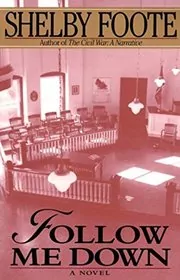
Follow Me Down
by Shelby Foote
1950
After Mississippi farmer Luther Eustis runs off with a much younger woman and she ends up dead, Foote tells the story through shifting voices. The result is a dark, uneasy novel about desire, guilt, religion, and the limits of what anyone really knows.
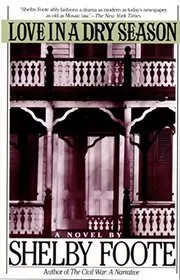
Love in a Dry Season
by Shelby Foote
1951
In a small Mississippi cotton town, two wealthy families and a smooth outsider become tangled in a bitter triangle of money, sex, and resentment. Foote turns social maneuvering into something tense and dangerous, with bad decisions closing in from every side.
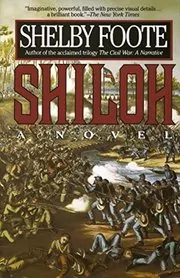
Shiloh
by Shelby Foote
1952
Foote re-creates the Battle of Shiloh through a chorus of Union and Confederate voices, from officers to common soldiers. The novel shows not just troop movements, but the fear, confusion, and exhaustion inside two brutal days of fighting.

Jordan County
by Shelby Foote
1954
This linked collection builds a fictional Mississippi county through seven stories that move backward from 1950 to 1797. Across generations, Foote shows how slavery, war, class, and memory shape ordinary lives and leave marks that do not fade.
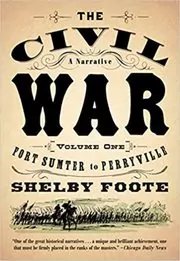
The Civil War, Vol. 1: Fort Sumter to Perryville
by Shelby Foote
1958
Foote opens with secession and Fort Sumter, then follows the war through First Bull Run, Shiloh, Antietam, and Perryville. It is the start of his sweeping three-volume history, rich in politics, personality, and battlefield detail.
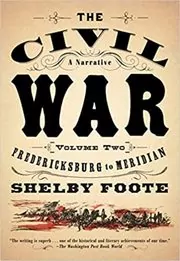
The Civil War, Vol. 2: Fredericksburg to Meridian
by Shelby Foote
1963
This middle volume tracks the turning point of the war, from Fredericksburg and Chancellorsville to Gettysburg, Vicksburg, Chickamauga, Chattanooga, and Meridian. Foote keeps the big campaigns readable by tying them to the people making the decisions and living with the cost.
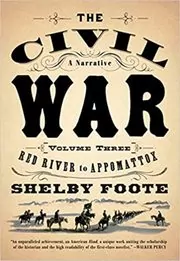
The Civil War, Vol. 3: Red River to Appomattox
by Shelby Foote
1974
Foote covers the war's final campaigns, from the Red River fiasco to Sherman's march, Petersburg, Appomattox, and Lincoln's assassination. It is a broad, gripping close to his long narrative of Union victory and Confederate collapse.
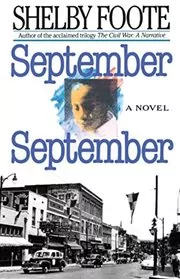
September, September
by Shelby Foote
1978
Set in Memphis in September 1957, this novel follows a bungled kidnapping planned against the backdrop of the Little Rock school crisis. Foote mixes suspense, race politics, and dark comedy as the plot spins beyond the kidnappers' control.
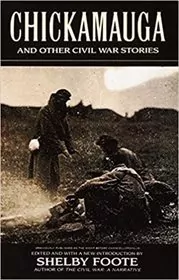
Chickamauga and Other Civil War Stories
by Shelby Foote
1993
Edited by Foote, this anthology gathers ten Civil War pieces by major American writers, including Ambrose Bierce, Mark Twain, William Faulkner, and Eudora Welty. Together they bring the war down to a human scale through fear, confusion, grief, and dark humor.

Stars in Their Courses
by Shelby Foote
1994
This compact volume pulls Foote's Gettysburg campaign narrative into a single book, tracing Lee's invasion of Pennsylvania and the three days of battle. It is a focused entry point into his Civil War writing, with maps and a strong sense of momentum.

The Beleaguered City
by Shelby Foote
1995
Drawn from the larger trilogy, this book follows Grant's long campaign to take Vicksburg and secure the Mississippi River. Foote captures the false starts, hard marches, and grinding siege that turned Vicksburg into one of the war's decisive struggles.

The Correspondence of Shelby Foote and Walker Percy
by Shelby Foote
1996
These letters between Foote and Walker Percy span more than four decades, from the late 1940s to 1990. They talk about writing, family, money, religion, and the South, and the friendship itself becomes the real story.
Where to start with Shelby Foote
If you want the full Civil War story: The Civil War, Vol. 1: Fort Sumter to Perryville → The Civil War, Vol. 2: Fredericksburg to Meridian → The Civil War, Vol. 3: Red River to Appomattox
If you want a shorter Civil War entry point: Shiloh → Stars in Their Courses → The Beleaguered City
If you want Mississippi town and family fiction: Tournament → Love in a Dry Season → Jordan County
If you want darker Southern crime and pressure: Follow Me Down → September, September
Shelby Foote sub-series and character series
Shelby Foote collections, short stories, and related book types
Short Story Collections
Non-Fiction
Standalone Shelby Foote books
Author bio
Shelby Foote was born in Greenville, Mississippi, on November 17, 1916, and grew up in the Delta world that would feed so much of his fiction. He was an only child, and after his father died of blood poisoning when Shelby was six, he stayed especially close to his mother. Greenville never really left him. Its class lines, family histories, manners, grudges, and voices kept turning up in his work for the rest of his life.
A big part of his early life was the Percy family, especially his friendship with Walker Percy. Through that circle he found a serious library and an adult world that took books seriously. He read hard, from Shakespeare and Joyce to Faulkner and Proust, and he later said Proust mattered deeply to him. That fits his own writing, which keeps circling back to memory, time, and the way the past can sit on the present like extra weight.
He went to the University of North Carolina in the mid-1930s, but he did not stay to take a degree. He had already edited his high school paper, and in Chapel Hill he read constantly, wrote for the campus literary magazine, skipped classes, and finally left to make his own way. During World War II he served with the Army and later the Marine Corps. After the war he worked briefly for the Associated Press in New York before turning back to fiction.
Writing kept pulling him back.
His first novel, Tournament, grew out of family history, especially the rise and fall of his grandfather. Then came Follow Me Down, Love in a Dry Season, Shiloh, and Jordan County in quick succession. Those books are crowded with Mississippi towns, damaged families, class friction, violence, gossip, and people who cannot quite escape where they came from. Shiloh, in particular, showed the bridge between the novelist he already was and the historian he was about to become.
Readers who start with the fiction usually notice how exact the voices are. Foote cared about how people talked, what they hid, and how a whole community could shape a life. Even when the plots turn grim, there is usually a strong sense of place under everything. The Delta is never just scenery in his books. It is pressure, inheritance, temptation, and sometimes the thing that traps people in roles they cannot shake.
Then the Civil War took over.
In the mid-1950s he was asked to write a one-volume history of the war, but the project kept expanding until it became The Civil War: A Narrative, published in three volumes between 1958 and 1974. What was supposed to be one book became the work that defined his public life. Readers responded to the way he told military history as a continuous story, with room for generals, privates, bad weather, missed chances, and the small details that make very large events feel personal.
Decades later, his appearance in Ken Burns's 1990 documentary The Civil War introduced him to a much wider audience. Viewers who had never opened his books still remembered the voice, the beard, the dry humor, and the storyteller's timing. But he never really stopped being a novelist, which you can see in Shiloh, in the later Memphis novel September, September, and even in The Correspondence of Shelby Foote and Walker Percy, where the letters sound as alive and opinionated as the fiction. He spent much of his adult life in Memphis, working in a steady daytime routine in an upstairs room of his house. Over the years he received three Guggenheim fellowships, was elected to the American Academy of Arts and Letters in 1994, and died in Memphis on June 27, 2005.













Edited by
Software engineer whose passion for tracking book recommendations from podcasts inspired the creation of MRB.
Lead investor at 3one4 Capital whose startup expertise and love for books helped shape MRB and its growth.
Comments
Did we miss something? Have feedback?
Help us improve this page by sharing your thoughts