
Sean McFate Books in Order
Explore Sean McFate books in order, with Tom Locke thrillers, nonfiction summaries, author background, and quick tips on the best place to start.
Last updated:
As an Amazon Associate, we earn from qualifying purchases (at no extra cost to you).
Sean McFate books in publication order
8 books

Building Better Armies
by Sean McFate
2014
Using Liberia as a case study, McFate examines how a shattered military was dismantled and rebuilt after civil war. The book mixes field experience with practical lessons about security reform, local politics, and the limits of outsourced army building.
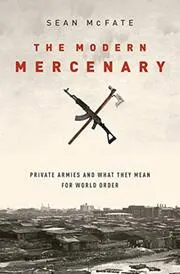
The Modern Mercenary
by Sean McFate
2014
McFate draws on his own contractor experience to explain how private armies shape modern conflict. He traces the rise of the military marketplace and argues that mercenaries are not a relic, but a growing force in world politics.
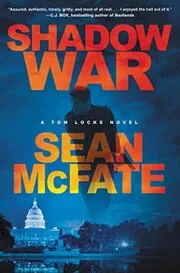
Shadow War
by Sean McFate
2016
Private contractor Tom Locke is pulled from Libya and sent into Ukraine on a secret mission to rescue an oligarch's family. What looks like a clean black op turns into a wider struggle over Russian influence, private power, and who really runs the war.
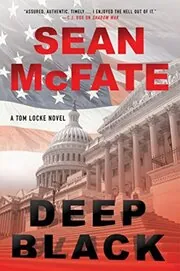
Deep Black
by Sean McFate
2017
Hiding in northern Iraq after a betrayal, Locke takes a job to find a missing Saudi prince inside ISIS territory. The rescue pulls him into royal intrigue, nuclear stakes, and another shadow conflict far bigger than the mission.

Mercenaries and War
by Sean McFate
2019
In this short study, McFate explains what mercenaries are, how private armies operate, and why they keep returning. It is a compact guide to the business logic, strategy, and risks behind outsourced warfare.
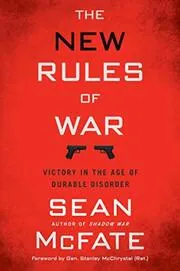
The New Rules of War
by Sean McFate
2019
McFate argues that wealthy states keep preparing for the wrong kind of war. He lays out ten blunt principles for an era of proxy fights, deniable attacks, private force, and weaker enemies outmaneuvering stronger powers.
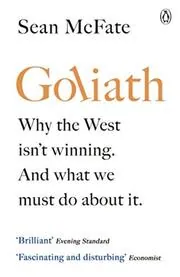
Goliath
by Sean McFate
2020
This UK edition of McFate's argument about modern conflict asks why the West keeps losing despite its wealth and firepower. He makes the case that future wars will be shaped by cunning, shadow tactics, and nonstate force.
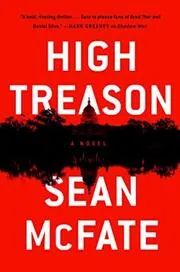
High Treason
by Sean McFate
2020
After a brutal attack on the US vice president's motorcade, Tom Locke suspects his old employer Apollo Outcomes. Chasing the truth with FBI agent Jennifer Lin, he uncovers a conspiracy of rogue mercenaries and insiders aimed at the White House.
Where to start with Sean McFate
If you want the Tom Locke thrillers: Shadow War → Deep Black → High Treason
If you want to understand private armies first: The Modern Mercenary → Mercenaries and War
If you want his big-picture strategy book: The New Rules of War → Goliath
If you want a practical case study from the field: Building Better Armies
Sean McFate sub-series and character series
Sean McFate collections, short stories, and related book types
Non-Fiction
Author bio
Sean McFate did not start out as the kind of writer people expect when they hear "war novelist." He spent part of his childhood in Ridgefield, Connecticut, then left for Saint Thomas Choir School in New York City, where music was a serious part of daily life. He has said he was a violinist first, and for a while imagined a future much closer to concert halls than battlefields.
Music came first.
At Brown University, he studied history and religious studies and went through ROTC. After college, he served as a paratrooper and officer in the U.S. Army's 82nd Airborne Division. He later described those years as the start of everything that followed. They took him into elite training programs, into real military command, and into the practical side of how power works when the stakes are life and death.
After the Army, McFate moved into the private military world, a shift that would define both his scholarship and his fiction. He worked as a contractor and political risk professional, spent years in Africa, dealt with warlords, rode with armed groups in the Sahara, and helped build Liberia's postwar army. That experience sits behind Building Better Armies and also behind much of the moral tension in his later novels. His work has always been close to the ground, not just theoretical.
He then went deep into academic study, earning degrees from Brown and the Harvard Kennedy School before completing a PhD in international relations at the London School of Economics. He has taught strategy at Georgetown University, Syracuse University, and the National Defense University, and he has also worked with policy institutions in Washington and Oxford. That mix, soldier, contractor, scholar, is what makes his books feel unusually lived-in.
McFate's nonfiction came first. In The Modern Mercenary, he explains how private armies fit into modern conflict and why they matter more than many governments want to admit. In The New Rules of War, and its UK edition Goliath, he argues that powerful states keep preparing for the wrong fights. Readers who like those books tend to come for the blunt, clear way he lays out big ideas: why technology does not solve everything, why deniable conflict matters, and why weaker actors often outplay stronger ones.
His move into fiction happened by accident. What became Shadow War started as a memoir, but he has said fiction gave him room to tell truths he could not easily put on the page in straight nonfiction. That book introduced Tom Locke, followed by Deep Black and High Treason, a mercenary protagonist shaped in part by McFate's own background. Readers usually come for the action, but stay for the mix of geopolitics, field detail, and hard questions about loyalty, money, and war.
He writes like someone who knows that strategy is personal.
McFate lives in Washington, DC, and still works at the intersection of ideas and real-world conflict. He teaches, comments on current wars, and keeps returning to the subjects that run through all his books: private power, hidden influence, and what people do when formal rules stop working. He has also kept up a long-running interest in opera and classical music, which feels fitting. His career has never moved in just one direction.









Edited by
Software engineer whose passion for tracking book recommendations from podcasts inspired the creation of MRB.
Lead investor at 3one4 Capital whose startup expertise and love for books helped shape MRB and its growth.
Comments
Did we miss something? Have feedback?
Help us improve this page by sharing your thoughts