
Scott Turow Books in Order
This page covers Scott Turow's books in order, with Kindle County reading guide, summaries, series background, and tips on where to start his legal thrillers.
Last updated:
As an Amazon Associate, we earn from qualifying purchases (at no extra cost to you).
Scott Turow books in publication order
18 books
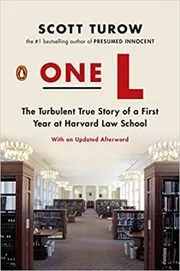
One L
by Scott Turow
1977
Turow's classic memoir follows his first year at Harvard Law School, from bewildering Socratic classes to cutthroat exams and friendships strained by competition, giving a candid, inside look at how modern lawyers are trained.
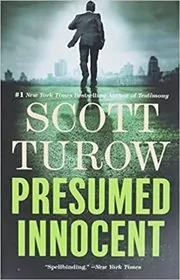
Presumed Innocent
by Scott Turow
1986
When prosecutor Rusty Sabich is assigned to investigate the murder of his colleague and former lover, evidence soon points back at him. As he stands trial in Kindle County, the case exposes tangled politics, marriage secrets, and the limits of legal truth.
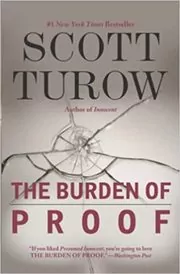
The Burden of Proof
by Scott Turow
1990
Defense lawyer Sandy Stern returns home to discover his wife has taken her own life, just as his brother in law, financier Dixon Hartnell, faces federal charges. Untangling Dixon's alleged fraud forces Sandy to confront buried secrets about his marriage and family.
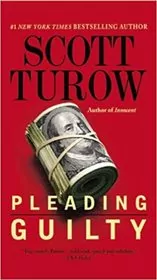
Pleading Guilty
by Scott Turow
1993
Middle aged lawyer and ex cop Mack Malloy is quietly pushed toward retirement until the firm asks him to track down a missing partner and the millions that vanished with him. His search through Kindle County's underbelly blurs the line between fixer and fall guy.
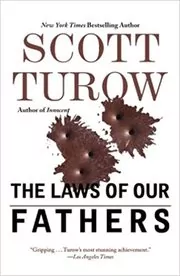
The Laws Of Our Fathers
by Scott Turow
1996
A drive by shooting in a Kindle County housing project brings Judge Sonia Klonsky a case in which a young man is accused of arranging his activist mother's murder. The trial reaches back to the 1960s, exposing old friendships, radical politics, and generational debts.
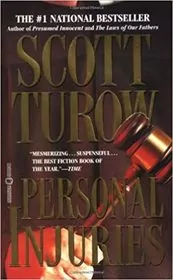
Personal Injuries
by Scott Turow
1999
Charismatic injury lawyer Robbie Feaver secretly bribes judges to win cases, until federal agents catch him and demand he help expose a wider web of corruption. Narrated by attorney George Mason, the sting operation traps everyone in a maze of wiretaps and shifting loyalties.
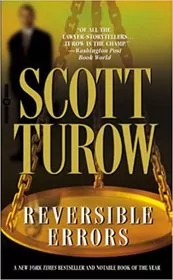
Reversible Errors
by Scott Turow
2002
Corporate attorney Arthur Raven reluctantly takes on the final appeal of Rommy "Squirrel" Gandolph, condemned for a triple murder. As new evidence surfaces, Raven, a weary detective, and a disgraced judge race to uncover the truth before the execution clock runs out.
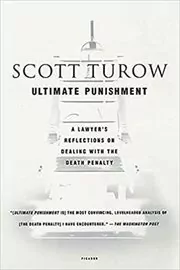
Ultimate Punishment
by Scott Turow
2003
In this compact work of nonfiction, Turow draws on his years as a prosecutor, defense lawyer, and member of Illinois death penalty commissions to weigh the case for and against capital punishment, focusing on innocence, deterrence, and what justice can realistically deliver.
Ordinary Heroes
by Scott Turow
2005
After his father's death, journalist Stewart Dubinsky discovers wartime letters and a hidden manuscript that hint at a buried court martial. His search through World War II archives reveals his father's secret life as a JAG officer and a very different story of how his parents met.
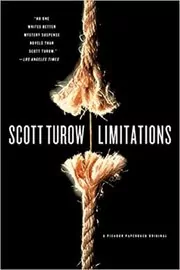
Limitations
by Scott Turow
2006
Judge George Mason is asked to rule on a high profile rape case that eerily mirrors something he and his friends did in college. Anonymous emails and his wife's illness close in, forcing him to confront guilt, fear, and the boundaries of judicial duty.
The Best American Mystery Stories 2006
by Scott Turow, Otto Penzler, Karen E Bender, CJ Box, James Lee Burke, Jeffery Deaver, Jane Haddam, William Harrison, Alan Heathcock, Emory Holmes II & Wendy Hornsby
2006
Edited by Scott Turow with series editor Otto Penzler, this annual anthology selects twenty-one mystery, crime, and suspense stories. Its contributors include C. J. Box, whose Yellowstone story "Pirates of Yellowstone" appears alongside work by established crime writers.
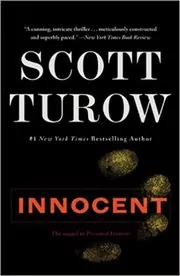
Innocent
by Scott Turow
2010
Decades after beating a murder charge, Rusty Sabich is now chief judge when his wife is found dead in their bed, and he waits almost a day before calling authorities. Old rival Tommy Molto brings a new case, and Rusty must again fight for his freedom and his family's trust.
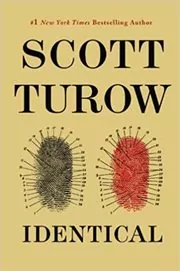
Identical
by Scott Turow
2013
Twenty five years after Cass Gianis pleaded guilty to killing his girlfriend Dita Kronon, he is paroled while his identical twin Paul runs for mayor. Dita's wealthy brother bankrolls a fresh investigation, raising doubts about what really happened and whether both twins share the blame.
By the Book
by Pamela Paul, Scott Turow, Jillian Tamaki, Anne Lamott & David Sedaris
2014
Pamela Paul gathers sixty-five extended interviews from The New York Times Book Review’s “By the Book” feature. Writers and artists, including David Sedaris and Anne Lamott, discuss reading habits, favorite authors, work routines, inspirations, irritations, and the books they recommend.
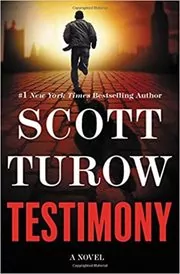
Testimony
by Scott Turow
2017
Disillusioned prosecutor Bill ten Boom leaves Kindle County for The Hague, where the International Criminal Court asks him to investigate the disappearance of an entire Roma refugee camp in postwar Bosnia. His case threads through military secrets, Balkan politics, and his own midlife upheaval.
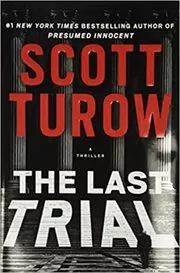
The Last Trial
by Scott Turow
2020
At eighty five, legendary defense attorney Sandy Stern agrees to try one last case, defending his longtime friend, Nobel winning doctor Kiril Pafko, whose breakthrough cancer drug is linked to patient deaths. The sprawling federal trial tests Sandy's health, ethics, and faith in the system he has served.
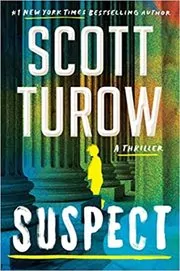
Suspect
by Scott Turow
2022
Pinky Granum, tattooed misfit private investigator and granddaughter of Sandy Stern, helps lawyer Rik Dudek defend police chief Lucia Gomez against sexual misconduct accusations. As a local hearing turns explosive and a witness dies, Pinky uncovers small town grudges, powerful enemies, and a very personal threat next door.

Presumed Guilty
by Scott Turow
2025
Now retired and hoping for a quiet marriage, Rusty Sabich agrees to defend his fiancée's son Aaron, a young Black man accused of murdering the daughter of a local prosecutor. Back in court, Rusty faces hostile politics, buried family tensions, and echoes of his own past trials.
Where to start with Scott Turow
If you want his most famous case first: Presumed Innocent → Innocent → Presumed Guilty
If you like long running courtroom characters: The Burden of Proof → Personal Injuries → The Last Trial
If you prefer international and historical angles: Ordinary Heroes → Testimony
If you want nonfiction about real law: One L → Ultimate Punishment → Guilty as Charged
If you enjoy a fresh Kindle County entry: Identical → Suspect
Scott Turow sub-series and character series
Scott Turow collections, short stories, and related book types
Non-Fiction
Standalone Scott Turow books
The Best American Mystery Stories 2006
by Scott Turow, Otto Penzler, Karen E Bender, CJ Box, James Lee Burke, Jeffery Deaver, Jane Haddam, William Harrison, Alan Heathcock, Emory Holmes II & Wendy Hornsby
2006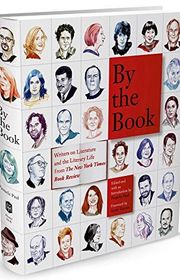
Author bio
Scott Turow grew up thinking about both stories and arguments. Born in Chicago in 1949, he became known first as a lawyer in real courtrooms and then as the writer who turned those courtrooms into gripping fiction.
Turow was raised on Chicago's North Side in West Rogers Park before his family moved to the suburb of Winnetka when he was a teenager. He went to New Trier High School, studied English at Amherst College, and then headed west on a writing fellowship to Stanford's Creative Writing Center, where he later stayed on as a lecturer.
In his mid twenties he pivoted to law, enrolling at Harvard Law School. Out of that experience came One L, his candid account of the first year of legal education, which has stayed in print for decades and is still passed from student to student before orientation.
After graduating, Turow joined the U.S. Attorney's Office in Chicago, spending years prosecuting corruption and white collar crime. On his daily commute he began drafting the novel that would change his life, Presumed Innocent, a story about a prosecutor accused of murdering his colleague and former lover.
When Presumed Innocent was published in 1987 it became a bestseller and later a hit film and television series, introducing readers to the fictional Midwestern jurisdiction of Kindle County, his stand in for Chicago and its suburbs. Most of his novels return to that landscape, following prosecutors, defense lawyers, judges, police officers, and politicians as they collide in and around the courthouse.
Over the next decades he built a loose cycle of interconnected books, each focused on a different corner of Kindle County. The Burden of Proof follows defense attorney Sandy Stern after his wife's death and a client's financial scandal, while Personal Injuries digs into a bribery scheme that entangles lawyers, judges, and the FBI. Reversible Errors and Innocent revisit old murders from new angles, asking what happens when the system may have condemned the wrong person or learned too little from the past. Later novels such as Testimony, The Last Trial, Suspect and Presumed Guilty push his characters into international courts, questions about medical ethics, police scandals, small town politics, and the strains of aging.
Alongside the fiction, Turow has written about law and fairness in real life. Ultimate Punishment reflects on his service on Illinois commissions that reviewed the death penalty and on his work representing men once sentenced to die, leading him to argue against capital punishment in practice.
He has kept one foot in the legal world, practicing at a large Chicago based firm and taking on complex pro bono cases, even as his books have sold in the tens of millions. He has served as president of the Authors Guild and on various ethics and judicial reform bodies, trying to improve the systems he writes about so often.
Turow still writes most days, often returning to the same characters years later to see how time and experience have changed them. Readers come to his work for the intricate plots and courtroom set pieces, but they tend to stay for something quieter, the way his stories ask what justice really looks like for flawed people on both sides of the law.




Edited by
Software engineer whose passion for tracking book recommendations from podcasts inspired the creation of MRB.
Lead investor at 3one4 Capital whose startup expertise and love for books helped shape MRB and its growth.
Comments
Did we miss something? Have feedback?
Help us improve this page by sharing your thoughts