
Saul Black Books in Order
Browse the Saul Black books by Glen Duncan in order, with summaries, series background, and where to start with these dark Valerie Hart thrillers.
Last updated:
As an Amazon Associate, we earn from qualifying purchases (at no extra cost to you).
Saul Black books in publication order
3 books
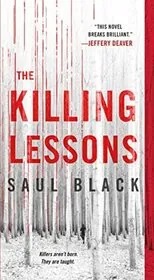
The Killing Lessons
by Saul Black
2015
Two brutal killers are moving across America, leaving tortured women behind them. San Francisco detective Valerie Hart is already near the edge when a child's survival offers the first real chance to stop the slaughter.
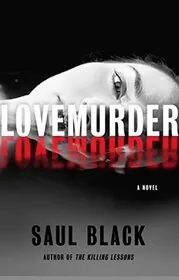
LoveMurder
by Saul Black
2016
A fresh mutilation bears the unmistakable signature of Katherine Glass, a notorious murderer already behind bars. When a note at the scene is addressed to Valerie Hart, the case turns into a personal descent back into a killer's mind.
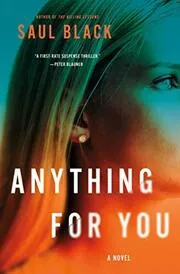
Anything For You
by Saul Black
2019
A former prosecutor is found murdered in his home, and the evidence seems to point to an obvious suspect. Valerie Hart is not convinced, and the deeper she digs, the more the case tangles with old secrets and her own past.
Where to start with Saul Black
If you want the full Valerie Hart arc: The Killing Lessons → LoveMurder → Anything For You
If you want the darkest serial-killer chase: The Killing Lessons → LoveMurder
If you want the most personal mind game: LoveMurder → Anything For You
If you want the cleanest single-case entry: Anything For You
Saul Black sub-series and character series
Valerie Hart (Saul Black) books in order
Explore this seriesValerie Hart (Saul Black) books in chronological order
Author bio
Glen Duncan writes thrillers as Saul Black, but he did not arrive at crime fiction by a single straight route. Born in Bolton, Lancashire, in 1965, he grew up in the north of England in an Anglo-Indian family, and he has spoken about feeling a little outside the room as a kid. That distance, hard at the time, helped make him an observer.
He noticed everything.
Duncan studied philosophy and literature, then moved to London in 1990. He spent four years working as a bookseller and writing in his spare time, which sounds almost quaint until you remember how much patience that life demands. Before the books were published, there were years of practice, uncertainty, and rejected work.
A real turning point came in 1994. He traveled to India with his father, then continued across the United States by Amtrak, and on that trip he wrote much of what became his first novel, Hope. When Hope was published in 1997, it started a career that would keep changing shape while circling the same big human questions.
Those questions show up everywhere in his work. Love and sex. Death and grief. Cruelty and compassion. Memory, shame, appetite, and the uneasy gap between who people are and who they want to be. You can feel that in I, Lucifer, which lets the Devil loose in human form, and in The Bloodstone Papers, which draws on Anglo-Indian history and family identity. Even when Duncan is funny, and he often is, there is usually something serious pulling underneath the joke.
A lot of readers found him through The Last Werewolf, and that makes sense. That novel, along with Talulla Rising and By Blood We Live, takes supernatural material that could have been pure spectacle and treats it as an emotional and moral problem instead. The monsters in these books lust, mourn, panic, joke, and keep going. Readers tend to like the trilogy not just for the blood and speed, but for the fact that it feels strangely human.
He likes pressure, on the plot and on the soul.
That helps explain Saul Black. When Duncan decided to write a serial-killer thriller, he gave himself a pen name and a tighter set of rules. The Valerie Hart novels, The Killing Lessons, LoveMurder, and Anything For You, are leaner and faster than much of his earlier fiction, but they still care about psychology, moral damage, and the cost of staring too long at darkness. Hart is a San Francisco homicide detective, and Duncan is interested not only in whether she solves the case, but in what the work is doing to her while she tries.
Across all of these books, he resists easy shelving. One novel may be wickedly funny, another bruised and intimate, another built like a high-speed chase. What links them is attention to the messy stuff that makes people real. Duncan lives in London, and whether the name on the cover is Glen Duncan or Saul Black, the draw is much the same: a quick mind, dark humor, and characters trying to live with parts of themselves they would rather not face head-on.



Edited by
Software engineer whose passion for tracking book recommendations from podcasts inspired the creation of MRB.
Lead investor at 3one4 Capital whose startup expertise and love for books helped shape MRB and its growth.
Comments
Did we miss something? Have feedback?
Help us improve this page by sharing your thoughts