
Ruthenia Quintet Books in Order
Part ofOlen Steinhauer Books in OrderSee the Ruthenia Quintet by Olen Steinhauer in order, with book summaries, series background on the Cold War setting, and simple tips on where to start reading.
Last updated:
As an Amazon Associate, we earn from qualifying purchases (at no extra cost to you).
Ruthenia Quintet books in publication order
5 books
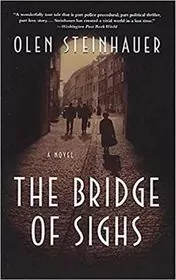
The Bridge of Sighs
by Olen Steinhauer
2003
In 1948, rookie homicide detective Emil Brod joins the People’s Militia in a war scarred Eastern European capital and is handed the murder of a popular state songwriter, a case that exposes corruption, suspicion, and the cost of loyalty.
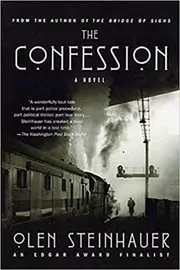
The Confession
by Olen Steinhauer
2004
Set in 1956, militia inspector and frustrated novelist Ferenc Kolyeszar investigates a missing party member’s wife and the savage death of a painter, while street protests and party pressure push him toward choices that may destroy his marriage and ideals.
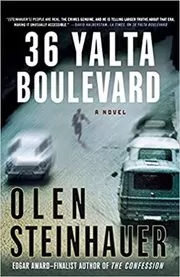
36 Yalta Boulevard
by Olen Steinhauer
2005
Loyal state security officer Brano Sev is sent back to his remote home village to interrogate a suspected defector, but when a villager turns up dead he is framed for murder and exiled, forcing him to question everything he serves.
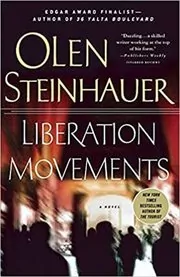
Liberation Movements
by Olen Steinhauer
2006
In the mid 1970s, a plane bound for Istanbul is hijacked by Armenian terrorists and blown up, sending secret policeman Gavra Noukas and detective Katja Drdova on an investigation that reaches back to an old murder and buried state secrets.
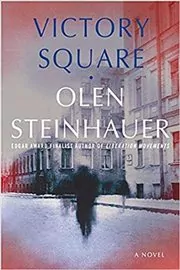
Victory Square
by Olen Steinhauer
2007
As communist rule crumbles in 1989, aging militia chief Emil Brod faces a string of murders tied to a revolutionary he arrested decades earlier, forcing him to reckon with past compromises before they destroy him and the colleagues he loves.
Ruthenia Quintet books in chronological order
Series background & context
The Ruthenia Quintet, also known as the Yalta Boulevard sequence, is a five book cycle set in a fictional Eastern European country that traces life under communism from the late 1940s to the revolutions of 1989.
The story begins with The Bridge of Sighs, where young homicide detective Emil Brod joins the People's Militia in 1948. His first case, the murder of a popular state songwriter, drops him into a city still full of war rubble and occupied by the Red Army, and he quickly discovers that solving crimes in a one party state means navigating politics as carefully as evidence.
In The Confession, the focus shifts to Ferenc Kolyeszar, a militia inspector who also writes fiction and feels his life slowly coming apart. The year is 1956, protests are brewing in the streets, and Ferenc's search for a missing party official's wife and a brutal killer forces him to decide what he will sacrifice for his work and what he will hold back for himself.
36 Yalta Boulevard moves into the 1960s and into the offices of State Security. Brano Sev, a loyal intelligence officer, is ordered to return to his home village and question a possible defector, only to be framed for murder and pushed into exile in Vienna, where he starts to look at his homeland, and his own service, with new eyes.
Liberation Movements stretches across 1968 and 1975, following secret policeman Gavra Noukas and homicide detective Katja Drdova as they investigate a hijacked plane that explodes on its way to Istanbul. Their work slowly reveals how a small, long ago murder connects to international terrorist groups and to the guarded lives of the people running their own government.
The sequence closes with Victory Square, set in 1989 as communist rule finally begins to buckle. Emil Brod, now the weary chief of the Militia, faces a series of killings and the return of a revolutionary figure he arrested decades earlier, and he has to confront the personal cost of decisions that once felt like simple duty.
Although each book stands on its own, recurring characters and long shadows make the quintet feel like one extended story about power, compromise, and survival. New readers get the most out of it by starting with The Bridge of Sighs and reading straight through as the unnamed country changes, decade by decade, around its policemen and spies.











Edited by
Software engineer whose passion for tracking book recommendations from podcasts inspired the creation of MRB.
Lead investor at 3one4 Capital whose startup expertise and love for books helped shape MRB and its growth.
Comments
Did we miss something? Have feedback?
Help us improve this page by sharing your thoughts