
Rush Limbaugh Books in Order
See all Rush Limbaugh books in order, including the Rush Revere children's series, with summaries, background, and guidance on where to start reading.
Last updated:
As an Amazon Associate, we earn from qualifying purchases (at no extra cost to you).
Rush Limbaugh books in publication order
7 books
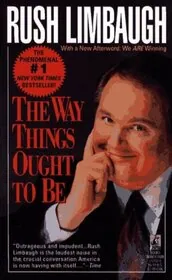
The Way Things Ought to Be
by Rush Limbaugh
1992
Part memoir and part polemic, this debut book traces Rush Limbaugh’s path into talk radio and lays out his core beliefs on government, culture, and the media, using stories from the show to explain how he thinks America should work.
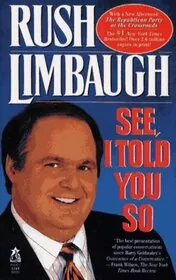
See, I Told You So
by Rush Limbaugh
1993
In this follow up to his first book, Rush Limbaugh gathers monologues and essays from his radio show into a tour of early 1990s American politics, arguing for conservative ideas while taking aim at liberal policies, media narratives, and cultural trends.
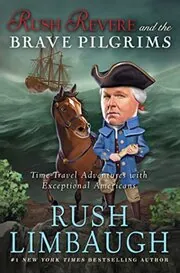
Rush Revere and the Brave Pilgrims
by Rush Limbaugh
2013
Substitute history teacher Rush Revere and his talking horse Liberty carry two students back to the Mayflower, where they join the Pilgrims’ dangerous Atlantic crossing, see the struggle to survive in Plymouth, and experience the first Thanksgiving as if they were there.
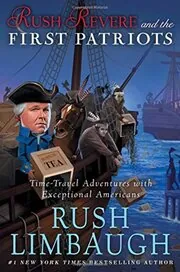
Rush Revere and the First Patriots
by Rush Limbaugh
2013
This adventure drops Rush Revere, Liberty, and their students into the crowded streets of 1760s Boston, where protests over British taxes grow louder and meetings with Samuel Adams, Benjamin Franklin, and Paul Revere show how ordinary people pushed a colony toward revolution.
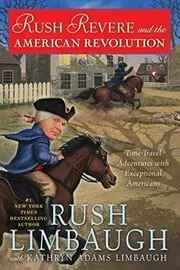
Rush Revere and the American Revolution
by Rush Limbaugh
2014
The crew rides with Rush Revere and Liberty into 1775, meeting colonial soldiers, witnessing Paul Revere’s midnight ride, and watching the first battles of the American Revolution while one student wrestles with his own father’s deployment in a modern war.
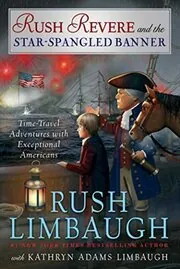
Rush Revere and the Star-Spangled Banner
by Rush Limbaugh
2015
Rush Revere, Liberty, and their friends leave a field trip to Washington, DC, for time travel stops with James Madison, Dolley Madison, Betsy Ross, and Francis Scott Key, watching the young nation fight war and define the freedoms symbolized by its flag.
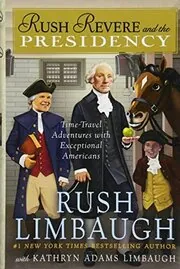
Rush Revere and the Presidency
by Rush Limbaugh
2016
When a Manchester Middle School student runs for class president, Rush Revere and Liberty jump back to the first years of the United States, visiting George Washington, John Adams, and Thomas Jefferson to see up close what real leadership and difficult choices look like.
Where to start with Rush Limbaugh
If you want to start with kids' time-travel adventures: Rush Revere and the Brave Pilgrims → Rush Revere and the First Patriots → Rush Revere and the American Revolution.
If your reader loves patriotic symbols and early presidents: Rush Revere and the Star-Spangled Banner → Rush Revere and the Presidency.
If you’re curious about his political commentary: The Way Things Ought to Be → See, I Told You So.
If you already know the radio show and want highlights: Radio's Greatest of All Time.
Rush Limbaugh sub-series and character series
Adventures of Rush Revere books in order
Explore this seriesAdventures of Rush Revere books in chronological order
Rush Limbaugh collections, short stories, and related book types
Non-Fiction
Author bio
Rush Limbaugh grew up in Cape Girardeau, Missouri, in a family better known for courtrooms than microphones. His father, grandfather, and brother were lawyers, and public life was part of the family story. Rush gravitated to radio instead, sneaking time on the air whenever he could.
As a teenager he took a job at a local station in his hometown, reading the news and spinning records before and after school under the on air name Rusty Sharpe. He graduated from Cape Girardeau Central High School in 1969, tried college at Southeast Missouri State University, and then dropped out after two semesters. Classes could not compete with the pull of broadcasting.
In the 1970s he bounced through music stations in Pennsylvania and Missouri, working under different names and being hired and fired more than once. One manager told him he did not have what it took to be an air personality and suggested a career in sales instead. Those detours ended up sharpening his timing, his sense of audience, and his stubbornness.
For several years he stepped away from the studio to work in promotions for the Kansas City Royals baseball team, learning how to build excitement around a brand. In 1984 he went back to talk radio in Sacramento, where his mix of politics, satire, and caller interaction quickly climbed to the top of the local ratings.
That success led to The Rush Limbaugh Show, a national program that launched from New York in 1988 and soon aired on hundreds of stations. Three hours a day he spoke directly to listeners about elections, culture, and the news, often without guests. By the early 1990s he was one of the most recognizable voices in American media.
Limbaugh's style was loud, comic, and openly conservative. He used recurring characters, theme music, and catchphrases, gave his most loyal fans the nickname “dittoheads,” and took sharp aim at liberal politicians and causes. The same approach that energized his audience also drew heavy criticism, making him a central, polarizing figure in American politics for more than three decades.
In print he carried the same voice into books like The Way Things Ought to Be and See, I Told You So, both of which spent months on bestseller lists. Later, with his wife Kathryn Adams Limbaugh, he helped create the middle grade Adventures of Rush Revere series, where a time traveling substitute teacher and a wisecracking horse guide kids through the Pilgrims, the American Revolution, and the early presidents. Those stories reflected his long standing interest in the founding era and his wish to make history feel immediate to younger readers.
Away from the microphone he experimented with business ventures, including a bottled iced tea line, and spent one day each year raising money for leukemia and lymphoma research on the air. Over time those Cure a Thon broadcasts brought in tens of millions of dollars, matched by large personal donations.
His own health became part of his public story. He underwent a cochlear implant after losing most of his hearing, spoke frankly about an addiction to prescription painkillers and treatment for it, and in early 2020 told listeners that he had been diagnosed with advanced lung cancer. Days after that announcement, he received the Presidential Medal of Freedom during the State of the Union address.
Limbaugh continued to host his show intermittently until shortly before his death on February 17, 2021, in Palm Beach, Florida, at age seventy. Afterward, his widow Kathryn and brother David helped assemble Radio's Greatest of All Time, a collection of favorite on air moments and recollections from family, friends, and political allies.
Whether admired or opposed, Rush Limbaugh left a lasting mark on American talk radio and conservative politics. His books, especially the Rush Revere adventures, offer another way to trace how he wanted to tell the story of the country he spent a lifetime talking about.












Edited by
Software engineer whose passion for tracking book recommendations from podcasts inspired the creation of MRB.
Lead investor at 3one4 Capital whose startup expertise and love for books helped shape MRB and its growth.
Comments
Did we miss something? Have feedback?
Help us improve this page by sharing your thoughts