
Rosie Holland Books in Order
Part ofJo Bannister Books in OrderSee the Rosie Holland books in order by Jo Bannister, with quick summaries, series background, reading order, and help deciding where to begin.
Last updated:
As an Amazon Associate, we earn from qualifying purchases (at no extra cost to you).
Rosie Holland books in publication order
2 books
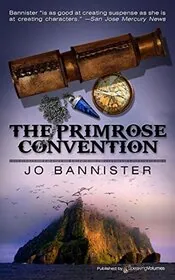
The Primrose Convention
by Jo Bannister
1998
Advice columnist Rosie Holland is drawn into the disappearance of a reader's brother in Scotland. With a motley group of helpers around her, she follows the trail into danger, secrets, and a case stranger than it first appears.

The Primrose Switchback
by Jo Bannister
1999
When Shad is found unconscious beside a murdered television researcher and later seems to confess under hypnosis, Rosie Holland smells trouble. Her search for the truth soon centers on a psychiatrist whose methods look anything but safe.
Rosie Holland books in chronological order
Series background & context
The Rosie Holland books are a smaller series, just two novels, but they are an especially good example of Jo Bannister's willingness to bend crime-fiction expectations. Rosie is not a police officer and not a private eye in the usual mold. She is an advice columnist, and a former pathologist, which tells you a lot before the plot even begins. She knows how to read people, she is not easily shocked, and she has very little patience for nonsense.
That makes her a strong center for mysteries that arrive from odd angles. Instead of waiting for the police to hand her a case, Rosie gets drawn in because people write to her, talk to her, trust her, or underestimate her. In The Primrose Convention, a reader's missing brother pulls her into a larger search that reaches well beyond a newspaper column. In The Primrose Switchback, a television researcher is found dead and a shaky confession points Rosie toward doubtful methods, media performance, and a story that clearly is not what it first appears to be.
Rosie is also the sort of character who invites an ensemble. Bannister surrounds her with friends, colleagues, and useful oddballs, people who can help, hinder, argue, or simply add texture. That gives the books a lighter, more conversational rhythm than some of Bannister's police series, though lighter does not mean shallow. The crimes are real, the danger is real, and Rosie is too smart to treat violence as a parlor game.
One of the pleasures here is the tone. These books mix cozy and hard-edged elements without becoming twee or grim. Rosie's work as an advice columnist means that emotion is always close to the surface, while her medical background keeps her from romanticizing what happens when things go wrong. Bannister can have fun with eccentric characters and still let the darker parts of the story land.
Because there are only two books, the Rosie Holland series feels compact and easy to dip into, but it still has a clear identity. If you like amateur sleuths with professional skills, a little wit, and a tendency to keep digging when everyone else says the matter is settled, Rosie is a very good companion. She is blunt, capable, and exactly nosy enough.
These books are for readers who enjoy crime fiction with personality. The mysteries matter, but so does Rosie's voice, the newsroom-adjacent atmosphere, and the sense that trouble can arrive through a letter, a television booking, or one question asked at exactly the wrong time.













Edited by
Software engineer whose passion for tracking book recommendations from podcasts inspired the creation of MRB.
Lead investor at 3one4 Capital whose startup expertise and love for books helped shape MRB and its growth.
Comments
Did we miss something? Have feedback?
Help us improve this page by sharing your thoughts