
Robert Penn Warren Books in Order
See Robert Penn Warren books in order, with short summaries, poetry and prose highlights, related letter volumes, reading order, and tips on where to start.
Last updated:
As an Amazon Associate, we earn from qualifying purchases (at no extra cost to you).
Robert Penn Warren books in publication order
66 books
The Essential Melville
by Robert Penn Warren
1857
Warren offers a reader's guide to Herman Melville, pairing selection with criticism. It is a compact way into Melville's imagination, themes, and power as both novelist and thinker.
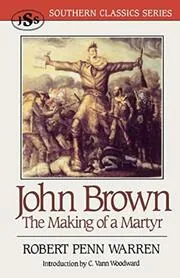
John Brown
by Robert Penn Warren
1929
Warren's early book studies the abolitionist as both historical actor and American symbol. It asks how fanaticism, martyrdom, and moral conviction shape the story of the nation.
Understanding Poetry
by Robert Penn Warren
1938
Written with Cleanth Brooks, this landmark textbook teaches readers to stay close to the poem on the page. Its examples and commentary helped reshape how poetry was taught in American classrooms.
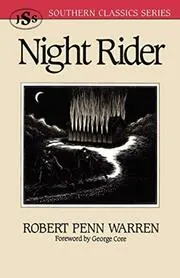
Night Rider
by Robert Penn Warren
1939
Percy Munn joins Kentucky tobacco growers fighting the trust and slides from idealism into terror. Warren turns the Black Patch wars into a dark novel about justice, violence, and self-deception.

Eleven Poems on the Same Theme
by Robert Penn Warren
1942
An early sequence, this book circles one emotional and philosophical problem from different angles. The repeated subject lets Warren test voice, form, and obsession.

Selected Poems 1923-1943
by Robert Penn Warren
1942
This selection gathers Warren's early poems, from tightly made lyrics to narrative pieces rooted in the South. It shows the formal discipline and pressure of thought that marked his beginnings.
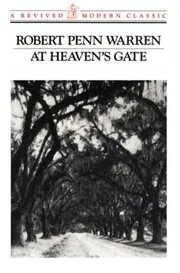
At Heaven's Gate
by Robert Penn Warren
1943
Set in Tennessee during hard times, this novel follows Sue Murdock through money, corruption, labor conflict, and broken loyalties. Private hunger and public scandal keep colliding until redemption looks hard to find.

Selected Poems of Robert Penn Warren
by Robert Penn Warren
1944
Edited after his death, this volume offers a strong one-book path through Warren's long poetic career. It balances early formal work with the freer, more searching later poems.

Blackberry Winter
by Robert Penn Warren
1946
Recounting one cold June day from boyhood, Seth watches storm damage, family strain, and a wandering tramp disturb the order of the farm. It is one of Warren's sharpest and most haunting coming-of-age stories.
Melville the poet
by Robert Penn Warren
1946
Warren turns from *Moby-Dick* to Melville's verse, reading the poems with sympathy and rigor. The book argues that Melville's poetry deserves serious attention on its own terms.

The Circus in the Attic
by Robert Penn Warren
1947
Warren's only major story collection moves through Southern towns, family strain, memory, and frustrated longing. Its title novella and *Blackberry Winter* are two of the main attractions.
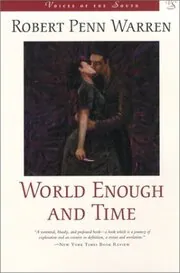
World Enough and Time
by Robert Penn Warren
1950
In early Kentucky, Jeremiah Beaumont marries a woman ruined by a powerful politician and binds himself to vengeance. Warren reshapes a real murder case into a tragic novel about idealism, pride, and betrayal.
William Faulkner And His South
by Robert Penn Warren
1951
Warren reads Faulkner through the history, speech, and moral pressures of the South. It is both a critical study and a vivid sketch of the world Faulkner kept returning to.

Brother to Dragons
by Robert Penn Warren
1953
Warren turns a brutal historical murder involving Thomas Jefferson's nephew into a book-length poem of voices. It is part drama, part meditation on evil, inheritance, and American innocence.
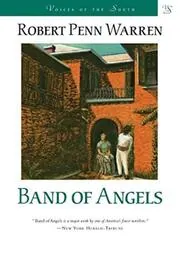
Band of Angels
by Robert Penn Warren
1955
Amantha Starr grows up as a planter's daughter, then learns she is legally enslaved because of her mixed ancestry. Her story carries the novel through the slave South and Civil War, where race and power never stay simple.
Segregation
by Robert Penn Warren
1956
Based on interviews and travel through the South after *Brown v. Board of Education*, this book studies the region's evasions, fears, and moral conflict. Warren makes reporting and self-scrutiny work together.

Promises: Poems 1954-1956
by Robert Penn Warren
1957
The collection that ended Warren's long poetic dry spell and won the Pulitzer Prize. These poems sound looser, bolder, and more conversational while keeping his moral seriousness.
Remember the Alamo!
by Robert Penn Warren
1958
Warren retells the battle with an eye to tactics, personalities, and the larger Texas struggle. It is brisk history for younger readers, with plenty of drama and consequence.
Selected Essays
by Robert Penn Warren
1958
A wide-ranging gathering of Warren's criticism and reflections on literature, history, and public life. It shows how naturally he moved between close reading and big questions.
Gods of Mount Olympus.
by Robert Penn Warren
1959
Warren retells Greek creation myths and the stories of the Olympian gods for younger readers. The book keeps the drama and strangeness of the old tales while making them clear and lively.
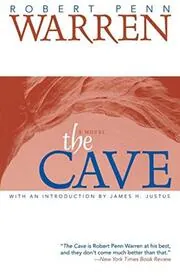
The Cave
by Robert Penn Warren
1959
When a young man is trapped in a Tennessee cave, rescue efforts turn into a national spectacle. Warren uses the crisis to expose ambition, grief, faith, and the strange hunger of a watching crowd.
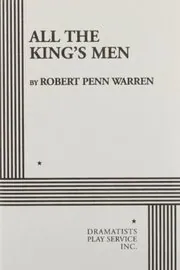
All the King's Men
by Robert Penn Warren
1960
Reporter Jack Burden watches the rise of Willie Stark, a gifted populist who becomes the center of a ruthless political machine. It is a political novel, but also a story about history, guilt, and the cost of power.
Recommended by
1 person Garry Kasparov recommended this book
Garry Kasparov
"One of my favorites." - Garry Kasparov
Garry Kasparov's recommendation of this book

You, Emperors, And Others
by Robert Penn Warren
1960
Warren keeps pushing the flexible line he found in *Promises*. The poems move easily between irony, memory, public history, and intimate feeling.
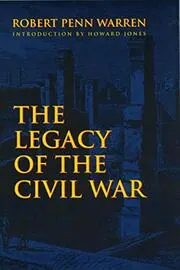
The Legacy of the Civil War
by Robert Penn Warren
1961
Warren uses the Civil War centennial to think about memory, myth, heroism, and division in American life. It is short, sharp, and still unsettling in the questions it asks.
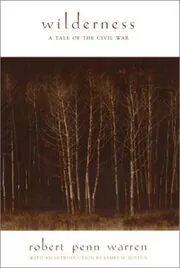
Wilderness
by Robert Penn Warren
1961
A young Bavarian immigrant comes to America during the Civil War looking for purpose and belonging. Warren makes the war less a battlefield panorama than a hard test of identity and conviction.
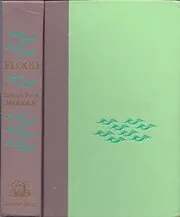
Flood
by Robert Penn Warren
1964
A Tennessee town faces obliteration as rising waters and a dam project force people to reckon with memory and loss. Warren turns disaster into a novel about place, change, and the stories people use to survive.
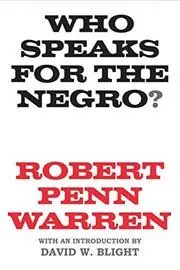
Who Speaks for the Negro?
by Robert Penn Warren
1965
Warren traveled in 1964 interviewing civil rights leaders, students, ministers, and organizers. The result is a searching oral history of the movement while it was still unfolding.

Selected Poems: New and Old, 1923-1966
by Robert Penn Warren
1966
This career-spanning selection lets readers see Warren's shift from tightly patterned early verse to the freer cadences of the later work. It is both survey and self-portrait.
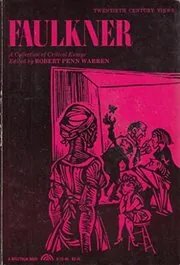
Faulkner
by Robert Penn Warren
1967
A compact critical study of Faulkner's fiction, themes, and methods. Warren keeps the focus on what makes the novels hard, rich, and worth wrestling with.

Incarnations
by Robert Penn Warren
1968
These poems are bodily, reflective, and alert to time passing. Warren writes about history, landscape, love, and mortality without losing his appetite for the physical world.

Audubon
by Robert Penn Warren
1969
A book-length poem built around the life and legend of John James Audubon. Wilderness, violence, beauty, and the making of America all enter the frame.
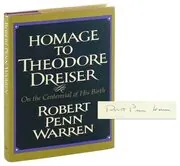
Homage to Theodore Dreiser
by Robert Penn Warren
1971
Warren returns to Dreiser as novelist, public figure, and American force. The book is tribute, criticism, and argument all at once.
Why do we read fiction?
by Robert Penn Warren
1971
In this essay, Warren asks what stories do that ordinary life cannot do for us so clearly. He treats fiction as a way to see conflict, motive, and consequence with sharpened attention.
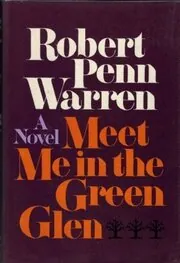
Meet Me In The Green Glen
by Robert Penn Warren
1974
A love story curdles into betrayal, suspicion, and murder in this late Warren novel. The book mixes rural setting, psychological tension, and a steady sense that the past is never finished.

Or Else
by Robert Penn Warren
1974
Warren's experimental late collection moves through history, memory, philosophical speculation, and sudden lyric clarity. It asks what remains when certainty does not.
Democracy and Poetry
by Robert Penn Warren
1975
Drawn from lectures, this book asks what poetry can mean in a democratic culture and why language still matters in public life. Warren keeps the argument philosophical but readable.
A conversation with Robert Penn Warren
by Robert Penn Warren
1976
This interview volume lets Warren speak directly about writing, teaching, politics, memory, and the South. It is a good place to hear the mind behind the books at work in plain talk.
A Time to Hear and Answer
by Robert Penn Warren
1976
A gathering of essays and talks in which Warren considers literature, culture, and public responsibility. The title fits the book's tone, attentive, questioning, and ready to argue.

New and Selected Poems, 1923-1985
by Robert Penn Warren
1976
A broad retrospective that gathers more than sixty years of Warren's poetry. It is one of the best single volumes for seeing the full sweep of his career.
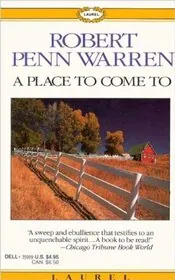
A Place to Come To
by Robert Penn Warren
1977
Jed Tewksbury, a scholar from rural Alabama, looks back on a life marked by ambition, loneliness, marriages, and restless travel. The novel becomes a long reckoning with memory, desire, and the search for home.

Old flame
by Robert Penn Warren
1978
A late poem of remembered desire, seen from the distance of age. Warren lets nostalgia, loss, and a dry, clear-eyed humor live together in the same brief space.
Katherine Anne Porter
by Robert Penn Warren
1979
Warren's study of Porter focuses on the precision, moral pressure, and depth of her fiction. It is brief, exact, and shaped by long admiration.
Modern Rhetoric
by Robert Penn Warren
1979
Cowritten with Cleanth Brooks, this textbook treats writing as an art of structure, clarity, and purpose. It blends practical instruction with a serious attention to style.

Ballad of a Sweet Dream of Peace
by Robert Penn Warren
1980
A late dramatic poem that turns Easter language toward history, suffering, and the wish for peace. It is meditative, restless, and alive to the gap between hope and the world as it is.

Being Here: Poetry 1977-1980
by Robert Penn Warren
1980
Late poems of presence, age, memory, and the natural world. Warren sounds reflective here, but never detached from the body's everyday fact.
Jefferson Davis Gets His Citizenship Back
by Robert Penn Warren
1980
Starting from the 1979 restoration of Davis's U.S. citizenship, Warren reflects on the Confederate president and the ironies of Southern memory. Biography, memoir, and history meet here.
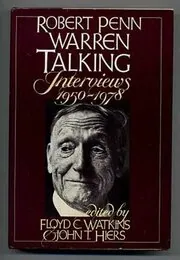
Robert Penn Warren Talking
by Robert Penn Warren
1980
These interviews from 1950 to 1978 show Warren on literature, politics, race, teaching, and his own books. The range is broad, but the pleasure is hearing him think aloud.

Have You Ever Eaten Stars? Poems 1979-1980
by Robert Penn Warren
1981
A late collection alive with wonder, appetite, and the strangeness of being old in a vivid world. Warren's titles and images keep the book playful even when the subject turns grave.

Love: Four Versions
by Robert Penn Warren
1981
Warren revisits love through four linked poetic approaches, changing angle, voice, and emotional pressure each time. The book is compact but formally inventive.
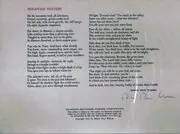
Mountain Mystery
by Robert Penn Warren
1981
A standalone poem that moves through mountain landscape toward uncertainty and revelation. Warren uses ascent, darkness, and physical danger to probe fear, memory, and the limits of knowing.

Rumor Verified
by Robert Penn Warren
1981
A short late collection that keeps testing memory against fact and rumor against lived experience. The tone is wry, elegiac, and still curious.
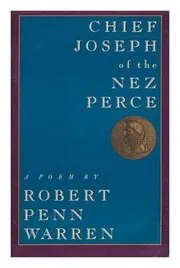
Chief Joseph of the Nez Perce
by Robert Penn Warren
1983
This book-length poem revisits Chief Joseph and the Nez Perce under the pressure of conquest and dispossession. Warren mixes historical narrative with reflection on land, defeat, and American memory.
I'll Take My Stand: The South and the Agrarian Tradition
by Robert Penn Warren
1983
Warren contributed to this famous Agrarian manifesto, a group defense of Southern tradition against industrial modernity. Read now, it also shows the tensions and limits of his early regional thinking.

New And Selected Poems 1960-1985
by Robert Penn Warren
1986
This volume emphasizes Warren's later poetry, when the line grew freer and the themes more openly autobiographical and philosophical. It is a good entry point for readers who prefer the late style.
Portrait of a Father
by Robert Penn Warren
1988
Part memoir and part elegy, this book circles Warren's father through memory, family history, and grief. It is intimate, searching, and quietly moving.
New and Selected Essays
by Robert Penn Warren
1989
A later gathering of Warren's essays on writers, politics, history, and art. It gives a strong sense of the breadth of his curiosity and the steadiness of his prose.
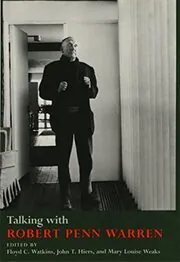
Talking with Robert Penn Warren
by Robert Penn Warren
1990
This larger interview collection brings together conversations across decades, including talks with writers and journalists. It is one of the best windows onto Warren's voice, habits of thought, and changing concerns.
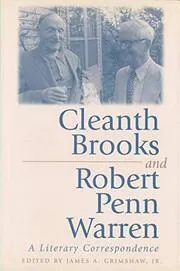
Cleanth Brooks and Robert Penn Warren: A Literary Correspondence
by Robert Penn Warren
1998
These letters track a long friendship and major collaboration between two central critics. They show textbooks, editing, criticism, and literary debate taking shape by mail.

The Collected Poems of Robert Penn Warren
by Robert Penn Warren
1998
The fullest gathering of Warren's poetry, bringing the long arc of his work into one place. It is the volume for readers who want the whole conversation.
Selected Letters of Robert Penn Warren
by Robert Penn Warren
2000
The first volume follows Warren from the 1920s into the early 1930s as he studies, teaches, and figures out what sort of writer he will be. It shows the young poet and novelist in the act of becoming himself.
Selected Letters of Robert Penn Warren, Volume 2
by Robert Penn Warren
2001
Covering the *Southern Review* years, this volume tracks Warren at LSU as editor, teacher, and rising writer. The letters show literature being made in real time, amid deadlines, friendships, and the Depression.
Selected Letters of Robert Penn Warren, Volume Three
by Robert Penn Warren
2005
This volume spans Warren's breakthrough 1940s and early 1950s, including *All the King's Men* and major personal changes. It catches him balancing fame, teaching, film work, and private life.
Selected Letters of Robert Penn Warren, Volume Four
by Robert Penn Warren
2008
These letters follow Warren through family life, Yale, his return to lyric poetry, and major books on race and American history. They show a writer widening his range while staying intensely curious.
Selected Letters of Robert Penn Warren, Volume Five
by Robert Penn Warren
2011
The last volume covers Warren's later 1960s and 1970s, from *Audubon* and *Or Else* to *Now and Then* and later novels. The letters are full of work talk, friendships, and reflections on a turbulent decade.
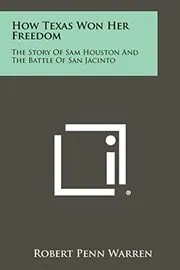
How Texas Won Her Freedom: The Story Of Sam Houston And The Battle Of San Jacinto
by Robert Penn Warren
2012
Warren recounts Sam Houston and the Battle of San Jacinto for younger readers. He keeps the campaign clear and fast-moving while placing it inside the larger struggle for Texas independence.

Now and Then: Poems, 1976-1978
by Robert Penn Warren
2012
This Pulitzer-winning book looks backward and forward at once, mixing childhood scenes, aging, memory, and philosophical pressure. The poems feel late, but never tired.
Where to start with Robert Penn Warren
If you want the big political novel: All the King's Men → Night Rider → At Heaven's Gate
If you want historical Southern epics: World Enough and Time → Band of Angels → Wilderness
If you want the poetry first: Selected Poems of Robert Penn Warren → Promises: Poems 1954-1956 → Audubon → Now and Then: Poems, 1976-1978
If you want Warren on race and American history: Segregation → Who Speaks for the Negro? → The Legacy of the Civil War
Robert Penn Warren sub-series and character series
Robert Penn Warren Letters books in order
Explore this series
Selected Letters of Robert Penn Warren, Volume 2
by Robert Penn Warren
2001Robert Penn Warren Letters, Book 2
Selected Letters of Robert Penn Warren, Volume Three
by Robert Penn Warren
2005Robert Penn Warren Letters, Book 3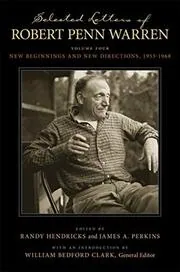
Selected Letters of Robert Penn Warren, Volume Four
by Robert Penn Warren
2008Robert Penn Warren Letters, Book 4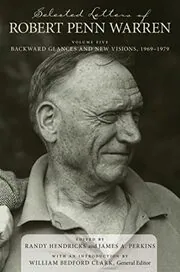
Selected Letters of Robert Penn Warren, Volume Five
by Robert Penn Warren
2011Robert Penn Warren Letters, Book 5
Robert Penn Warren Letters books in chronological order
Selected Letters of Robert Penn Warren, Volume 2
by Robert Penn Warren
2001Robert Penn Warren Letters, Book 2Selected Letters of Robert Penn Warren, Volume Three
by Robert Penn Warren
2005Robert Penn Warren Letters, Book 3Selected Letters of Robert Penn Warren, Volume Four
by Robert Penn Warren
2008Robert Penn Warren Letters, Book 4Selected Letters of Robert Penn Warren, Volume Five
by Robert Penn Warren
2011Robert Penn Warren Letters, Book 5
Robert Penn Warren collections, short stories, and related book types
Chapbooks
Collections
Non-Fiction






How Texas Won Her Freedom: The Story Of Sam Houston And The Battle Of San Jacinto
by Robert Penn Warren
2012
Standalone Robert Penn Warren books
Author bio
Robert Penn Warren was born in Guthrie, Kentucky, in 1905, and some of his deepest early impressions came from the border country of Kentucky and Tennessee. He went to school in Clarksville, Tennessee, spent time on family farms, and grew up around the kinds of stories, memories, and arguments that would later fill both his fiction and his poetry.
He did not set out to become a writer.
As a young man, Warren wanted a naval career, but an eye injury closed that path. He went to Vanderbilt instead, began in chemical engineering, and very quickly found himself pulled toward English, history, and the life of the mind.
That turn changed everything. At Vanderbilt he studied with John Crowe Ransom and joined the Fugitive circle, the group of poets and critics who read one another's work and argued seriously about literature. Warren later said that this was, in a very real way, his education.
Graduate study took him west and then overseas. He earned an MA at Berkeley, studied at Yale, and went on to Oxford as a Rhodes Scholar. While in England, tired of dissertation work and feeling far from home, he began writing fiction almost by accident. Out of that stretch came the start of a second life on the page.
He also spent much of his adult life teaching. Warren taught at Southwestern College in Memphis, Vanderbilt, Louisiana State University, the University of Minnesota, and Yale. At LSU he helped found The Southern Review with Cleanth Brooks, and the two men also wrote textbooks such as Understanding Poetry and Modern Rhetoric, books that changed how literature was taught in American classrooms for generations.
His fiction is full of people who want a clean moral story and then discover that life will not give them one. Night Rider turns the Kentucky tobacco wars into a study of idealism, violence, and self-deception. All the King's Men, the novel most readers know first, follows Willie Stark and Jack Burden through the machinery of power and compromise. World Enough and Time and Band of Angels go back into American history to ask what ambition, race, guilt, and desire do to a life.
Poetry, though, was always home base.
Books like Brother to Dragons, Promises, Audubon, and Now and Then show how much range Warren had. He could write about family memory, birds, politics, the body, old age, landscape, and the strange human need to make sense of suffering. The poems often feel as if they are thinking their way forward in real time, but they never lose their grip on image and sound.
He also wrote directly about public life. In Segregation and Who Speaks for the Negro? he confronted the crisis of race in America by traveling, listening, interviewing, and revisiting his own earlier assumptions. Those books matter because they are not only reports on a country in conflict. They are acts of self-examination too.
Recognition came steadily: a Pulitzer Prize for All the King's Men, two more for poetry, and in 1986 the role of first official U.S. Poet Laureate. By then he had also become one of the rare American writers equally at home in novels, poems, criticism, history, and public argument.
For much of his later life he lived with the writer Eleanor Clark in Connecticut and spent summers in Vermont. They had two children, Rosanna and Gabriel. Warren died in 1989, still writing late poems and essays. What he left behind is large, but the concerns stay remarkably steady: history, responsibility, memory, love, and the hard business of telling the truth about oneself.






Edited by
Software engineer whose passion for tracking book recommendations from podcasts inspired the creation of MRB.
Lead investor at 3one4 Capital whose startup expertise and love for books helped shape MRB and its growth.
Comments
Did we miss something? Have feedback?
Help us improve this page by sharing your thoughts