
Robert Hicks Books in Order
Explore Robert Hicks books in order, with short summaries, background on his Civil War novels, and a simple guide to where to start reading.
Last updated:
As an Amazon Associate, we earn from qualifying purchases (at no extra cost to you).
Robert Hicks books in publication order
3 books
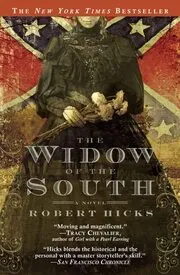
The Widow of the South
by Robert Hicks
2005
Set during the Battle of Franklin in 1864, this novel follows Carrie McGavock as her home becomes a Confederate field hospital. Faced with chaos and suffering, she finds the strength to care for the wounded and claim a purpose of her own.
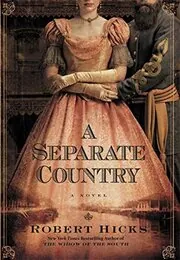
A Separate Country
by Robert Hicks
2009
In the shattered years after the Civil War, Confederate general John Bell Hood tries to build a life beyond the battlefield. Hicks uses Hood's wounds, marriage, and misfortunes to tell a story about regret, love, and the damage war leaves behind.
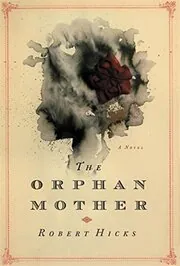
The Orphan Mother
by Robert Hicks
2016
After the Civil War, former slave and Franklin midwife Mariah Reddick searches for the truth behind her son's murder. Her hunt for justice pulls her through buried grief, local politics, and old secrets that refuse to stay buried.
Where to start with Robert Hicks
If you want the main entry point: The Widow of the South → A Separate Country → The Orphan Mother
If you want one powerful Civil War story first: The Widow of the South
If you want the books that dig into the war's aftermath: A Separate Country → The Orphan Mother
Standalone Robert Hicks books
Author bio
Robert Hicks was born in West Palm Beach, Florida, on January 30, 1951, but Tennessee became the place most closely tied to his work and public life. In 1974 he moved to Williamson County, south of Nashville, and settled near the Bingham community in an old log cabin called Labor in Vain. That landscape, its local history, and the people who cared about preserving it would shape much of what he wrote later.
Before novels, Hicks built a varied career in music and the arts. He worked in music publishing and artist management in both alternative rock and country music, and later became a partner in B. B. King's Blues Clubs in Orlando, Los Angeles, Nashville, and Memphis, where he jokingly carried the title Curator of Vibe. It fits him pretty well. He seemed happiest when history, storytelling, music, and place all overlapped.
He was also a serious collector, especially of outsider art, Southern material culture, and Tennesseana. That interest led him into curatorial work, including the long effort behind the exhibition Art of Tennessee, which took years to move from a kitchen-table idea to a public show in Nashville in 2003. He co-edited the catalog as well. Even before fiction took over, Hicks was already doing the kind of work he would later do in novels: gathering voices, textures, objects, and forgotten stories.
Then Carnton changed everything.
Hicks spent years working to preserve the remaining fragments of the Franklin battlefield and the history around Carnton, the house that became a field hospital after the Battle of Franklin in 1864. Out of that work came his first novel, The Widow of the South. He later said the book grew from preservation work, deep reading, and one accidental meeting with historian Shelby Foote, who encouraged him to finish it. The novel follows Carrie McGavock, a real woman whose home was overtaken by war, and it shows the battle not as an abstract military event but as a human emergency.
The Widow of the South was published in 2005 and reached the New York Times bestseller list within a week of release. That same year, The Tennessean named Hicks its Tennessean of the Year because of the book's effect on preservation and heritage tourism in the state. Readers responded to the scale of the history, but also to the way Hicks stayed close to grief, duty, and small acts of care. He wrote about war, but he kept his eye on the people left to carry the bodies, keep the house standing, and remember what happened.
He stayed with Civil War and Reconstruction-era subjects in his next books, though he approached them from different angles. A Separate Country turns to Confederate general John Bell Hood and the wreckage he carried after the war, mixing public history with private damage. The Orphan Mother follows Mariah Reddick, a Black midwife in Franklin searching for justice after her son's murder. Across these novels, Hicks returned again and again to memory, loss, race, loyalty, and the way communities live with violence long after the fighting stops.
He never wrote history as homework.
Alongside the novels, Hicks wrote essays about regional history, music, and Southern culture. He also published opinion pieces on contemporary politics in the South and contributed regularly to Garden & Gun. That mix makes sense when you look at his books. They are full of place, but never only about place. They ask what gets saved, who gets remembered, and what people owe the dead, while still leaving room for gardens, front porches, sharp talk, and the stubborn details of everyday life.
In later years he remained closely associated with Franklin and the surrounding Tennessee community. He liked gardening and, by his own account, knew he probably should have been out jogging instead. He died of cancer near Franklin, Tennessee, on February 25, 2022, at seventy-one. By then, his novels had done more than tell stories. They had helped many readers see one corner of Southern history as lived experience, not just dates in a book.




Edited by
Software engineer whose passion for tracking book recommendations from podcasts inspired the creation of MRB.
Lead investor at 3one4 Capital whose startup expertise and love for books helped shape MRB and its growth.
Comments
Did we miss something? Have feedback?
Help us improve this page by sharing your thoughts