
Robert Barron Books in Order
Explore Robert Barron books in order, with publication details and book summaries to help you choose where to start and plan your next read.
Last updated:
As an Amazon Associate, we earn from qualifying purchases (at no extra cost to you).
Robert Barron books in publication order
26 books
A Study of the de Potentia of Thomas Aquinas in Light of the Dogmatik of Paul Tillich
by Robert Barron
1993
Barron interprets Aquinas's account of creation in De Potentia through Paul Tillich's 1925 Dogmatik. He argues that its metaphysical language encourages a Christian posture of receptivity, connecting the doctrine of creation with discipleship.
Thomas Aquinas
by Robert Barron
1996
Barron approaches Aquinas through the spiritual life underlying his philosophical and theological work. Examining his understanding of Christ, creation, God, and human purpose, he presents a thinker whose intellectual achievements are inseparable from Christian devotion.
And Now I See
by Robert Barron
1998
Barron explores Christian conversion as a change in perception and a transformation of the whole person. Drawing on theology and literature, he considers how encountering Christ can move a life shaped by fear toward trust.
Heaven in Stone and Glass
by Robert Barron
2000
Gothic cathedrals become guides to Christian spirituality in Barron’s reflections on sacred architecture. Light, height, labyrinths, and carved creatures reveal how buildings communicate religious meaning and invite visitors to contemplate humanity’s longing for God.
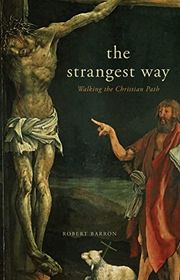
The Strangest Way
by Robert Barron
2002
Barron draws on mystics, saints, and literature to examine Christianity as a demanding spiritual path. Three approaches to holiness connect prayer, acknowledgment of sin, and self-giving with practical ways to seek a deeper relationship with God.
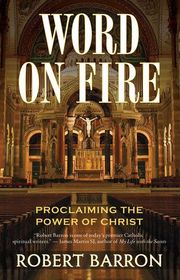
Word on Fire
by Robert Barron
2002
Reflections on biblical passages introduce Catholic belief through art, music, literature, philosophy, and saints’ lives. Barron connects themes of God, Christ, worship, and spiritual practice, inviting readers to relate Christian teaching to their own experience.
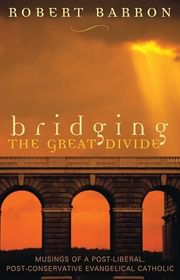
Bridging the Great Divide
by Robert Barron
2004
Barron’s essays seek a Catholic identity beyond familiar liberal and conservative divisions. Drawing on tradition while engaging contemporary concerns, he considers how the Church can renew its spiritual life and communicate its faith within American culture.
The Priority of Christ
by Robert Barron
2007
Barron argues for placing Christ at the center of Catholic theological reflection. His systematic approach reconsiders knowledge, God, ethics, and beauty, challenging liberal theological assumptions while exploring how a Christ-centered vision might reshape church life.
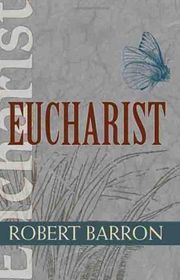
Eucharist
by Robert Barron
2008
Barron examines the Eucharist through the connected themes of sacred meal, sacrifice, and Christ’s presence. Biblical interpretation, theological reflection, and examples from culture explore what the sacrament means for Christian worship and everyday spiritual life.
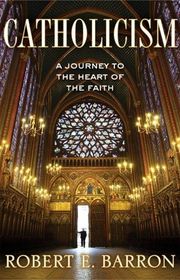
Catholicism
by Robert Barron
2011
Beginning with Jesus, Barron introduces Catholic beliefs through Scripture, history, art, and the lives of saints. The journey connects sacraments, prayer, Mary, and the Church with larger questions about grace, salvation, and humanity’s final destiny.
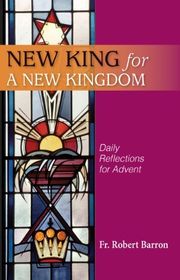
New King for a New Kingdom
by Robert Barron
2012
These brief daily Advent devotions draw on Barron’s Word on Fire homilies to explore Scripture and Christian preparation for Christmas. His reflections consider the need for salvation through Jesus within the traditions and expectations of the season.
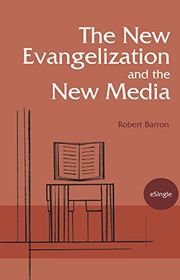
The New Evangelization and the New Media
by Robert Barron
2014
Drawing on his experience of digital ministry, Barron considers how Catholics can communicate their faith through electronic media. This short essay explains his understanding of the New Evangelization and the lessons learned from reaching audiences online.
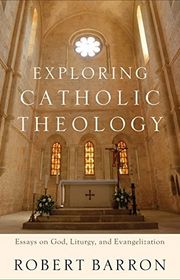
Exploring Catholic Theology
by Robert Barron
2015
These essays connect Catholic intellectual tradition with contemporary questions about God, worship, and culture. Barron considers philosophy, biblical interpretation, liturgy, and evangelization, seeking a theology that remains rooted in tradition while addressing modern skepticism.
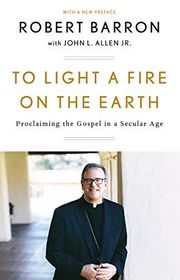
To Light a Fire on the Earth
by Robert Barron
2017
In conversation with journalist John Allen, Barron discusses his life, ministry, and approach to sharing Catholic faith. Questions about atheism, prayer, beauty, and social media frame his efforts to engage people within an increasingly secular culture.
Arguing Religion
by Robert Barron
2018
Based on talks at technology companies, Barron explores how believers and skeptics can discuss religion more productively. He argues for reasoned, respectful disagreement and examines the place of intellectual inquiry in conversations about God.
Letter to a Suffering Church
by Robert Barron
2019
Addressing Catholics shaken by clerical sexual abuse, Barron examines scandal through Scripture and Church history. He argues for remaining within the Church while confronting wrongdoing and pursuing reform, placing the crisis alongside the faith’s spiritual commitments.
Centered
by Robert Barron
2020
Organized around Word on Fire’s guiding principles, this selection of Barron’s writings connects spiritual formation with evangelization. Reflections on Catholic belief invite readers to consider how prayer, daily life, and communicating faith can support one another.
Renewing Our Hope
by Robert Barron
2020
Barron considers how the Church might renew its mission by drawing more deeply on Catholic intellectual tradition. Essays address religious disaffiliation, theology, family life, education, and contemporary culture, connecting those questions with the task of evangelization.
The Pivotal Players
by Robert Barron
2020
Barron introduces twelve figures whose lives influenced Catholicism and the wider world. Saints, thinkers, artists, and writers, including Augustine, Aquinas, Chesterton, and Flannery O’Connor, reveal different ways Christian belief has shaped action and creative work.
Light from Light
by Robert Barron
2021
Walking through the Nicene Creed, Barron explains central Christian teachings and their philosophical foundations. His reflections address God, Christ, the Spirit, the Church, and resurrection, inviting both questioning believers and skeptics to examine the faith’s claims.
The Rosary with Bishop Robert Barron
by Robert Barron
2021
Barron explains how to pray the Rosary and explores the Christian mysteries at its center. Practical guidance and spiritual reflection introduce the prayer’s meditative character, helping readers connect its repeated words with the life of Christ.
Redeeming the Time
by Robert Barron
2022
These essays examine recent social and ecclesial upheaval through Catholic teaching. Barron considers political division, the abuse crisis, religious disaffiliation, public debate, and the pandemic, asking how Christian faith can guide responses to conflict and uncertainty.
The Great Story of Israel
by Robert Barron
2022
Barron reads the Old Testament through the theological approach of the Church Fathers. Moving through the Pentateuch, historical books, and biblical novellas, he connects Israel’s story of calling and liberation with Christian understanding of Scripture.
Come, Lord Jesus
by Robert Barron
2023
Sermons on Advent and Christmas readings guide reflection on expectation, repentance, and Christ’s birth. Drawn from Barron’s preaching, the collection revisits familiar biblical stories and considers how these seasons shape Christian prayer and spiritual preparation.
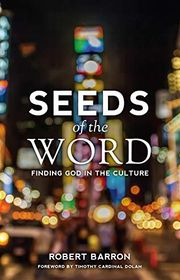
Seeds of the Word
by Robert Barron
Barron searches for traces of Christian meaning in popular films, books, politics, and everyday culture. These essays connect stories and public debates with theological ideas, considering how unexpected cultural encounters can become openings for religious reflection.
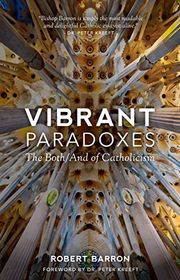
Vibrant Paradoxes
by Robert Barron
Barron explores apparently opposing ideas within Catholic thought, including faith and reason, body and soul, and grace and nature. These essays consider how the Incarnation holds such tensions together without dissolving the distinctive claims of either side.
Where to start with Robert Barron
For a broad introduction to the faith: Catholicism
For belief explained through the Nicene Creed: Light from Light
For essays on faith and culture: Seeds of the Word → Vibrant Paradoxes
For a more academic theological argument: The Priority of Christ
Standalone Robert Barron books
A Study of the de Potentia of Thomas Aquinas in Light of the Dogmatik of Paul Tillich
by Robert Barron
1993Creation as Discipleship
by Robert Barron
2004Musings of a Post-Liberal, Post-Conservative Evangelical Catholic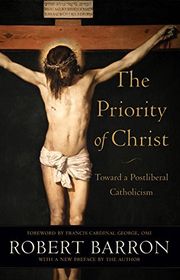
Author bio
Robert Barron is a Catholic bishop, theologian and the founder of Word on Fire, a ministry that brings religious teaching into books, films, podcasts and commentary on contemporary culture. His writing ranges from academic theology to introductions for readers beginning to investigate Catholic belief. He serves as bishop of Winona-Rochester in Minnesota.
His training connects philosophy with theology. He earned a master’s degree in philosophy from the Catholic University of America in 1982 and a doctorate in sacred theology from the Institut Catholique de Paris in 1992. Ordained a priest for Chicago in 1986, he joined the theological faculty at Mundelein Seminary in 1992, developing a career that combined teaching with ministry.
Books are one part of his wider effort to explain Catholicism to a public audience.
Catholicism provides a broad entrance to that work. Beginning with Jesus Christ, it moves through subjects including sacraments, worship, prayer, saints and salvation. Art, architecture, literature and history become ways of approaching the beliefs, rather than decorative material added to an abstract argument. The book accompanies the documentary series of the same name, which Barron created and hosted and which aired on PBS. Readers who know his filmed presentations can therefore find a related approach on the page.
The Priority of Christ asks a more specialized question: where should Christian theology begin? Barron organizes his account around Jesus rather than treating Christ as an addition to a framework established elsewhere. The argument reaches into knowledge, the nature of God and ethics, with biblical narratives and reflections on saints helping develop the case. It is a more demanding entry than the general survey, suited to readers interested in the intellectual structure behind his public teaching.
The essay collections offer a shorter form of encounter. Seeds of the Word looks for Christian meaning in films, books, politics and everyday culture. Vibrant Paradoxes considers relationships such as faith and reason, body and soul, and grace and nature. In both, Barron brings theological ideas to things readers may already recognize, while maintaining the particular claims of Catholic thought.
Light from Light uses the Nicene Creed as its organizing guide.
Its explanations address the basics of Christian belief, including readers who are skeptical, curious or returning after time away. This gives the book a different shape from a collection of topical essays: the creed supplies a continuous path through the questions. Together, these books show how Barron changes the form of his presentation for different levels of familiarity with the subject.
Barron’s institutional responsibilities have continued alongside his writing. He led Mundelein Seminary from 2012 to 2015, became an auxiliary bishop of Los Angeles in 2015 and was appointed to Winona-Rochester in 2022. The move to Minnesota followed years of work in seminary education, broadcasting and public religious discussion.



Edited by
Software engineer whose passion for tracking book recommendations from podcasts inspired the creation of MRB.
Lead investor at 3one4 Capital whose startup expertise and love for books helped shape MRB and its growth.
Comments
Spotted a missing book, a wrong order or a mistake? Tell us and we'll fix this page.
We're a reading guide, not the author or publisher, so we can't send books or pass on messages.