
Richard Powers Books in Order
Explore Richard Powers books in order, with concise summaries, publication notes, reading paths, and friendly advice on where to start with his novels.
Last updated:
As an Amazon Associate, we earn from qualifying purchases (at no extra cost to you).
Richard Powers books in publication order
14 books
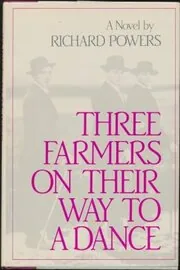
Three Farmers on Their Way to a Dance
by Richard Powers
1985
August Sander's photograph of three young men in 1914 becomes the center of three linked stories. Powers follows the farmers, a modern narrator, and a computer writer into a mystery shaped by art and war.

Prisoner's Dilemma
by Richard Powers
1988
Eddie Hobson Sr., a sick and stubborn family man, hides the truth about his failing body while building a private project called Hobbstown. His children try to understand the illness, the history, and the secrets.
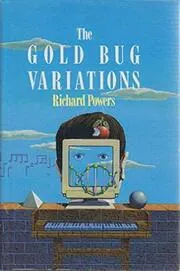
The Gold Bug Variations
by Richard Powers
1991
Stuart Ressler enters 1950s molecular biology hoping to crack the genetic code, then vanishes from science. Twenty-five years later, another pair follows his trail through love, Bach, computers, and the puzzle of meaning.
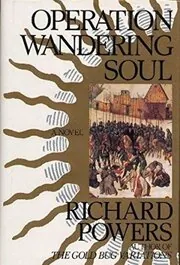
Operation Wandering Soul
by Richard Powers
1993
In a Los Angeles children's ward, surgical resident Richard Kraft and therapist Linda Espera care for children pushed to the edge. Their work becomes a grim, tender look at illness, imagination, and the stories children need.
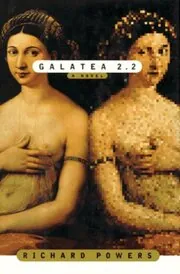
Galatea 2.2
by Richard Powers
1995
A fictional Richard Powers returns to a research campus and joins neurologist Philip Lentz in training a neural network on literature. As the machine learns, the experiment unsettles ideas about reading, consciousness, and love.
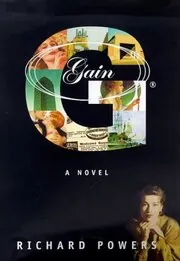
Gain
by Richard Powers
1998
Laura Body, a divorced real-estate agent in Lacewood, Illinois, receives a cancer diagnosis just as a nearby consumer-products giant reveals its long history. The novel links one body to the hidden costs of business.
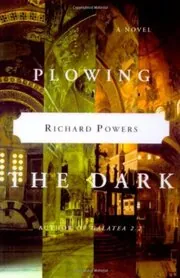
Plowing the Dark
by Richard Powers
2000
At a Puget Sound lab, artists and programmers build an immersive virtual world. In Beirut, an American hostage survives an empty room with memory alone, and the two stories test imagination as refuge and trap.
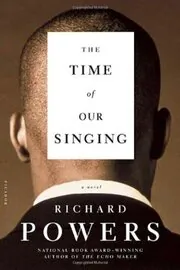
The Time of Our Singing
by Richard Powers
2002
After meeting at Marian Anderson's 1939 concert, scientist David Strom and singer Delia Daley build a family around music. Their children come of age in a divided America, caught between art, race, loyalty, and history.
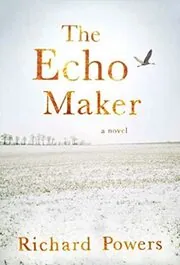
The Echo Maker
by Richard Powers
2006
A truck crash leaves Mark Schluter with a brain injury and the conviction that his sister Karin is an impostor. As a neurologist investigates, family history, memory, and the Nebraska landscape turn strange and unstable.
Recommended by
1 person Ev Williams recommended this book
Ev Williams
On the "books read" section of Ev Williams' GoodReads profile.
Ev Williams's recommendation of this book
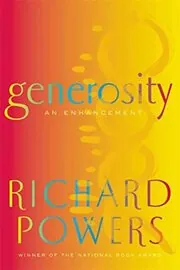
Generosity
by Richard Powers
2009
Creative writing teacher Russell Stone meets Thassa Amzwar, an Algerian refugee with an uncanny gift for happiness. As scientists and media close in, her joy becomes a question of genetics, ownership, and exploitation.
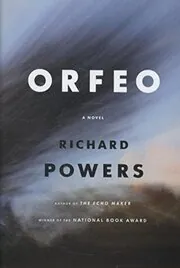
Orfeo
by Richard Powers
2014
Composer Peter Els keeps a home microbiology lab in his search for hidden patterns in music. When Homeland Security mistakes the experiment for a threat, he goes on the run through the people and sounds that shaped him.
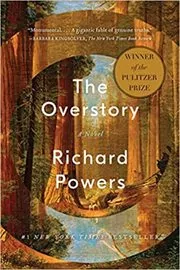
The Overstory
by Richard Powers
2018
Nine people are drawn by their encounters with trees into a larger story of forests, activism, and loss. As their lives branch together, the novel asks what humans owe the living world around them.
Recommended by
4 people Hugh Jackman recommended this book
Hugh Jackman
"Completely reverses the way you look at the world when you walk outside." - Hugh Jackman
Hugh Jackman's recommendation of this book  Emilia Clarke recommended this book
Emilia Clarke
"Should be mandatory reading the world over." - Emilia Clarke
Emilia Clarke's recommendation of this book  Bill Gates recommended this book
Bill Gates
"One of the most unusual novels I’ve read in years." - Bill Gates
Bill Gates's recommendation of this book  Mark Manson recommended this book
Mark Manson
"I loved this book." - Mark Manson
Mark Manson's recommendation of this book
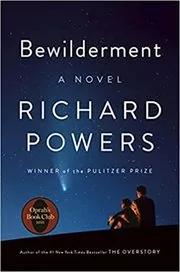
Bewilderment
by Richard Powers
2021
Astrobiologist Theo Byrne studies distant worlds while raising his troubled nine-year-old son, Robin, after his wife's death. A new neurofeedback treatment offers hope, but their bond is tested by grief and a damaged planet.
Recommended by
1 person Ezra Klein recommended this book
Ezra Klein
Ezra Klein recommended this book on Twitter.
Ezra Klein's recommendation of this book

Playground
by Richard Powers
2024
On the Pacific island of Makatea, old friends, artists, divers, and an AI pioneer converge as residents weigh a plan for floating cities. The novel links ocean wonder to memory, technology, and the future of home.
Where to start with Richard Powers
If you want the best-known nature novels: The Overstory → Bewilderment → Playground.
If you like science, tech, and AI: Galatea 2.2 → Generosity → Playground.
If music and history pull you in: The Gold Bug Variations → The Time of Our Singing → Orfeo.
If you want the publication-order route: Three Farmers on Their Way to a Dance → Prisoner's Dilemma → The Gold Bug Variations.
Standalone Richard Powers books
Author bio
Richard Powers was born on June 18, 1957, in Evanston, Illinois, the fourth of five children. He grew up first in the Chicago suburbs, including Lincolnwood, then spent five years in Bangkok after his father took a post at the International School Bangkok. That move seems to have stayed with him: many of his novels circle people trying to make sense of systems larger than any one life.
As a kid, Powers was drawn to music and science before fiction. He trained in cello and voice, played guitar, clarinet, and saxophone, and read widely in science and biography. Darwin, Homer, and the old dream of being a scientist all arrived early.
For a while, science looked like the plan.
He entered the University of Illinois in 1975 as a physics major, but an honors literature course helped turn him toward English. He has said he wanted the broad view, not the ever-narrower path of specialization. He earned bachelor's and master's degrees in English, then chose not to continue into a Ph.D. for much the same reason.
After college, he moved to Boston and worked with computers. On a visit to the Museum of Fine Arts, he saw August Sander's 1914 photograph of three young men on their way to a dance. Within days, he left his job and began the novel that became Three Farmers on Their Way to a Dance.
That is a pretty good origin story.
Powers kept building novels that connect private lives to science, technology, music, business, and the natural world. The Gold Bug Variations braids genetics, Bach, love, and the search for patterns. Galatea 2.2 turns artificial intelligence into a campus story about reading, memory, and loneliness. The Echo Maker, which won the National Book Award for Fiction, follows a brain-injured man who believes his sister is an impostor.
The scale can be big, but the stories usually start with a person under pressure: a grieving parent, a sick body, a damaged ecosystem, a family pulled apart by history, a mind trying to know itself. In The Time of Our Singing, music and race shape one family across the twentieth century. In Orfeo, a composer's experiment makes him look dangerous to the security state.
Many readers first meet Powers through The Overstory, winner of the Pulitzer Prize for Fiction. The novel follows people whose lives are changed by trees, forests, and the slow intelligence of the living world. Its success brought a wider audience to the questions that had been running through his work for decades: how humans use knowledge, what progress costs, and what we fail to notice until it is almost gone.
His later books keep that conversation going. Bewilderment narrows the lens to a widowed astrobiologist and his son, while Playground opens out across ocean life, friendship, artificial intelligence, and a Pacific island asked to vote on a risky future. Powers now lives near the Great Smoky Mountains in eastern Tennessee, a landscape that helped shape his turn toward trees, waters, and the more-than-human world.




Edited by
Software engineer whose passion for tracking book recommendations from podcasts inspired the creation of MRB.
Lead investor at 3one4 Capital whose startup expertise and love for books helped shape MRB and its growth.
Comments
Did we miss something? Have feedback?
Help us improve this page by sharing your thoughts