
Raymond Chandler Books in Order
Browse Raymond Chandler books in order, with Philip Marlowe reading order, summaries, series background, and guidance on where to start his noir fiction.
Last updated:
As an Amazon Associate, we earn from qualifying purchases (at no extra cost to you).
Raymond Chandler books in publication order
33 books

Stories and Early Novels
by Raymond Chandler
1933
This Library of America volume gathers Chandler’s key 1930s pulp stories alongside his first three Philip Marlowe novels—The Big Sleep, Farewell, My Lovely, and The High Window. It traces his evolution from magazine writer to creator of the modern Los Angeles private eye.

Bay City Blues
by Raymond Chandler
1938
Detective John Dalmas is hired to look into the supposed suicide of a doctor’s wife in the corrupt coastal community Chandler calls Bay City. What seems like a closed case opens up into police brutality, blackmail, and the grim politics of a seaside boomtown.
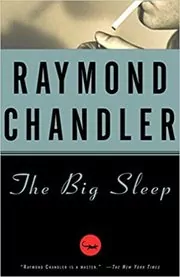
The Big Sleep
by Raymond Chandler
1939
Private detective Philip Marlowe is hired by aging General Sternwood to stop a shady bookseller from blackmailing the general’s reckless daughter. What begins as a simple shakedown spirals into murder, pornography, and a tangle of secrets in seedy 1930s Los Angeles.
Recommended by
1 person Jordan Peterson recommended this book
Jordan Peterson
Recommended on Jordan Peterson's website.
Jordan Peterson's recommendation of this book
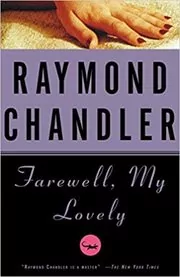
Farewell, My Lovely
by Raymond Chandler
1940
While chasing a routine missing-persons case, Philip Marlowe watches hulking ex-con Moose Malloy storm into a nightclub looking for his vanished sweetheart. The search for Velma pulls Marlowe through gambling dens, crooked cops, and spiritualist rackets in a violent Los Angeles.
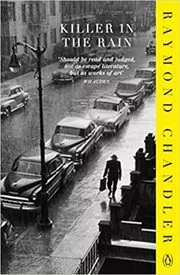
No Crimes In The Mountains
by Raymond Chandler
1941
In this long short story, detective John Evans travels to a remote mountain resort after receiving a cryptic letter from a new client. A dead man, missing money, and rumors of foreign agents turn a quiet vacation town into a tight, fast-moving manhunt.
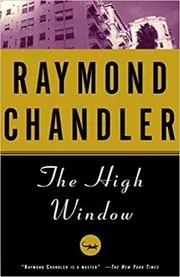
The High Window
by Raymond Chandler
1942
Called in by tyrannical widow Elizabeth Murdock, Philip Marlowe is asked to recover a priceless Brasher Doubloon supposedly stolen by her flighty daughter‑in‑law. The hunt for the missing coin uncovers murder, blackmail, and rot at the heart of a wealthy Pasadena family.
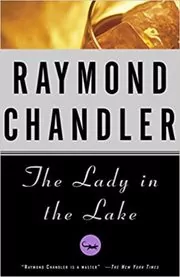
The Lady in the Lake
by Raymond Chandler
1943
Businessman Derace Kingsley hires Philip Marlowe to track down his missing wife, who may have run off with a lover. Marlowe’s search leads from a quiet mountain resort back to Los Angeles, where multiple bodies and police corruption surface beneath the placid lake water.
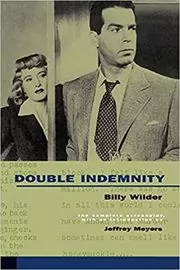
Double Indemnity
by Raymond Chandler
1944
This volume presents Raymond Chandler’s screenplay for the classic film noir about an insurance agent drawn into murdering a client for the double‑payout on a policy. His cool plot with a calculating femme fatale helped set the template for postwar crime movies.
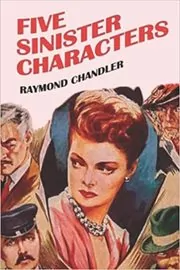
Five Sinister Characters
by Raymond Chandler
1945
Five classic stories—featuring characters from hotel detectives to small‑time grifters—make up this collection. Pieces like Pearls Are a Nuisance, I’ll Be Waiting, Red Wind, and Trouble is My Business showcase Chandler’s mix of sardonic humor, romantic disappointment, and sudden violence.
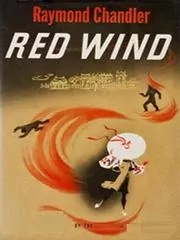
Red Wind
by Raymond Chandler
1946
On a night when the hot Santa Ana wind has Los Angeles on edge, Philip Marlowe stops for a drink in a small bar and witnesses a sudden killing. The shooting drags him into a case of jealousy, blackmail, and a woman who can’t quite let go.

Spanish Blood
by Raymond Chandler
1946
Lieutenant Sam Delaguerra, an honest Los Angeles cop with deep Californio roots, investigates the murder of his politician friend Donegan Marr. As he uncovers a web of bosses, fixers, and betrayals, Sam must choose between exposing the truth and letting an official lie stand.

The Finger Man
by Raymond Chandler
1947
After witnessing a mob killing, Philip Marlowe agrees to testify against racketeer Manny Tinnen and then go undercover to bring down Tinnen’s boss. The job drags him through nightclubs, boxing gyms, and crooked politics where every ally may be another paid informer.
The Little Sister
by Raymond Chandler
1949
A prim young woman from Kansas hires Philip Marlowe to find her missing brother in Los Angeles. The job plunges him into Hollywood’s low-end studios, ruthless fixer types, and a tangle of blackmail and sibling betrayal that strips away any glamour the movies promise.
The Simple Art of Murder
by Raymond Chandler
1950
This collection combines Chandler’s influential essay on what crime fiction should be with a group of early hardboiled stories. It’s a sharp introduction to his ideas about realism, style, and why detectives like Philip Marlowe belong on the mean streets.

Trouble is My Business
by Raymond Chandler
1950
Four hard-edged stories—including the title tale of a spoiled rich boy and the woman out to ruin him—show Philip Marlowe working cases that start as simple protection jobs and end in murder. It’s a compact tour of his meaner, messier short-form adventures.

Professor Bingo's Snuff
by Raymond Chandler
1951
Joe Pettigrew is a drab husband humiliated by his cheating wife and their smug lodger—until a peculiar Professor Bingo sells him snuff that makes him invisible. Joe’s “perfect” locked-room murder quickly spins out of control in one of Chandler’s few macabre fantasies.
Pickup on Noon Street
by Raymond Chandler
1952
Collecting four vintage stories, this book drops various Chandler detectives into fixed-up cars, crooked city halls, and backroom gun deals. The title piece starts with a seemingly simple encounter on a tough downtown block and explodes into murder and political cover‑ups.
Smart-Aleck Kill
by Raymond Chandler
1953
Hollywood studio detective Mallory is hired to stop a blackmail scheme aimed at temperamental director Derek Walden. When Walden turns up dead, Mallory’s hunt for the truth runs through crooked city officials, mob enforcers, and the dirty money behind the movie business.
The Long Goodbye
by Raymond Chandler
1953
Philip Marlowe befriends damaged war veteran Terry Lennox, then drives him to Mexico on the night Lennox’s wife is found brutally murdered. Refusing to accept the easy answers, Marlowe digs into Hollywood wealth, publishing scandals, and the price of loyalty and self-respect.
Recommended by
2 people- Jordan Peterson recommended this book
Jordan Peterson
Recommended on Jordan Peterson's website.
Jordan Peterson's recommendation of this book  Andy Greenwald recommended this book
Andy Greenwald
Andy Greenwald recommended this book on Twitter.
Andy Greenwald's recommendation of this book
Pearls are a Nuisance
by Raymond Chandler
1958
A rare comic turn for Chandler, this story follows gentleman Walter Gage and roughneck Henry Eichelberger as they hunt for Mrs. Penruddock’s stolen pearls. High-flown speech, dive bars, and bruising brawls turn the search into a boozy, oddly warmhearted caper.
Playback
by Raymond Chandler
1958
An anonymous client hires Philip Marlowe to shadow an attractive woman traveling under an alias to a seaside town called Esmeralda. As he learns why she’s being hunted, Marlowe must decide whether to betray his employer or help her outrun a dangerous past.
The Smell of Fear
by Raymond Chandler
1965
This hefty collection gathers many of Chandler’s strongest short stories, from early pulp pieces to late work. Across crooked cops, desperate drifters, and Marlowe himself, the tales share a tense, unsettled atmosphere—the “smell of fear” that hangs over everyday places.
The Midnight Raymond Chandler
by Raymond Chandler
1971
An omnibus volume, The Midnight Raymond Chandler pairs the novels The Little Sister and The Long Goodbye with key stories such as Red Wind and Trouble is My Business. It’s an efficient way to sample both Marlowe’s long cases and Chandler’s shorter, sharper work.
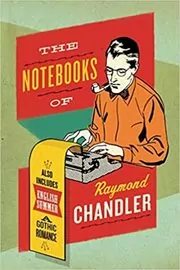
English Summer
by Raymond Chandler
1976
This unfinished gothic romance shifts Chandler’s eye from Los Angeles to an English country house full of secrets. An American narrator falls for a seemingly innocent young woman, only to find that class, desire, and buried cruelty make the summer anything but idyllic.
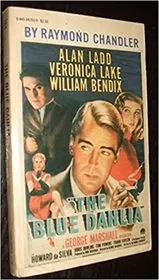
The Blue Dahlia
by Raymond Chandler
1976
Chandler’s only wholly original screenplay follows war veteran Johnny Morrison, who returns to Los Angeles to find his wife unfaithful and later murdered. Framed as the prime suspect, he must untangle nightclub intrigue, shell‑shocked comrades, and a ruthless killer on the Sunset Strip.
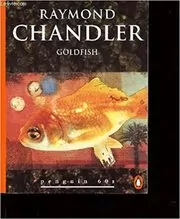
Goldfish
by Raymond Chandler
1981
Private eye Philip Marlowe is hired to track down the long‑missing Leander pearls, stolen years earlier and never recovered. His search through cheap rooming houses, grifters, and double‑crosses turns into a tight, twisty case about greed, courage, and who will take the fall.
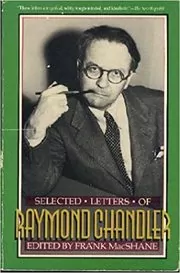
Selected Letters
by Raymond Chandler
1981
Drawn from decades of correspondence, Selected Letters lets Chandler speak in his own sardonic, thoughtful voice. He writes about the grind of pulp work, Hollywood battles, his marriage to Cissy, and the doubts and stubborn pride behind Philip Marlowe’s creation.

Later Novels and Other Writings
by Raymond Chandler
1995
Companion to Stories and Early Novels, this volume collects The Lady in the Lake, The Little Sister, The Long Goodbye, and Playback, plus the Double Indemnity script, essays, and letters. It showcases Chandler’s darker late style and his reflections on writing and Hollywood.
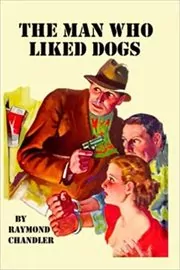
The Man Who Liked Dogs
by Raymond Chandler
1996
Detective Sam Delaguerra is sent to a seaside California town to look for a missing girl whose worried mother fears the worst. The trail leads through political bosses, an offshore gambling ship, and a suave killer whose love of dogs masks far darker loyalties.
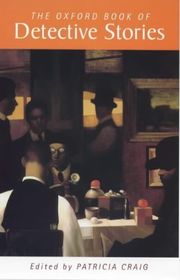
The Oxford Book of Detective Stories
by Patricia Craig, Émile Gaboriau, John Charles Dent, Arthur Conan Doyle, R Austin Freeman, Maurice Leblanc, Palle Rosenkrantz, William Briggs MacHarg, Jacques Futrelle, Harvey J. O'Higgins, Raymond Chandler, Erle Stanley Gardner, Agatha Christie, Dashiell Hammett, James Thurber, Jorge Luis Borges, Georges Simenon, Ellery Queen, 松本清張, Robert Van Gulik, Paolo Levi, Gwendoline Butler, Josef Škvorecký, Amanda Cross, Janwillem van de Wetering, Ted Wood, James Melville, Stuart M Kaminsky, Shizuko Natsuki, Sarah L. Caudwell, Sue Grafton, Vincent Banville, Ruth Dudley Edwards, Sara Paretsky, Pentti Kirstilä, Garry Disher, Peter Robinson & Ian Rankin
2000
Patricia Craig’s international detective-story anthology spans classic and modern crime fiction from Britain, the United States, Europe, Japan, and beyond. The selection includes police procedurals, amateur sleuths, women detectives, and locked-room puzzles, with a story by Garry Disher.
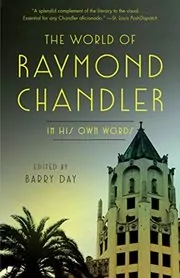
The World of Raymond Chandler
by Raymond Chandler
2014
Part biography, part scrapbook, this book weaves together Chandler’s own words—taken from his fiction, letters, and interviews—with commentary and photos. It sketches his restless life, his love‑hate relationship with Los Angeles and Hollywood, and how Philip Marlowe slowly took shape.

I’ll Be Waiting
by Raymond Chandler
2020
Tony Reseck, a weary hotel house detective, notices a red‑haired woman sitting alone night after night, waiting for a dangerous man from her past. When gangsters arrive to collect old debts, Tony has to decide how much he’ll risk for a stranger he barely knows.
Collected Stories
by Raymond Chandler
This volume gathers Raymond Chandler's complete short stories, including pieces unavailable for many years, with an introduction by John Bayley. The collection brings his crime fiction together in one place, alongside work beyond his familiar detective novels.
Where to start with Raymond Chandler
If you're new to Philip Marlowe: The Big Sleep → Farewell, My Lovely → The High Window → The Lady in the Lake
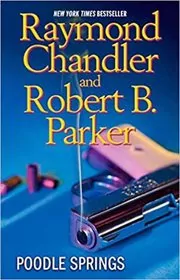
If you want the later, moodier Marlowe: The Little Sister → The Long Goodbye → Playback → Poodle Springs
If you prefer short fiction and standalones: Trouble is My Business → The Simple Art of Murder → No Crimes In The Mountains
If you're curious about his life and letters: Selected Letters → The World of Raymond Chandler → Stories and Early Novels → Later Novels and Other Writings
Raymond Chandler sub-series and character series
Raymond Chandler collections, short stories, and related book types
Short Stories/Novellas
Short Story Collections
Screenplays
Non-Fiction
Standalone Raymond Chandler books
The Oxford Book of Detective Stories
by Patricia Craig, Émile Gaboriau, John Charles Dent, Arthur Conan Doyle, R Austin Freeman, Maurice Leblanc, Palle Rosenkrantz, William Briggs MacHarg, Jacques Futrelle, Harvey J. O'Higgins, Raymond Chandler, Erle Stanley Gardner, Agatha Christie, Dashiell Hammett, James Thurber, Jorge Luis Borges, Georges Simenon, Ellery Queen, 松本清張, Robert Van Gulik, Paolo Levi, Gwendoline Butler, Josef Škvorecký, Amanda Cross, Janwillem van de Wetering, Ted Wood, James Melville, Stuart M Kaminsky, Shizuko Natsuki, Sarah L. Caudwell, Sue Grafton, Vincent Banville, Ruth Dudley Edwards, Sara Paretsky, Pentti Kirstilä, Garry Disher, Peter Robinson & Ian Rankin
2000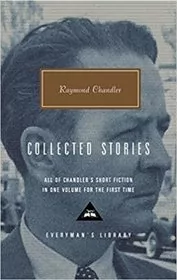
Author bio
Raymond Chandler wrote some of the most familiar sentences in crime fiction, but his own path to writing was long, messy, and often lonely. He moved between countries, jobs, and rented rooms before he ever met Philip Marlowe on the page. What he built from that restlessness was a voice that sounded both streetwise and oddly formal, like someone translating poetry into slang.
He was born Raymond Thornton Chandler on July 23, 1888, in Chicago, but his childhood split between the American Midwest and England after his father left the family. His mother took him to London, where he studied at Dulwich College and soaked up a very traditional, very British education.
Instead of university he tried on adult life in pieces: a civil service job at the Admiralty he quickly came to hate, a short, unsuccessful stint as a journalist, and years of writing poems and reviews that paid little. Before the First World War he spent time in France and Germany, polishing languages he would later turn into sharp, ironic prose.
In 1917 he enlisted with the Canadian Expeditionary Force, served in France, and later trained with the Royal Flying Corps. After the war he followed his mother back to the United States and settled in Southern California, just as Los Angeles was turning from dusty boomtown into sprawling metropolis.
By day he worked his way up through the local oil business, eventually becoming a company executive; by night he drank too much and went home to Cissy Pascal, the older woman he fell for and finally married in 1924. Their marriage—odd to outsiders, steady and intense to them—anchored a life that shifted from one rented house or apartment to another all over greater Los Angeles.
In 1932, at forty‑four, Chandler was fired for drinking, womanizing, and not showing up to work. With no real prospects in the middle of the Depression, he made a decision that sounds simple only in hindsight: he would learn to write for the pulp magazines he’d been reading in his car. He dissected stories by other crime writers, especially Erle Stanley Gardner, then spent months drafting his own. His first crime story, 'Blackmailers Don’t Shoot', appeared in Black Mask in 1933, and more followed.
The novels came later and changed everything. Starting with The Big Sleep in 1939, then Farewell, My Lovely, The High Window, The Lady in the Lake, The Little Sister, The Long Goodbye, and finally Playback, he turned Philip Marlowe into the prototype of the modern private eye—tough, disillusioned, and yet stubbornly honorable. The books recycled and expanded his early stories but added a new depth about aging, corruption, and the ache of trying to live decently in a crooked town.
His Los Angeles is all bright sun and long shadows, where every neighborhood—from oil fields to Hollywood hills—feels like another stage set for broken deals.
Hollywood came calling, and Chandler answered, uneasily. In the 1940s he co‑wrote the screenplay for Double Indemnity and wrote the original script for The Blue Dahlia, earning Academy Award nominations and a front‑row seat to studio politics. The work paid well and sharpened his dialogue, but it also deepened his cynicism about the movie business.
His private life never really recovered after Cissy’s long illness and death in 1954. Chandler slid in and out of depression and alcohol, attempted suicide, and wrote less, but he was still recognized by peers, serving as president of the Mystery Writers of America shortly before his death. He died in La Jolla, California, on March 26, 1959, leaving behind seven completed novels, a handful of screenplays, and short stories that would influence crime writers for generations.






Edited by
Software engineer whose passion for tracking book recommendations from podcasts inspired the creation of MRB.
Lead investor at 3one4 Capital whose startup expertise and love for books helped shape MRB and its growth.
Comments
Did we miss something? Have feedback?
Help us improve this page by sharing your thoughts