
R.C. Sherriff Books in Order
Explore R.C. Sherriff books in order, with short summaries and a guide to the series and standalone titles to help you choose where to start reading.
Last updated:
As an Amazon Associate, we earn from qualifying purchases (at no extra cost to you).
R.C. Sherriff books in publication order
14 books
Journey's End
by R.C. Sherriff
1929
Young officer Raleigh arrives in the trenches hoping to serve beside the man he has long admired. Instead, he finds Stanhope changed by war, as their company waits under mounting strain for the next attack.

Badger's Green
by R.C. Sherriff
1930
A company plans to redevelop the quiet village of Badger's Green, alarming residents determined to preserve their home. Their resistance leads to an unusual agreement: a cricket match will decide whether the village survives unchanged.

The Fortnight in September
by R.C. Sherriff
1931
The Stevens family leave London for their familiar fortnight at a seaside boarding house. Beneath the pleasures and rituals of their annual holiday, each family member brings private worries, hopes, and a desire for something different.
Greengates
by R.C. Sherriff
1936
Retirement leaves Mr. Baldwin restless and disrupts the comfortable routines he and his wife once shared. As they consider leaving London, the search for a different home becomes a chance to imagine a new life together.

The Hopkins Manuscript
by R.C. Sherriff
1939
Retired teacher Edgar Hopkins learns that the moon is heading toward Earth, threatening his quiet English village with destruction. His account follows ordinary routines and extraordinary preparations as neighbors confront the prospect of the world ending.

Chedworth
by R.C. Sherriff
1944
A blinded RAF officer and his actress wife face the destruction of a castle during an air raid. What appears to be another wartime catastrophe may offer the couple an unexpected change in their lives.
Another Year
by R.C. Sherriff
1948
Approaching retirement, village vicar Roger Matthews feels drawn to serve a poor London neighborhood. Unfriendly residents repeatedly turn him away, until an unexpected encounter and an abandoned boathouse give his difficult mission a possible opening.
Miss Mabel
by R.C. Sherriff
1948
After her wealthy twin sister dies, Miss Mabel's charitable intentions become entangled with murder. This comedy follows an elderly woman whose wish to put family money to better use raises uncomfortable questions about the means she chooses.

Home at Seven
by R.C. Sherriff
1950
David Preston returns from work at the usual hour, only to learn that an entire day has passed without him. Unable to explain his lost time, he finds himself implicated in robbery and murder.

The White Carnation
by R.C. Sherriff
1953
After his Christmas party, prosperous John Greenwood is locked out of his own house by a sudden gust of wind. The strange events that follow unsettle his comfortable life and offer a chance to reconsider it.

King John's Treasure
by R.C. Sherriff
1954
Schoolboys Simon and Peter spend their holiday searching for the royal treasure King John supposedly lost in the fens. Their investigation leads to a secluded estate and a family guarding an extraordinary secret across generations.
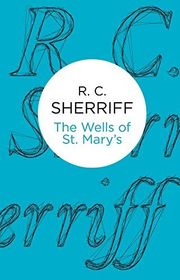
The Wells of St Mary's
by R.C. Sherriff
1962
A neglected well becomes a local sensation after a powerful visitor claims its water cured him. As the town prepares to profit, a man who knows the secret behind its healing powers demands a share.
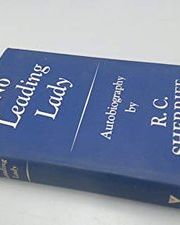
No Leading Lady
by R.C. Sherriff
1968
R.C. Sherriff recounts the unexpected success of Journey’s End, a play first written to support his rowing club. His memoir follows the shift from insurance work to theatrical fame and a career writing for Hollywood.

The Siege of Swayne Castle
by R.C. Sherriff
1973
A powerful earl lays siege to Lord Swayne’s coastal castle under the pretext of serving King John. Inside, Swayne’s son forms a friendship with the earl’s captive son as the conflict threatens both their families.
Where to start with R.C. Sherriff
For his First World War drama: Journey's End
For everyday life and quiet changes: The Fortnight in September → Greengates
For speculative disaster: The Hopkins Manuscript
For his account of becoming a writer: No Leading Lady
Standalone R.C. Sherriff books
Author bio
R.C. Sherriff moved from insurance work to a writing career that included plays, novels and Hollywood screenplays. Born Robert Cedric Sherriff in Hampton Wick in 1896, he attended Kingston Grammar School and followed his father into an insurance office. The First World War interrupted that life. He served with the East Surrey Regiment and was badly wounded at Ypres in 1917.
His experience of the trenches became the basis of Journey's End.
After the war, Sherriff returned to insurance and wrote for amateur theatrical groups. Some of his plays helped raise money for Kingston Rowing Club, where he was a member. Theatre began as something done around his job, rather than a profession he could immediately rely on. Journey's End was his first play to receive a professional production, and its success eventually let him give up insurance for writing full time.
Set in a dugout, the play draws on both his service and his letters home. Readers approaching him through it encounter men living under the pressure of war, rather than an adventure at a safe historical distance. No Leading Lady offers his own later account of the change from an insurance career to theatre and film, making it a useful companion for anyone interested in how that unexpected success happened.
His novels often bring the same attention to people facing a change they cannot control.
The Fortnight in September follows the Stevens family on their annual seaside holiday to Bognor. Its scale is deliberately modest: the trip matters because it is their chance to step outside the routines of the rest of the year. For a reader wanting family life and the details of an ordinary holiday, this is a different introduction from the wartime play. Greengates turns to the Baldwins, a childless couple struggling to adjust when retirement puts them at home together all day. The possibility of leaving London raises questions about what the next part of their life could be.
The Hopkins Manuscript begins with a much larger threat. Retired Hampshire schoolteacher Edwin Hopkins records events as the moon draws nearer to Earth and his village prepares for disaster. His limited viewpoint keeps the approaching catastrophe tied to one person's concerns. Read beside the domestic novels, it shows how far Sherriff could change the circumstances while continuing to observe the reactions of people with familiar habits and expectations.
Screenwriting took him into another working world. His credits include The Invisible Man, The Four Feathers, Goodbye Mr. Chips and The Dam Busters. Goodbye Mr. Chips brought him an Oscar nomination, but the books here allow readers to move beyond the film career as well as beyond Journey's End. There are separate entry points for theatre, everyday family experience, speculative disaster and memoir.
Sherriff lived for many years with his mother in Esher. He died in 1975. His writing career had grown from amateur performances into several forms, with the small decisions of ordinary people remaining central even when the setting was a dugout or a world facing catastrophe.















Edited by
Software engineer whose passion for tracking book recommendations from podcasts inspired the creation of MRB.
Lead investor at 3one4 Capital whose startup expertise and love for books helped shape MRB and its growth.
Comments
Spotted a missing book, a wrong order or a mistake? Tell us and we'll fix this page.
We're a reading guide, not the author or publisher, so we can't send books or pass on messages.