
Project Transhuman Books in Order
Part ofJS Morin Books in OrderThis page lists the Project Transhuman books by J.S. Morin in order, with summaries, series background, and where to start this post-human saga.
Last updated:
As an Amazon Associate, we earn from qualifying purchases (at no extra cost to you).
Project Transhuman books in publication order
6 books
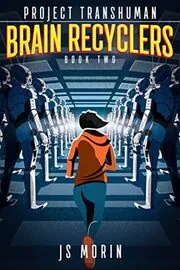
Brain Recyclers
by JS Morin
2017
The return of humanity excites some robots and terrifies others. When bodies, memories, and identity become bargaining chips, Charlie7 and Eve are pulled into the middle.
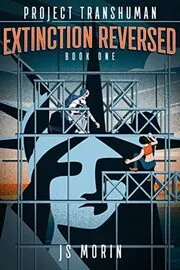
Extinction Reversed
by JS Morin
2017
Charlie7, the oldest robot alive, finally meets Eve14, the first healthy human in a thousand years. Protecting her could change the future of Earth.
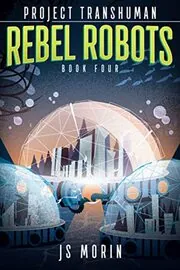
Rebel Robots
by JS Morin
2017
Robot society fractures as old loyalties fail and new ambitions rise. Charlie7 must navigate a conflict where both sides think they are protecting the future.
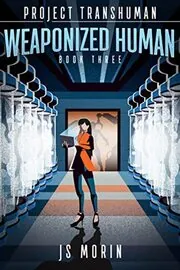
Weaponized Human
by JS Morin
2017
As new humans become more than an experiment, powerful factions start seeing them as assets. Eve's existence could save a world, or turn her into the most dangerous prize on it.
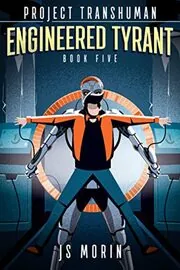
Engineered Tyrant
by JS Morin
2018
A new human generation reaches adulthood, and one heir believes leadership is his by design. Earth's future may hinge on whether creation can outgrow control.
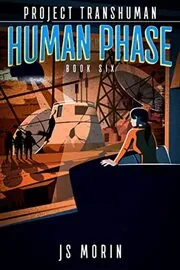
Human Phase
by JS Morin
2018
The balance between robot caretakers and human descendants finally shifts. What comes next for Earth depends on who gets to define the future of humanity.
Project Transhuman books in chronological order
Series background & context
Project Transhuman is one of J.S. Morin's cleaner science fiction setups, and also one of his strangest. Earth has been rebuilt after catastrophe. The human race is gone, or so it seems, and robots have spent a thousand years carrying out the long work of restoring the planet. Then a new human appears, and everything the machines thought was settled suddenly stops being settled.
That is the premise in one sentence.
The emotional center of the series is Charlie7, the oldest robot alive, and Eve14, the first healthy human in a thousand years. Charlie is a veteran of a world that no longer exists. Eve is proof that the future may not belong to the machine society that inherited the ruins. Around them is a civilization of robots built from copied and recombined human minds, which means this is not a story about cold, uniform machines. These robots carry personalities, memories, grudges, and desires that often feel very human, even when their bodies do not.
That idea gives the series a lot to play with. Morin can write action, political conflict, and high-stakes scientific problems, but he can also keep circling the deeper question underneath everything: what actually counts as human when memory, personality, body, and biology can all be separated? Some characters want to protect Eve. Some want to control what she represents. Some want bodies of their own. Others would rather freeze the future in place than risk losing the order they built.
The books stay readable because Morin does not bury those questions under jargon.
He likes concrete tension. Who gets custody of the future. Who is willing to break the rules first. Which old loyalties matter when an extinct species is suddenly not quite extinct anymore. There is a golden-age adventure streak in the way the series moves, but it is paired with a quieter interest in consciousness, identity, and the uneasy overlap between caretaker and creator.
The setting helps too. Post-human Earth is not presented as a simple wasteland or a shining utopia. It is a managed world, full of inherited systems and old wounds. The robots have had a thousand years to build society, and that means the return of humanity is not a miracle everyone greets the same way. For some, it is hope. For others, it is chaos wearing a familiar face.
If you want Morin without the overt wizardry, this is a good series to try. It still has his interest in found relationships and moral pressure, but the tools are different here. Less magic. More memory, biology, and machine politics. The result is a thoughtful but fast-moving story about who gets to inherit a world after history appears to be over.


Edited by
Software engineer whose passion for tracking book recommendations from podcasts inspired the creation of MRB.
Lead investor at 3one4 Capital whose startup expertise and love for books helped shape MRB and its growth.
Comments
Did we miss something? Have feedback?
Help us improve this page by sharing your thoughts