
PL Travers Books in Order
See all PL Travers books in order, from Mary Poppins onward, with brief summaries, series background, and clear tips on reading order and where to start.
Last updated: 1 new book added
As an Amazon Associate, we earn from qualifying purchases (at no extra cost to you).
PL Travers books in publication order
17 books
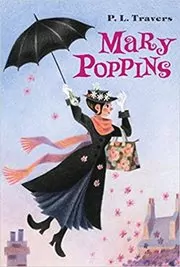
Mary Poppins
by PL Travers
1934
When the wind blows Mary Poppins to 17 Cherry Tree Lane, the Banks children find that their new nanny is both stern and astonishing. Outings to the park turn into secret adventures that quietly rearrange how they see the world.
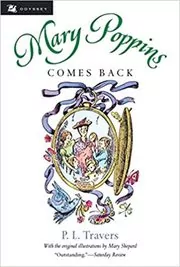
Mary Poppins Comes Back
by PL Travers
1935
Nothing at the Banks house feels right after Mary Poppins leaves, until Michael reels her down from the clouds on the string of his kite. Her second stay brings fiercer lessons, a terrifying old nanny and even wilder, sky high adventures.
I Go by Sea, I Go by Land
by PL Travers
1941
Told as the diary of eleven year old Sabrina Lind, this novel follows her and her younger brother James as they leave wartime England for safety overseas. Sea convoys, blackouts and new American relatives all appear through a sharp, homesick child’s eyes.
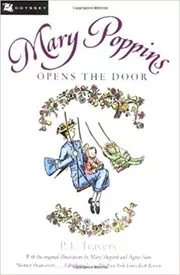
Mary Poppins Opens the Door
by PL Travers
1943
On Guy Fawkes Night Mary Poppins drops back into the Banks children’s lives, promising to stay only until a mysterious door opens. Between piano tuners, living statues and underwater parties, the children sense that this visit may be her last.
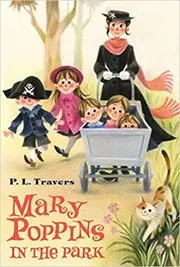
Mary Poppins in the Park
by PL Travers
1952
Set during earlier visits to Cherry Tree Lane, this collection follows Jane, Michael and the twins on six park side adventures with Mary Poppins. Tea with fairy tale strangers, talking cats and runaway shadows turn an ordinary green into a doorway to elsewhere.
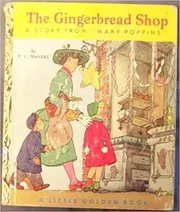
The Gingerbread Shop
by PL Travers
1952
In this picture book spun from a Mary Poppins episode, Jane and Michael follow their nanny into Mrs Corry’s strange gingerbread shop. Sugary treats, golden paper stars and a midnight errand hint that the night sky itself may not be what it seems.
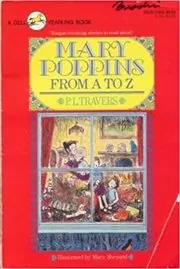
Mary Poppins from A to Z
by PL Travers
1962
An alphabet of Mary Poppins moments, this book offers twenty six short scenes, one for each letter, featuring the Banks children and their formidable nanny. Each vignette plays with odd words and small bits of magic that reward careful, curious readers.
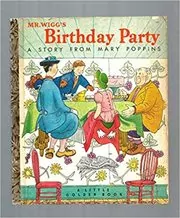
Mr. Wigg's Birthday Party
by PL Travers
1962
Mary Poppins escorts Jane and Michael to celebrate Mr Wigg’s birthday, only to find their host floating near the ceiling with laughter. Soon the children, the tea table and even Mary herself are swept into an upside down party in mid air.
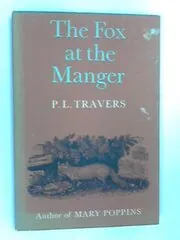
The Fox at the Manger
by PL Travers
1962
After a Christmas Eve service at St Paul’s Cathedral, a woman tells three boys a forgotten version of the Nativity in which a wild fox comes to the stable. Scorned by the other animals, he still offers the Christ child the one gift only he can give.
Friend Monkey
by PL Travers
1971
In Victorian London a shy dock clerk named Mr Linnet unexpectedly acquires a small monkey from a passing sailor. The lively creature’s well meant mischief overturns his household and career, pushing the whole odd little family toward a risky voyage and a new kind of home.
About the Sleeping Beauty
by PL Travers
1975
Here Travers brings together several versions of the Sleeping Beauty story, adds her own retelling and then pauses to ask what the tale might mean. The result is part anthology, part extended essay on how fairy tales work on the imagination.
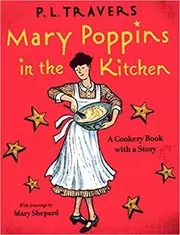
Mary Poppins in the Kitchen
by PL Travers
1975
When the cook goes away for a week, Mary Poppins marches the Banks children into the kitchen and puts them in charge of supper. A simple story frames real recipes, turning everyday meals into another sort of lesson in order and adventure.
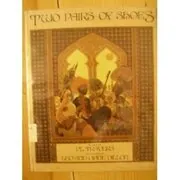
Two Pairs of Shoes
by PL Travers
1976
Retelling two Middle Eastern folktales, this picture book follows men whose worn out shoes betray and reveal their true selves. In one story shabby slippers bring trouble, in another a pair of sandals helps a royal treasurer remember where he came from.
Mary Poppins in Cherry Tree Lane
by PL Travers
1982
On a warm Midsummer Eve, Mary Poppins leads the Banks children to the furthest corner of the park for a late picnic. As darkness falls, herbs whisper, constellations step down from the sky and one ordinary path becomes briefly part of the cosmos.
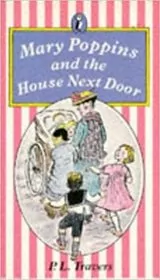
Mary Poppins and the House Next Door
by PL Travers
1988
The long empty house at Number 18 Cherry Tree Lane finally gains a tenant when Mr Banks’s fearsome old governess, Miss Andrew, moves in with a South Seas boy named Luti. Mary Poppins helps the Banks children befriend him and, when homesickness bites, find a way back home.
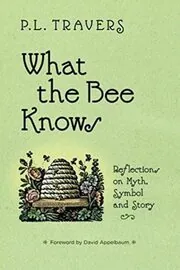
What the Bee Knows
by PL Travers
1990
This collection gathers Travers’s essays and reflections on myth, symbol and storytelling. Drawing on folklore, religion and personal memories, she considers figures such as heroes, fools and black sheep, asking what old tales can still teach modern readers.
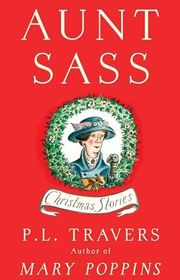
Aunt Sass
by PL Travers
2014
Three autobiographical stories recall the unusual adults who shaped P. L. Travers’s childhood. An eccentric great-aunt, a Chinese cook, and a blunt former jockey become unexpected allies, revealing experiences that later influenced the author’s fictional characters.
Where to start with PL Travers
If you want the classic Mary Poppins novels: Mary Poppins → Mary Poppins Comes Back → Mary Poppins Opens the Door → Mary Poppins in the Park
If you want later Cherry Tree Lane adventures: Mary Poppins in Cherry Tree Lane → Mary Poppins and the House Next Door
If you prefer stand alone children’s fiction: I Go by Sea, I Go by Land → Friend Monkey → The Fox at the Manger
If you are curious about Travers and myth: About the Sleeping Beauty → What the Bee Knows → Two Pairs of Shoes
If you like shorter Mary Poppins tales: The Gingerbread Shop → Mr. Wigg's Birthday Party → Mary Poppins from A to Z
PL Travers sub-series and character series
Standalone PL Travers books
Author bio
P. L. Travers was born Helen Lyndon Goff in 1899 in the Queensland town of Maryborough, Australia, and spent her early years between a bank manager's flat and the wide Australian bush. Her father loved stories and Ireland, her mother brought sharp maxims and Scottish and Irish ancestry, and both threads ran through the tales she would later tell.
When her father died while she was still a child, the family moved often and money was tight. Books, daydreams and the companionship of a formidable great aunt helped steady her. At school near Sydney she threw herself into reading and performing, acting in Shakespeare and writing poems that began to appear in local magazines.
As a young woman she worked first as a Shakespearean actress and then as a journalist, taking the stage name Pamela Lyndon Travers. In 1924 she sailed to England, determined to make a life out of words. London and Dublin opened new doors for her: she fell in with Irish writers such as George Russell and W. B. Yeats, and through them deepened a lifelong fascination with myth, folklore and spiritual traditions.
Those interests sit quietly behind Mary Poppins. Travers started writing about the mysterious nanny in the 1920s, drawing on stories she had invented for children she knew. Living in a thatched cottage in Sussex, she began shaping the first novel, and in 1934 Mary Poppins appeared in print. Readers met a brisk, vain, utterly competent London nanny who could ride the wind, talk to stars and yet insist that nursery rules be kept.
The book was a success, and seven more Mary Poppins volumes followed over the next five decades. The stories stay close to the Banks children in Cherry Tree Lane, but their adventures wander far, into the night zoo, under the sea, into the cracks of time and up to the constellations. Travers liked to say that she did not write for children in particular; she wrote the stories that felt true to her and trusted that the right readers would find them.
Alongside the Poppins books she produced other work. I Go by Sea, I Go by Land follows English children evacuated overseas during the Second World War. Friend Monkey is a Victorian era fantasy about a troublesome yet loyal animal companion. In About the Sleeping Beauty and What the Bee Knows she turned directly to myth and fairy tale, retelling old stories and reflecting on why such patterns matter in ordinary lives.
During the war she worked for the British Ministry of Information and spent extended periods in the United States, where she also lived among Navajo, Hopi and Pueblo communities to learn about their stories and ceremonies. Later she taught and lectured at colleges, wrote essays, and served as an editor for a journal devoted to myth and tradition. The public often saw her as reserved, but friends also remembered her dry humour and intense curiosity.
Travers never married. In middle age she adopted an Irish boy, Camillus, and brought him to live with her in London. She guarded her private life carefully, preferring that readers look to the books rather than to her own history. Late in life she watched Mary Poppins adapted into a hugely popular film and, later, a stage musical, reacting with a mixture of gratitude, irritation and wry amusement. Awarded the honour of OBE in 1977, she wrote well into old age and died in London in 1996, aged ninety six, leaving a body of work that treats stories themselves as a kind of practical magic.







Edited by
Software engineer whose passion for tracking book recommendations from podcasts inspired the creation of MRB.
Lead investor at 3one4 Capital whose startup expertise and love for books helped shape MRB and its growth.
Comments
Did we miss something? Have feedback?
Help us improve this page by sharing your thoughts