
Philip Marlowe (Lawrence Osborne) Books in Order
Part ofLawrence Osborne Books in OrderSee the Philip Marlowe novel by Lawrence Osborne in order, with a quick summary, series background, and notes on how his take fits Marlowe's world.
Last updated:
As an Amazon Associate, we earn from qualifying purchases (at no extra cost to you).
Philip Marlowe (Lawrence Osborne) books in publication order
1 book
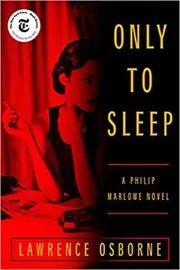
Only to Sleep
by Lawrence Osborne
2018
In 1988, a retired Philip Marlowe is pulled from his Baja California barstool to investigate the supposed drowning of a rich developer. What begins as insurance work turns into a last case full of money, reinvention, and regret.
Philip Marlowe (Lawrence Osborne) books in chronological order
Series background & context
Lawrence Osborne's Philip Marlowe entry is a small branch of the larger Chandler world, but it has a clear idea behind it. Instead of trying to freeze Marlowe in the old Los Angeles of the 1940s and 1950s, Osborne asks what happens if the detective keeps living. Only to Sleep imagines Marlowe in late life, retired, weathered, and still just nosy enough to get himself into trouble.
This Marlowe is in his seventies, and that changes the rhythm of everything.
Set in 1988, the novel finds him living in Baja California, passing quiet days in hotel bars and carrying the weight of a long career. He is still good at reading people, still alert to vanity, lies, class signals, and greed, but the book is interested in age as much as crime. The body is slower. Sleep is harder. Memory crowds in. Osborne keeps the old detective's moral instincts, then filters them through fatigue, regret, and a sense that the world has not improved just because time has passed.
The setting matters just as much as the age shift. Rather than Chandler's smoky offices and mean streets, Osborne gives Marlowe the borderlands, marinas, hotel terraces, desert roads, and hazy coastal developments of Mexico and Southern California. It is still noir, but the mood is sun-bleached instead of rain-soaked. The heat, the sea, and the distance from old Hollywood make the story feel both familiar and off-center, which suits Marlowe well. He has always been a man slightly out of step with the world around him.
The case in Only to Sleep begins with the apparent drowning of Donald Zinn, a wealthy man whose much younger widow stands to come out very well. Marlowe is asked to look into the death, and what seems at first like routine legwork opens into a murkier tangle of money, reinvention, and deception. The plot keeps the shape of a classic private-eye mystery, but Osborne is less interested in flashy puzzle solving than in atmosphere, weariness, and the way self-invention shades into fraud.
That gives this series strand a distinct tone. The wisecracks are there, but more quietly. The suspense comes less from speed than from pressure, from the sense that everyone is bluffing and time is running short. If Chandler's Marlowe often felt bruised but unbreakable, Osborne's version feels mortal. That vulnerability is the point.
So this is best read as a late coda, not a reboot. Marlowe fans will recognize the code of honor, the eye for rot beneath money, and the refusal to look away when something smells wrong. Osborne readers will recognize the border setting, the expatriate drift, and the interest in characters who think they can vanish into a new life. Only to Sleep sits neatly between those two traditions, respectful of Chandler but unmistakably its own book.










Edited by
Software engineer whose passion for tracking book recommendations from podcasts inspired the creation of MRB.
Lead investor at 3one4 Capital whose startup expertise and love for books helped shape MRB and its growth.
Comments
Did we miss something? Have feedback?
Help us improve this page by sharing your thoughts