
Philip K Dick Books in Order
Explore Philip K Dick books in order, with novel and short story lists, summaries, adaptations, series background, and guidance on where to start reading his work.
Last updated:
As an Amazon Associate, we earn from qualifying purchases (at no extra cost to you).
Philip K Dick books in publication order
84 books

The Defenders and Three Others
by Philip K Dick
1950
A small collection built around "The Defenders" and three additional early stories, showcasing Dick’s themes of war, automation, and the gap between official narratives and messy reality.

Beyond Lies the Wub
by Philip K Dick
1951
In this classic early story, a starship crew buys a huge pig-like alien for food, only to discover it can speak and may be far more than livestock, testing their humanity and appetite.

The Gun
by Philip K Dick
1952
Explorers land on an apparently dead planet and find their ship trapped by an automated defense gun still faithfully protecting a war-time secret, forcing them into a dangerous attempt to disarm it.

The Skull
by Philip K Dick
1952
A time traveler is sent to the past with only a mysterious skull and orders to kill its owner before he founds a subversive religion, only to discover his own role in that history.

Mr. Spaceship
by Philip K Dick
1953
To outwit alien mines, scientists build a warship controlled by a human brain, but the mind inside the craft has its own ideas about peace, war, and where it wants to travel.

The Defenders
by Philip K Dick
1953
Humans shelter in underground bunkers while robot "defenders" fight a devastating surface war—until evidence suggests the machines may have ended the conflict long ago and are hiding the truth.

The Hanging Stranger
by Philip K Dick
1953
Returning from work, a TV repairman is horrified to see a body hanging in the town square while everyone else seems unconcerned, leading him to a chilling discovery about invasion and conformity.

Beyond the Door
by Philip K Dick
1954
A jealous husband buys his wife a cuckoo clock, then grows convinced the bird hates him. The clock’s behavior after their marriage collapses leaves the question of malice chillingly open.

Small Town
by Philip K Dick
1954
A frustrated map-maker obsessively builds a detailed model of his town, then discovers that changes to the miniature landscape may be reshaping the real community—and the people in it.

The Crystal Crypt
by Philip K Dick
1954
As a passenger ship flees war-tense Mars for Earth, security men hunt saboteurs believed to have destroyed a key Martian city, while three nervous travelers harbor an impossible secret.

The Last of the Masters
by Philip K Dick
1954
In a supposedly anarchist future without formal government, a hidden enclave still serves an aging artificial intelligence, raising the question of whether humanity can function without any rulers at all.

A Handful of Darkness
by Philip K Dick
1955
Dick’s first hardcover collection gathers early stories in which bureaucrats, robots, and ordinary workers stumble into alternate realities, dangerous technologies, and unsettling glimpses of the near future.

Human Is?
by Philip K Dick
1955
When a cold, abusive official returns from a mission suddenly kind and loving, his wife suspects he’s been replaced by an alien—and must decide which version of him is truly "human".
Solar Lottery / World of Chance
by Philip K Dick
1955
In a cold-war future ruled by probability, the world’s leader is chosen by a deadly random lottery. Clerk Ted Benteley is pulled into conspiracies and assassination plots surrounding the new Quizmaster.

War Veteran
by Philip K Dick
1955
A mysterious old soldier appears in a veterans’ hospital claiming to have fought in a future war, and his story may be part of a psychological weapon—or a warning of battles still to come.
The Man Who Japed
by Philip K Dick
1956
Years after a limited nuclear war, ad executive Allen Purcell lives under a repressive moral regime until he drunkenly decapitates a public statue, setting off political intrigue and questions about rebellion and responsibility.

The Minority Report
by Philip K Dick
1956
Police commissioner John Anderton runs a Precrime unit that arrests people before they offend—until the system predicts he himself will commit murder, forcing him to question the infallibility of foreknowledge.
The World Jones Made
by Philip K Dick
1956
In a post-war relativist society that outlaws absolute belief, a mutant precog named Floyd Jones can see one year ahead and builds a dangerous movement that may doom humanity even as it promises salvation.
Eye in the Sky
by Philip K Dick
1957
Eight people caught in an accident at a particle accelerator awaken in a series of bizarre alternate realities, each shaped by one person’s fears and beliefs, and must figure out whose mind they’re trapped in.
The Cosmic Puppets
by Philip K Dick
1957
Returning to his Virginia hometown, Ted Barton finds the town transformed, his own childhood erased from the records, and an invisible war between ancient cosmic powers playing out in its streets.

The Unreconstructed M
by Philip K Dick
1957
Investigators hunt a rogue self-propelled weapon disguised as everyday objects, probing how a forgotten war machine can survive and adapt inside the civilian world it was built to defend.

The Variable Man and Other Stories
by Philip K Dick
1957
A mid-career collection featuring tales like "The Variable Man," "Second Variety," and "The Minority Report," showcasing Dick’s early explorations of precognition, killer machines, and slippery futures.
Time Out Of Joint
by Philip K Dick
1959
Ragle Gumm lives a quiet 1950s small-town life solving a newspaper puzzle—until ordinary objects dissolve into labels and clues suggest his world is an elaborate construct built around him.
Dr. Futurity
by Philip K Dick
1960
Doctor Jim Parsons is flung into a distant future where euthanasia is law and births are tightly controlled, then recruited into a time-travel plot to alter history and save a persecuted group.
Vulcan's Hammer
by Philip K Dick
1960
After a devastating world war, Earth is governed by a series of vast computers called Vulcan, while a resistance movement known as the Healers fights to free humanity from its technocratic rule.
The Man in the High Castle
by Philip K Dick
1962
Set in an America divided between Nazi Germany and Imperial Japan, this novel follows traders, spies, and ordinary people whose lives intersect around a banned book that imagines the Allies winning World War II.
Recommended by
1 person Russell Moore recommended this book
Russell Moore
"Fascinating book." - Russell Moore
Russell Moore's recommendation of this book
The Game-Players of Titan
by Philip K Dick
1963
In a depopulated future ruled by alien vugs, Earth’s remaining landowners gamble for cities and spouses in an elaborate game, only to uncover telepaths, conspiracies, and a chance to challenge their overlords.

Cantata-140
by Philip K Dick
1964
An earlier title for The Crack in Space, this edition centers on a future Earth wrestling with overpopulation, suspended-animation "bibs," and a mysterious transit breakthrough that opens the way to another world.
Clans of the Alphane Moon
by Philip K Dick
1964
On a former psychiatric colony world, rival settlements are organized around different mental illnesses. When Earth tries to retake the moon, its eccentric "clans" must decide whether they can defend the strange society they’ve built.
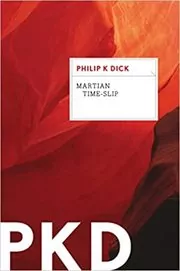
Martian Time-Slip
by Philip K Dick
1964
Repairman Jack Bohlen, union boss Arnie Kott, and autistic psychic boy Manfred Steiner cross paths on a struggling Mars colony, where time may not run straight and land speculation hides deeper ruin.
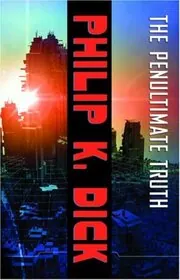
The Penultimate Truth
by Philip K Dick
1964
Most of humanity toils in underground bunkers, believing World War III still rages above. When a tank colony leader reaches the surface, he finds a lush world hoarded by a ruling elite built on lies.
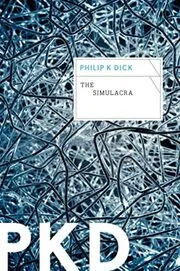
The Simulacra
by Philip K Dick
1964
In a merged US-European superstate, a permanent First Lady fronts a fraudulent government run by hidden elites and android presidents, while ordinary citizens, psionics, and performers get caught up in coups and civil war.
The Three Stigmata Of Palmer Eldritch
by Philip K Dick
1964
On bleak off-world colonies, desperate settlers use an illegal drug to escape into shared fantasies, until mysterious industrialist Palmer Eldritch returns from deep space with a rival hallucinogen that may carry a terrifying godlike presence.
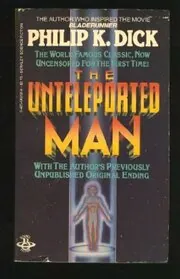
The Unteleported Man
by Philip K Dick
1964
In a future where millions emigrate one-way by teleport to a supposedly idyllic colony world, bankrupt shipowner Rachmael ben Applebaum chooses the long starship voyage instead and discovers there may be something sinister behind the sales pitch.
Dr. Bloodmoney, or How We Got Along After the Bomb
by Philip K Dick
1965
After nuclear catastrophe, scattered survivors—among them a guilt-ridden physicist, a limbless mechanic with terrifying powers, and a girl carrying her twin inside her—try to rebuild life in Northern California’s ruins.
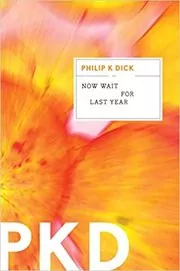
Now Wait For Last Year
by Philip K Dick
1966
Organ-transplant surgeon Eric Sweetscent is drawn into a galactic war and a marriage in crisis when he and his wife encounter a time-bending drug that may show the future—or trap them in it.
The Crack in Space
by Philip K Dick
1966
In an overcrowded future Earth, a malfunctioning teleport device opens a rift to a parallel world, promising salvation for frozen "bibs" in suspended animation, but also awakening another civilization that may not welcome human settlers.

Total Recall
by Philip K Dick
1966
This tie-in volume presents the story of a man who buys artificial memories of a secret agent’s life on Mars and finds reality upended when those memories may be true, plus related material from the film adaptations.
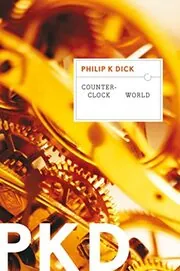
Counter-Clock World
by Philip K Dick
1967
In a world where time runs backward and the dead claw their way from graves to "old-birth," a resurrected religious leader becomes the focus of competing churches, politicians, and a library that literally eats books.
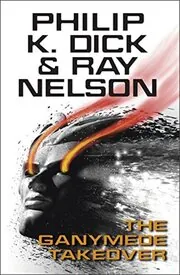
The Ganymede Takeover
by Philip K Dick
1967
Earth has fallen to worm-like aliens from Ganymede, but human resistance fighters, telepaths, and mad scientists wield reality-warping weapons that can turn thoughts into dangerous illusions and possibly destroy both sides.
The Zap Gun
by Philip K Dick
1967
Cold War blocs secretly convert their superweapons into useless consumer gadgets while staging an arms race for show—until real aliens invade and washed-out weapons designer Lars Powderdry must somehow create a weapon that actually works.
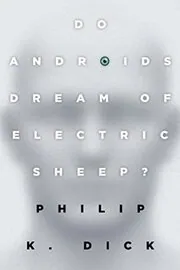
Do Androids Dream of Electric Sheep? / Blade Runner
by Philip K Dick
1968
In a post-war, depopulated San Francisco, bounty hunter Rick Deckard hunts advanced androids while longing for a real animal, forcing him to confront what empathy, humanity, and authenticity mean in a synthetic world.
Galactic Pot-Healer
by Philip K Dick
1969
Depressed pot-repairer Joe Fernwright is recruited by a godlike alien called Glimmung to raise a sunken cathedral on a distant world, joining a motley team in a quest that may be glorious, doomed, or both.
Ubik
by Philip K Dick
1969
After a corporate mission on the Moon goes wrong, technician Joe Chip finds his reality sliding backward in time, haunted by a dead boss and a ubiquitous product called Ubik that may be their only protection.
We Can Build You
by Philip K Dick
1969
A small organ-making firm pivots to building android replicas of historical figures, but as a simulacrum of Abraham Lincoln struggles to cope with modern life, its creator Louis Rosen spirals into obsession and mental breakdown.
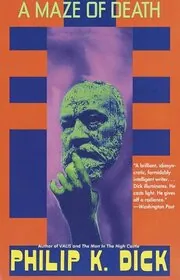
A Maze of Death
by Philip K Dick
1970
Fourteen colonists on the remote world Delmak-O receive cryptic instructions and encounter strange machines, shifting buildings, and an invented religion, as they’re picked off one by one and forced to question what’s real.
Our Friends From Frolix 8
by Philip K Dick
1970
In a future where super-intelligent "New Men" and psychic "Unusuals" rule over ordinary people, disillusioned worker Nick Appleton joins a resistance leader returning to Earth with an alien ally from Frolix 8.

The Book of Philip K. Dick
by Philip K Dick
1972
An anthology of shorter works that samples different phases of Dick’s career, giving readers compact introductions to his favorite themes of fractured realities, political paranoia, and stubbornly ordinary people.
Flow My Tears, The Policeman Said
by Philip K Dick
1974
Celebrity talk-show host Jason Taverner wakes up in a police-state America where no one remembers him and his ID records don’t exist, sending him on a desperate run through a world ruled by checkpoints and informers.

Confessions of a Crap Artist
by Philip K Dick
1975
Eccentric collector and conspiracy believer Jack Isidore moves in with his sister and her husband on a rural California farm, chronicling their collapsing marriage and his own delusions in deadpan detail.
Deus Irae
by Philip K Dick
1976
In a post-nuclear wasteland, a limbless artist is sent on a hazardous pilgrimage to find and paint Carleton Lufteufel, the man worshipped as the God of Wrath for unleashing the doomsday weapons.
A Scanner Darkly
by Philip K Dick
1977
An undercover narcotics agent in near-future California becomes addicted to the drug he’s supposed to stop, watching his identity fracture as he spies on his own friends through high-tech surveillance.

The Golden Man
by Philip K Dick
1980
Set in a future that hunts dangerous mutants, this collection’s title story follows a golden-skinned precog whose animal instincts and ability to see the future make him impossible to contain.
The Divine Invasion
by Philip K Dick
1981
Centuries in the future, exiled God-figure "Yah" returns to Earth by incarnating through a child, drawing ordinary people into a struggle against a corrupt, tyrannical cosmic power.

VALIS
by Philip K Dick
1981
Blending memoir and fiction, this novel follows Horselover Fat—Philip K. Dick’s alter ego—as he tries to interpret a pink beam of information he believes came from God, unraveling conspiracy, madness, and gnostic theology in 1970s California.
The Transmigration of Timothy Archer
by Philip K Dick
1982
Told by his daughter-in-law, this novel traces an Episcopal bishop’s search for early Christian secrets, strange mushrooms, and genuine faith, as those around him confront grief, madness, and the possibility of survival after death.

What If Our World is Their Heaven?
by Philip K Dick
1982
Drawn from Philip K. Dick’s final recorded interviews, this volume captures him talking freely about his writing, film adaptations, favorite philosophers, and the visionary experiences that shaped his last novels.
Lies, Inc.
by Philip K Dick
1983
This expanded version of The Unteleported Man plunges deeper into hallucinatory "paraworlds" as Rachmael ben Applebaum and underground agency Lies, Inc. uncover what really awaits emigrants on the far-off colony of Whale’s Mouth.
In Milton Lumky Territory
by Philip K Dick
1984
Set in 1950s Idaho and Oregon, this realist novel follows traveling buyer Bruce Stevens as he pursues a risky typewriter deal, falls for an older woman who once knew him as a boy, and daydreams alternative futures.
The Man Whose Teeth Were All Exactly Alike
by Philip K Dick
1984
In suburban Marin County, real-estate agent Leo Runcible feuds with his neighbor Walt Dombrosio over racism, petty slights, and a supposed Neanderthal skull, exposing class tension, marital cruelty, and the costs of self-righteousness.

I Hope I Shall Arrive Soon
by Philip K Dick
1985
A late collection that pairs the title story—about a man trapped conscious during starship hibernation—with essays and short fiction that circle Dick’s obsessions with memory, guilt, and constructed worlds.
Puttering About in a Small Land
by Philip K Dick
1985
In 1950s Los Angeles, TV shop owner Roger Lindahl sabotages his shaky marriage and business through affairs, impulsive decisions, and a disastrous plan to send his son to an elite boarding school.
Radio Free Albemuth
by Philip K Dick
1985
In an alternate America ruled by a paranoid president, record-store clerk Nick Brady begins receiving messages from a mysterious VALIS entity, drawing him and a thinly disguised Philip K. Dick into a secret resistance.
Humpty Dumpty in Oakland
by Philip K Dick
1986
Ailing garage owner Jim Fergesson considers investing his savings in a flashy new auto plaza, while his tenant Al Miller becomes convinced they’re being conned, tangling working-class lives in suspicion and bad luck.
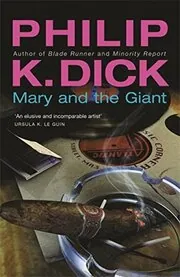
Mary and the Giant
by Philip K Dick
1987
Young Mary Anne Reynolds rebels against her stifling small-town life through affairs with an older shop owner and a Black jazz singer, confronting racism, desire, and the cost of trying to reinvent herself.

Second Variety
by Philip K Dick
1987
This volume centers on the brutal story of self-replicating killer machines that evolve beyond human control, plus other tales about war, automation, and the unintended consequences of weapons.

The Short Happy Life of the Brown Oxford and Other Classic Stories
by Philip K Dick
1987
A themed collection built around a whimsical tale of a living shoe, alongside other early stories that mix domestic detail, odd technology, and sudden shifts in reality.

We Can Remember It for You Wholesale
by Philip K Dick
1987
Named for the story that inspired Total Recall, this collection brings together memory-twisting adventures and paranoid futures where implanted experiences and corporate plots blur what’s real.
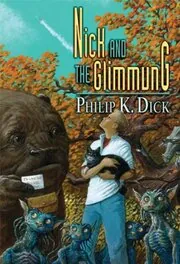
Nick and the Glimmung
by Philip K Dick
1988
Written for younger readers, this adventure sends boy Nick, his parents, and their cat to Plowman’s Planet, where they meet strange aliens and a powerful being called the Glimmung while trying to make a new home.
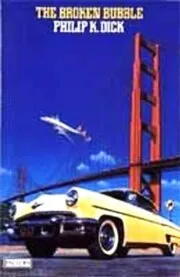
The Broken Bubble
by Philip K Dick
1988
San Francisco DJ Jim Briskin and his ex-wife become entangled with a teenage married couple, trading partners and testing their limits in a story about love, immaturity, and second chances in 1950s California.

The Dark-Haired Girl
by Philip K Dick
1988
A personal collection of letters, essays, and reflections addressed to the dark-haired women in Dick’s life, revealing his romantic entanglements, anxieties, and evolving ideas about love and identity.
In Pursuit of VALIS
by Philip K Dick
1991
A compact selection from Dick’s Exegesis and related essays, collecting his notes and reflections on the 1974 "VALIS" experiences, Gnosticism, and the strange overlap between his fiction and his life.
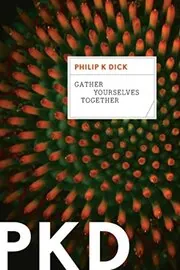
Gather Yourselves Together
by Philip K Dick
1994
As American factory owners prepare to hand a Chinese plant over to Communist control in 1949, three employees left behind drift through debates about politics, sex, and belief, replaying old affairs and forging uneasy bonds.
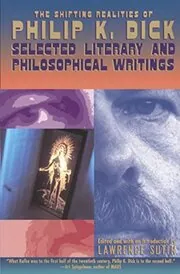
The Shifting Realities of Philip K. Dick
by Philip K Dick
1995
Essays, speeches, story outlines, and autobiographical pieces in which Dick reflects on writing science fiction, alternate realities, politics, and the ideas that fed novels like The Man in the High Castle and VALIS.

Paycheck and Other Classic Stories
by Philip K Dick
2003
Collects "Paycheck"—about an engineer who must reconstruct his erased memories from a bag of odd clues—along with other fast-moving stories of corporate espionage, time loops, and dangerous inventions.
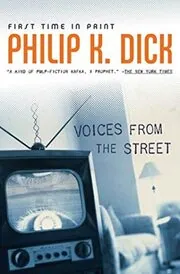
Voices from the Street
by Philip K Dick
2007
Stuart Hadley, a restless TV salesman in early-1950s Oakland, ricochets between his conventional marriage, bohemian lovers, and a charismatic preacher as he spirals toward breakdown in search of meaning.

Dry My White Noise Tears
by Philip K Dick
2010
A later collection that gathers shorter Philip K. Dick pieces in a single volume, offering readers another window into his recurring concerns with perception, technology, and fragile inner lives.

Electric Ant
by Philip K Dick
2010
A graphic-novel adaptation of "The Electric Ant," in which Garson Poole discovers he is an organic robot whose subjective reality is fed by a tape he can edit—until his experiments threaten to erase everything.

The Exegesis of Philip K. Dick
by Philip K Dick
2011
An edited selection from Dick’s vast private journal, where he tries to interpret his 1974 visionary experience, blending theology, philosophy, autobiography, and notes that fed directly into the VALIS novels.

Philip K. Dick
by Philip K Dick
2015
This short book introduces Philip K Dick’s life and ideas, sketching his career and recurring themes and pointing readers toward some of his landmark novels and stories.

Philip K. Dick's Electric Dreams
by Philip K Dick
2017
A companion anthology to the TV series, collecting the original short stories behind episodes such as "The Hood Maker," "The Commuter," and "The Impossible Planet," with brief notes on their adaptations.

The Eyes Have It and Other Stories
by Philip K Dick
2022
A slim collection that reprints early stories like "The Eyes Have It," "The Hanging Stranger," and "Beyond Lies the Wub," highlighting Dick’s playful, unsettling twists on everyday situations.
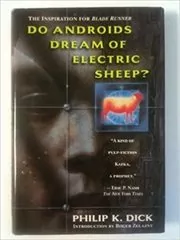
Do Androids Dream of Electric Sheep?
by Philip K Dick
On a devastated Earth, bounty hunter Rick Deckard tracks fugitive androids almost indistinguishable from humans. His assignment to destroy them forces questions about empathy and identity while his targets fight to preserve their own lives.
We Can Remember It for you Wholesale and Other Classic Stories
by Philip K Dick
This short-story collection includes 'We Can Remember It for You Wholesale,' 'The Adjustment Team,' and 'Impostor.' With an introduction by Norman Spinrad, it brings together works that explore altered reality and inspired several film adaptations.
Where to start with Philip K Dick
If you’re new and want his most famous novels: The Man in the High Castle → Do Androids Dream of Electric Sheep? / Blade Runner → Ubik.
If you like gritty, paranoid near-future stories: A Scanner Darkly → Flow My Tears, the Policeman Said → Time Out Of Joint.
If you’re curious about his religious and philosophical phase: VALIS → The Divine Invasion → The Transmigration of Timothy Archer.
If you prefer stranger offworld adventures: Martian Time-Slip → The Three Stigmata Of Palmer Eldritch → Galactic Pot-Healer.
If you’re coming from the movies and TV: Do Androids Dream of Electric Sheep? / Blade Runner → The Minority Report → Total Recall → Philip K. Dick's Electric Dreams.
Philip K Dick sub-series and character series
Philip K Dick collections, short stories, and related book types
Short Stories/Novellas
Short Story Collections
Graphic Novels
Non-Fiction
Standalone Philip K Dick books


















We Can Remember It for you Wholesale and Other Classic Stories
by Philip K Dick
Publication date unknown
Author bio
Philip K. Dick was born in Chicago in 1928 and grew up between Illinois, Washington, D.C., and California, the son of two federal employees who divorced when he was young.
He was a premature twin; his sister Jane died in infancy, a loss he later said haunted him and surfaced again and again in the form of missing or invisible twins in his fiction.
After a brief stint studying at the University of California, Berkeley, he dropped out, worked in record and radio shops, and poured his energy into writing. He sold his first story, "Beyond Lies the Wub," in 1952 and spent the 1950s turning out dozens of short pieces for pulp magazines to pay the rent.
His early novels such as Solar Lottery and The World Jones Made led to a breakthrough with The Man in the High Castle in 1962, an alternate‑history tale that won a major science fiction award and showed how ambitious his work could be. Through the 1960s he followed with books like Martian Time-Slip, The Three Stigmata Of Palmer Eldritch, and Ubik, each using paranoid plots and shifting realities to ask what is real and who is in control.
Dick’s own life grew more turbulent as his career took off. Living in California, juggling tight finances and several marriages, he relied heavily on amphetamines and other drugs, and those years fed directly into dark, semi‑autobiographical novels such as A Scanner Darkly and Flow My Tears, the Policeman Said.
In 1974 he underwent a series of strange visionary experiences that he called "2-3-74," involving intense dreams, a beam of pink light, and a sense that another intelligence was contacting him. He spent the rest of his life trying to interpret what had happened, filling thousands of pages of notebook entries later published as The Exegesis of Philip K. Dick and fictionalizing those ideas in the so‑called VALIS trilogy.
While his books never made him rich during his lifetime, they steadily attracted devoted readers, and film makers quickly saw their potential. After his death in 1982, adaptations such as Blade Runner, Total Recall, Minority Report, A Scanner Darkly, The Man in the High Castle, and the TV anthology Electric Dreams pushed his stories into the mainstream and helped cement his reputation.
Dick died in Santa Ana, California, after a stroke at age fifty‑three, leaving behind forty‑plus novels and well over a hundred short stories. What links them isn’t just future tech or alien worlds, but a recurring curiosity about how fragile identity can be and how ordinary people cope when the world suddenly stops making sense.










Edited by
Software engineer whose passion for tracking book recommendations from podcasts inspired the creation of MRB.
Lead investor at 3one4 Capital whose startup expertise and love for books helped shape MRB and its growth.
Comments
Did we miss something? Have feedback?
Help us improve this page by sharing your thoughts