
Peter Quinn Books in Order
Browse Peter Quinn books in order, with quick summaries, Fintan Dunne reading order, series background, and easy ideas on where to start first.
Last updated:
As an Amazon Associate, we earn from qualifying purchases (at no extra cost to you).
Peter Quinn books in publication order
5 books
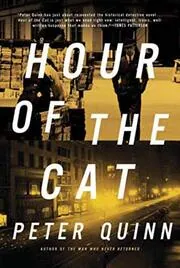
The Hour of the Cat
by Peter Quinn
2005
On the eve of World War II, New York detective Fintan Dunne tries to clear a Cuban immigrant convicted of murder. His case pulls him from city tenements to Nazi intrigue, where local corruption and global violence start to connect.
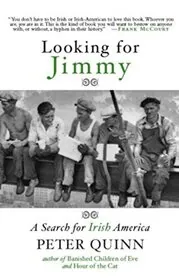
Looking for Jimmy
by Peter Quinn
2007
Part memoir and part history, this book traces Irish America through family memory, politics, faith, and city life. Quinn uses his own roots as a way into the larger story of how immigrants remade themselves, and New York, across generations.
Banished Children of Eve
by Peter Quinn
2008
Set during New York's 1863 Draft Riots, this sweeping novel follows Irish immigrants, Black New Yorkers, strivers, and drifters as the city turns violent. Quinn builds a bruising portrait of race, class, and survival in Civil War Manhattan.
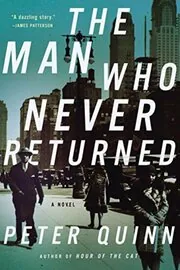
The Man Who Never Returned
by Peter Quinn
2010
In 1955, retired detective Fintan Dunne is hired to reopen the disappearance of Judge Joseph Force Crater, New York's most famous cold case. The deeper he digs into old politics, corruption, and rumor, the more dangerous the past becomes.
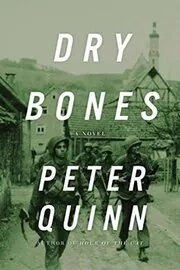
Dry Bones
by Peter Quinn
2013
A failed OSS mission in 1945 leaves Fintan Dunne carrying secrets into the Cold War. Years later, when a former comrade resurfaces, he follows a trail linking wartime atrocities, vanished men, and intelligence work that was never meant to surface.
Where to start with Peter Quinn
If you want the big standalone historical novel: Banished Children of Eve
If you want the detective series from the beginning: The Hour of the Cat → The Man Who Never Returned → Dry Bones
If you want a real-history cold case: The Man Who Never Returned
If you want nonfiction and Irish American history: Looking for Jimmy
Peter Quinn sub-series and character series
Peter Quinn collections, short stories, and related book types
Non-Fiction
Standalone Peter Quinn books
Author bio
Born in New York in 1947, Peter Quinn grew up in Parkchester in the Bronx, in an Irish Catholic family with deep city roots. That mix of borough life, family story, politics, and memory stayed with him. It became the ground he would return to again and again, whether he was writing fiction, history, essays, or speeches.
Before he published novels, Quinn spent years around words in other forms. He earned a B.A. from Manhattan College in 1969 and an M.A. in history from Fordham University in 1974, then did further doctoral work in Irish history. In 1979 he moved from academic life into politics and became chief speechwriter for New York governor Hugh Carey, later continuing in that role for Mario Cuomo.
That work mattered.
Quinn helped shape some of Cuomo's best-known speeches, including the 1984 Democratic National Convention address and the Notre Dame speech on politics and religion. In 1985 he joined Time Inc. as chief speechwriter and later retired as corporate editorial director of Time Warner in 2007. Along the way he also wrote for television, co-writing the documentary McSorley's New York, which won a New York Emmy for outstanding historical programming.
His path to fiction started in a library. While researching speeches at the state library, he came across an 1855 New York housing report and realized he was looking at the world his great-grandparents had lived in after coming from Ireland. That discovery pushed him toward the material that became Banished Children of Eve, his 1994 novel set around the New York Draft Riots of 1863. The book won an American Book Award in 1995.
New York is all over his work.
Readers who come to Quinn for fiction usually start with Banished Children of Eve or the Fintan Dunne books, The Hour of the Cat, The Man Who Never Returned, and Dry Bones. The first is a wide-angle Civil War New York novel, crowded with immigrants, strivers, racial tension, and city violence. The Fintan Dunne trilogy shifts into historical mystery and noir, following an Irish American detective through the years before World War II, the long shadow of the Judge Crater case, and the murky overlap of wartime espionage and Cold War secrecy.
He also writes nonfiction that stays close to the same questions. Looking for Jimmy mixes memoir, history, and cultural criticism as Quinn traces the Irish American experience through family memory, politics, religion, and city life. Across all of these books, certain concerns keep showing up: how immigrants refashion themselves, how New York shapes character, how politics and institutions press on ordinary people, and how the past lingers long after a city thinks it has moved on.
He has also been active in Irish American cultural life beyond his books. Quinn edited The Recorder, the journal of the American Irish Historical Society, from 1986 to 1993, wrote essays and reviews for major newspapers and magazines, and served as a commentator or adviser on historical documentaries and films, including Gangs of New York.
Now based in Hastings-on-Hudson with his wife, Kathleen Burbank Quinn, he has the kind of writing life that makes sense when you look back at the whole arc. History pulled him in first, but story gave him a way to bring that history to the page. That balance, research on one side and lived city feeling on the other, is what keeps his work so readable.


Edited by
Software engineer whose passion for tracking book recommendations from podcasts inspired the creation of MRB.
Lead investor at 3one4 Capital whose startup expertise and love for books helped shape MRB and its growth.
Comments
Did we miss something? Have feedback?
Help us improve this page by sharing your thoughts