
Percival Everett Books in Order
Browse Percival Everett books in order, with quick summaries of his novels, stories, and poetry, plus reading notes and a few smart places to start.
Last updated: 1 new book added
Coming soonNext book: Serious Music (2027) · Pre-order on Amazon
As an Amazon Associate, we earn from qualifying purchases (at no extra cost to you).
Percival Everett books in publication order
38 books
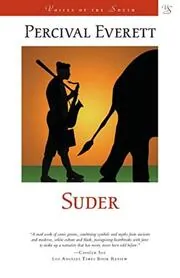
Suder
by Percival Everett
1983
Craig Suder, a slumping Seattle Mariners third baseman, decides he cannot hit a curveball, keep his life together, or even quite explain himself. Everett turns a sports setup into a strange, funny breakdown story.

Walk Me to the Distance
by Percival Everett
1985
Vietnam veteran David Larson drifts into a fading Western town, where grief, work, and an odd local family pull him into a search for a missing boy. A quiet, bleakly funny early novel about damage and survival.
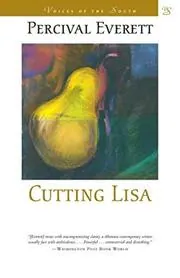
Cutting Lisa
by Percival Everett
1986
Recently widowed obstetrician John Livesey goes to Oregon to visit family and soon suspects a secret at the center of his son's marriage. What begins as domestic unease turns into a sly, unsettling small-town mystery.

The Weather and Women Treat Me Fair
by Percival Everett
1987
Everett's first story collection gathers spare, often rough-edged pieces set mostly in the contemporary West. These stories watch ordinary people under pressure, and you can already feel his eye for dry humor and sudden violence.

For Her Dark Skin
by Percival Everett
1990
Everett recasts the myth of Jason and Medea, centering Medea as a Black woman whose intelligence, love, and rage drive the story. The result is a lean, unsettling retelling about desire, power, and betrayal.

Zulus
by Percival Everett
1990
In a ruined future, Alice Achitophel, an outcast in a dead-end city, finds herself mysteriously pregnant and suddenly valuable to dangerous people. Everett mixes apocalypse, black comedy, and fable into something eerie and hard to predict.
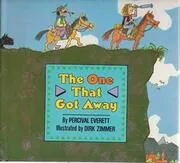
The One that Got Away
by Percival Everett
1992
In this playful picture book, three cowboys rope a runaway number one, only to find there are many more where it came from. It is a goofy, clever story about words, numbers, and how slippery simple things can be.

God's Country
by Percival Everett
1994
After raiders destroy his home and kidnap his wife, cowardly rancher Curt Marder hires a Black tracker named Bubba and rides west in pursuit. Everett uses the search to savage the myths of the American Western.

Big Picture
by Percival Everett
1996
This story collection moves through painters' lives, damaged relationships, and the everyday strain of being Black in white spaces. Everett keeps the tone darkly comic, restless, and alert to the moment when ordinary life veers sideways.

Frenzy
by Percival Everett
1996
Narrated by Dionysos's put-upon companion, this novel reimagines Greek myth as comic, strange, and often brutal. As the god of wine and frenzy moves through the world, old stories turn newly unruly.

Watershed
by Percival Everett
1996
A hydrologist heads to the mountains for solitude and fishing, then gets drawn into murder, treaty politics, and a toxic threat to a nearby reservation. It is part mystery, part political thriller, and deeply rooted in place.

Glyph
by Percival Everett
1999
Ralph is a silent baby with a staggering mind, a gift for theory, and a habit of writing notes in crayon. When adults discover what he can do, this funny, brainy novel turns into a philosophical kidnapping caper.
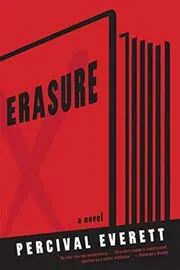
Erasure
by Percival Everett
2001
Frustrated that the literary world rewards narrow ideas of Blackness, novelist Thelonious Monk Ellison writes a parody of a stereotyped bestseller. Then the parody becomes a sensation, and the joke turns painfully real.

Grand Canyon, Inc.
by Percival Everett
2001
A scheme to turn the Grand Canyon into the ultimate commercial attraction sets off a fight between greed and resistance. This short, sharp satire goes after spectacle, development, and what gets ruined for profit.

A History of the African-American People
by Percival Everett
2004
Told through letters and documents, this satire follows a madcap effort to produce a history of African American life supposedly backed by Strom Thurmond. Everett and James Kincaid turn the whole project into a farce about power, race, and bad faith.

American Desert
by Percival Everett
2004
College professor Ted Street dies in a gruesome accident, then sits up in his coffin at the funeral. His impossible return sparks a media circus, religious panic, and a darkly comic search for what being alive now means.

Damned if I Do
by Percival Everett
2004
A mischievous collection of stories about race, class, desire, and storytelling itself. Some pieces feel realistic, some surreal, but almost all of them twist expectations just when you think you know where Everett is headed.

re: f -gesture-
by Percival Everett
2005
This early poetry collection moves from myth and fable into the body, then onward to logic and philosophy. Everett uses tight, experimental poems to test how sound, sense, and image rub against one another.
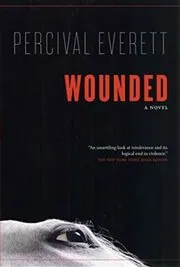
Wounded
by Percival Everett
2005
Wyoming horse trainer John Hunt wants a quiet life, but violence keeps closing in around his ranch. Everett builds a spare, tense novel about friendship, masculinity, and the cost of looking away.

The Water Cure
by Percival Everett
2007
After his daughter's death, writer Ishmael Kidder abducts the man he believes is responsible and holds him in a remote cabin. The novel is part revenge tale, part shattered confession, and never lets its moral ground stay steady.

I Am Not Sidney Poitier
by Percival Everett
2009
Named Not Sidney Poitier, a wealthy orphan moves through a world that keeps misreading him. Everett spins the setup into a deadpan comic odyssey about race, class, names, and the absurd rules of American life.
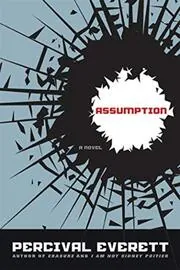
Assumption
by Percival Everett
2011
Deputy sheriff Ogden Walker investigates a set of baffling cases in and around a small New Mexico town. Each mystery seems to open into something stranger, until the book starts unsettling your trust in the story itself.

Swimming Swimmers Swimming
by Percival Everett
2011
These poems worry at the link between words and meaning, then enjoy breaking it. The collection is playful, meditative, and full of shifts in sound, logic, and perspective.
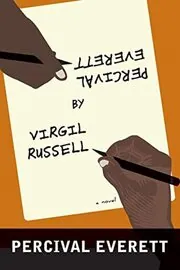
Percival Everett by Virgil Russell
by Percival Everett
2013
A man visits his aging father in a nursing home and finds himself pulled into a looping story that may be his father's, his own, or both. Everett turns grief and family strain into a slippery, self-questioning novel.

The Body of Martin Aguilera
by Percival Everett
2013
Retired professor Lewis Martin finds the body of his friend Martin Aguilera in a cabin, only for it to vanish when he returns with the sheriff. What follows is a lean Southwestern mystery full of disappearance, doubt, and mounting danger.
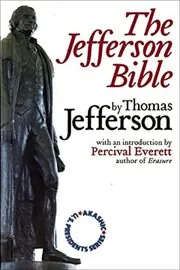
The Jefferson Bible
by Percival Everett
2013
This edition presents Thomas Jefferson's stripped-down gospel narrative, assembled by removing miracles and focusing on Jesus's moral teachings. Everett contributes the introduction, framing the book as a revealing act of belief, doubt, and selection.

Half an Inch of Water
by Percival Everett
2015
Set largely in Wyoming and the wider West, these linked stories follow ranchers, drifters, families, and searchers through grief, weather, and sudden grace. Everett keeps the language spare while letting the uncanny slip quietly into view.

Parts of Brain
by Percival Everett
2015
This experimental volume is built from fake reviews, fragments, letters, and scholarly jokes circling an almost impossible book called Parts of Brain. It is Everett at his most self-conscious, playful, and determined to keep readers off balance.

Trout's Lie
by Percival Everett
2015
In this poetry collection, Everett tests the border between meaning and nonsense with sharp, deceptively simple lines. The poems feel thoughtful, sly, and more interested in asking questions than settling them.
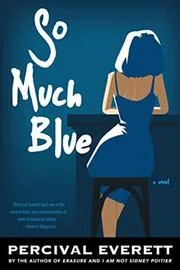
So Much Blue
by Percival Everett
2017
Painter Kevin Pace carries several secrets at once: a hidden canvas, an affair in Paris, and a memory from a dangerous trip to El Salvador. Everett braids art, marriage, friendship, and guilt into a quiet, suspenseful novel.

Two Stories
by Percival Everett
2018
This slim volume pairs two brief works, one grounded in family life and unease, the other gleefully metafictional. Even in miniature, Everett makes narrative feel unstable, funny, and slightly dangerous.

The Book of Training by Colonel Hap Thompson of Roanoke, Va, 1843
by Percival Everett
2019
Framed as a mock nineteenth-century training manual for slaveholders, this brief, brutal poetry book imitates the language of instruction, profit, and punishment. Everett uses the form to expose the cold mechanics of slavery without softening any of it.
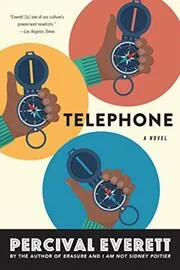
Telephone
by Percival Everett
2020
A college professor learns his daughter is gravely ill and begins to unravel under the weight of grief and uncertainty. Everett turns a family crisis into a tense, disorienting novel about love and narrative itself.
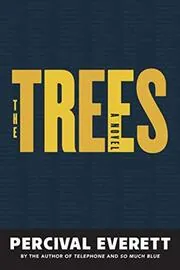
The Trees
by Percival Everett
2021
A string of bizarre murders in Money, Mississippi draws investigators into a case haunted by the legacy of lynching and the murder of Emmett Till. It is funny, furious, and impossible to read as just a mystery.

Dr. No
by Percival Everett
2022
Mathematician Wala Kitu is hired by a billionaire villain obsessed with nothing, literally, and soon ends up in a comic caper aimed at Fort Knox. Everett mixes Bond parody, philosophy, and heist energy with perfect straight-face timing.

James
by Percival Everett
2024
Everett retells Huckleberry Finn from James's point of view, giving Jim a private life, a sharp mind, and far more agency than the old novel allowed. The familiar journey becomes tense, funny, and devastatingly new.

Sonnets for a Missing Key
by Percival Everett
2024
Inspired by Chopin's preludes and jazz phrasing, these experimental sonnets play with tone, music, and formal restraint. Everett lets the poems sound precise and loose at once, as if the page were listening as much as speaking.

Serious Music
by Percival Everett
2027
Gifted Black musician Arthur Champion faces a vindictive professor at Oberlin before military service takes him to the Somme in 1918. His journey through war, Harlem and Woodrow Wilson’s White House confronts him with ambition, racism and American power.
Where to start with Percival Everett
If you want the big recent breakout: James
If you want his sharpest satire about books and race: Erasure → I Am Not Sidney Poitier
If you want dark, fast-moving mysteries: The Trees → Assumption
If you want Western settings and quieter pressure: Wounded → Walk Me to the Distance → Half an Inch of Water
If you want his strangest formal experiments: Glyph → Dr. No → Telephone
Percival Everett collections, short stories, and related book types
Short Story Collections
Picture Books
Non-Fiction
Standalone Percival Everett books
Author bio
Percival Everett was born in Fort Gordon, Georgia, in 1956, but he grew up in Columbia, South Carolina, where he lived through high school. He studied philosophy at the University of Miami, then earned an M.A. in fiction at Brown University. That mix of training still feels central to his work. His books are full of story, of course, but they are also full of questions about language, logic, identity, and the gap between what people say and what they mean.
He wrote his first novel, Suder, while he was at Brown. From the beginning, he did not settle into one shelf or one mode. Over time he moved through westerns, myths, crime fiction, campus satire, short stories, poetry, and books that seem to argue with the idea of genre while they are still unfolding.
He rarely writes the same kind of book twice.
For many readers, Erasure is the doorway in. The novel follows a Black writer who is sick of the literary world's appetite for stereotype, only to watch a parody he writes get rewarded as the real thing. It is funny, cutting, and sad all at once. The book later became the basis for the film American Fiction, which brought Everett's work to a much wider audience.
Other titles show how much ground he likes to cover. I Am Not Sidney Poitier turns mistaken identity and American race politics into a deadpan comic journey. The Trees starts as a murder investigation in Mississippi and grows into a fierce reckoning with the long afterlife of lynching. James, his retelling of Adventures of Huckleberry Finn from Jim's point of view, became one of his biggest books yet, winning the National Book Award and the Pulitzer Prize.
Even with all that variety, some things keep returning. Everett often writes about the American West, about men who would rather stay silent than explain themselves, about families under pressure, and about the strange power of names. He is also deeply interested in how language behaves, how it hides, slips, performs, and sometimes betrays. That is true in the wild comedy of Glyph, the moral pressure of Wounded, and the grief-struck unease of Telephone.
He has long balanced writing with teaching and is a Distinguished Professor of English at the University of Southern California. He lives in Los Angeles with his wife, the novelist Danzy Senna, and their children. By most accounts, he keeps the public performance of authorship at arm's length, which fits the work. The books are lively and provocative, but the persona behind them often stays deliberately hard to pin down.
That reserve has not made the work small. If anything, it has left more room for the books themselves, which can be playful, bleak, philosophical, and very funny, sometimes within a single chapter.














Edited by
Software engineer whose passion for tracking book recommendations from podcasts inspired the creation of MRB.
Lead investor at 3one4 Capital whose startup expertise and love for books helped shape MRB and its growth.
Comments
Did we miss something? Have feedback?
Help us improve this page by sharing your thoughts