
Paul O Williams Books in Order
Browse Paul O Williams books in order, from the Pelbar Cycle to Gorboduc, with short summaries, series background, and help choosing where to start.
Last updated:
As an Amazon Associate, we earn from qualifying purchases (at no extra cost to you).
Paul O Williams books in publication order
12 books

The Edge of the Woods
by Paul O Williams
1968
Williams's first haiku collection gathers fifty-five brief poems rooted in close observation. Woods, weather, birds, and small moments of surprise open into a quieter, more attentive way of looking at the world.
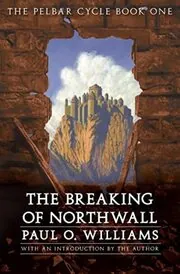
The Breaking of Northwall
by Paul O Williams
1981
Exiled from rigid Pelbar society, the restless Jestak is sent to the fortress of Northwall. There he risks everything, crossing enemy lines in pursuit of love, lost knowledge, and a different future for the warring tribes.
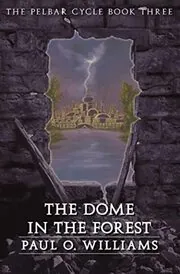
The Dome in the Forest
by Paul O Williams
1981
As Pelbar society opens to trade and outsiders, the discovery of a hidden underground shelter upsets old certainties. A young woman from that buried world brings revelations that could reshape everyone's future.
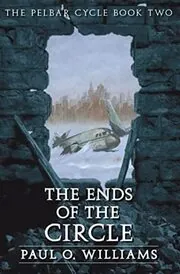
The Ends of the Circle
by Paul O Williams
1981
Stel, a Pelbar craftsman and flute player, leaves home to seek the legendary Shining Sea. As he crosses a post-nuclear America, his wife Ahroe follows with secrets of her own and equal determination.
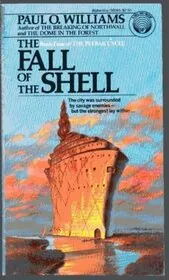
The Fall of the Shell
by Paul O Williams
1982
In conservative Threerivers, a small accident involving a treasured shell throws twin brothers Brudoer and Gamwyn into crisis. One faces prison, the other a long journey, and the old Pelbar order starts to crack.
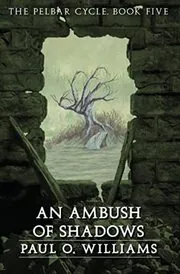
The Ambush of Shadows
by Paul O Williams
1983
As the Pelbar push north, Tantal raiders strike back and kidnap Raydi, the daughter of Stel Westrun. Stel's hunt to bring her home turns a fragile peace into a personal and political war.
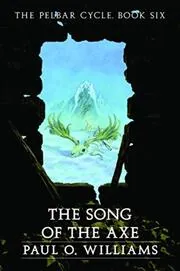
The Song of the Axe
by Paul O Williams
1984
Years after Northwall, peace is changing the nomadic Shumai. Tor takes his nephew Tristal on a last hard journey to teach the old way, but captivity and suffering force the boy to learn what the axeman's code really means.
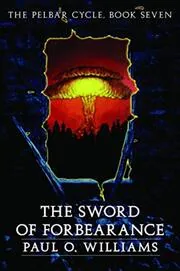
The Sword of Forbearance
by Paul O Williams
1985
The Heart River Federation has united much of the continent, but eastern holdouts led by Innanigan still threaten war. The final book asks whether justice and restraint can win where conquest keeps returning.
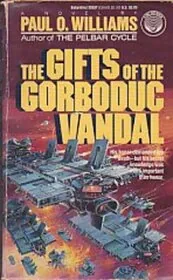
The Gifts of the Gorboduc Vandal
by Paul O Williams
1989
Umber, a Gorboduc scientist, shocks his people by accepting captivity rather than death. His choice looks dishonorable, but it hides a risky plan tied to Landsdrum and the hard cost of living by a brutal code.

Growing in the Rain
by Paul O Williams
1991
This collection of fifty-four poems turns rain, landscape, and ordinary experience into reflective lyric moments. It shows Williams working in a roomier form than haiku while keeping his gift for exact, patient noticing.
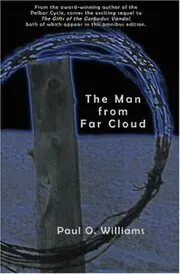
The Man from Far Cloud
by Paul O Williams
2006
Captured far from home, Gorboduc biologist Umber Treggevvthann is forced to rethink loyalty, belonging, and even love. His search for truth leads into a mystery with consequences wider than he first understands.

These Audacious Maples
by Paul O Williams
2007
Williams's first book of tanka gathers short five-line poems about daily life, memory, language, pets, weather, and feeling. The mood is intimate and lightly conversational, with small moments that keep unfolding after the line break.
Where to start with Paul O Williams
If you want his signature post-apocalyptic series: The Breaking of Northwall → The Ends of the Circle → The Dome in the Forest
If you want the later Pelbar books with bigger political stakes: The Fall of the Shell → The Song of the Axe → The Sword of Forbearance
If you want far-future space fiction: The Gifts of the Gorboduc Vandal → The Man from Far Cloud
If you want the poetry side first: The Edge of the Woods → Growing in the Rain → These Audacious Maples
Paul O Williams sub-series and character series
Paul O Williams collections, short stories, and related book types
Collections
Author bio
Paul O Williams was born in Chatham, New Jersey, in 1935 and grew up there. He spent much of his working life teaching English, but readers usually meet him through two quite different doors: the quiet door of haiku and the wider, stranger door of science fiction.
He studied at Principia College, then earned an M.A. and a Ph.D. from the University of Pennsylvania. He taught at Penn and Duke before joining Principia College in Elsah, Illinois, where he later became professor emeritus. Elsah mattered to his fiction too. The river country around it echoes through the landscape of the Pelbar Cycle.
He started writing haiku in 1964.
That side of his work never really sat off to one side. His first haiku collection, The Edge of the Woods, appeared in 1968, and he kept writing short Japanese forms for decades, later publishing books such as Growing in the Rain and These Audacious Maples. He also wrote essays about haiku in English, and those essays were gathered in The Nick of Time. Readers who like clear thinking about craft still find plenty to chew on there.
Then, in the early 1980s, he made a sharp turn into science fiction and did it without losing his calm, observant style. The Breaking of Northwall opened the seven-book Pelbar Cycle, a post-apocalyptic series set in North America long after a time of fire. The books follow separated cultures slowly finding one another again, and that rebuilding instinct is part of what gives the series its staying power.
He liked big questions, but he usually approached them through people on the move.
Across The Ends of the Circle, The Dome in the Forest, and The Sword of Forbearance, he wrote about exile, travel, language, custom, and the hard work of making peace. Even when the stakes are large, his books tend to stay close to how people live day to day, what they carry, what they fear, and what they hope can still be repaired. That mix of adventure and patience is a big part of his appeal.
He also wrote the two Gorboduc novels, The Gifts of the Gorboduc Vandal and The Man from Far Cloud, which move from ruined America to a far-future interstellar setting. They show another side of him: still interested in culture clash and moral choices, but now on a much larger stage. Whether he was writing about tribes along a river or human societies scattered across space, he kept returning to the same question: how do people live together without crushing one another?
His poetry life was just as active. He helped found Haiku Poets of Northern California in 1989, served as president of the Haiku Society of America in 1999, and was vice president of the Tanka Society of America in 2000. In 1983 he won the John W. Campbell Award for Best New Writer in science fiction, and in 1989 he received the Museum of Haiku Literature Award. Those honors point to the unusual balance of his career, part novelist, part poet, part teacher.
After retiring from Principia, he moved to the San Francisco Bay Area and kept writing. He died on June 2, 2009. What remains is a body of work that feels unusually steady: thoughtful post-apocalyptic novels, brief poems that notice the world closely, and essays that show how much he cared about getting words right.



Edited by
Software engineer whose passion for tracking book recommendations from podcasts inspired the creation of MRB.
Lead investor at 3one4 Capital whose startup expertise and love for books helped shape MRB and its growth.
Comments
Did we miss something? Have feedback?
Help us improve this page by sharing your thoughts