
Pacific Sniper Books in Order
Part ofDavid Healey Books in OrderSee the Pacific Sniper books by David Healey in order, with quick summaries, series background, and a helpful guide to where to start next.
Last updated:
Coming soonNext book: Typhoon Sniper (2027) · Pre-order on Amazon
As an Amazon Associate, we earn from qualifying purchases (at no extra cost to you).
Pacific Sniper books in publication order
7 books

Pacific Sniper
by David Healey
2021
After Pearl Harbor, Appalachian marksman Deacon Cole joins the fight against Japan and faces his first brutal island campaign. His skill with a rifle may be the only thing standing between his squad and a deadly enemy sniper.

Jungle Sniper
by David Healey
2022
Deacon Cole lands in the Philippines in the first wave of invasion and soon heads into the wet, punishing interior of Leyte. Jungle terrain, monsoon weather, and a vengeful sniper make every mile dangerous.
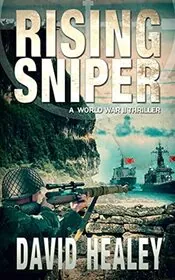
Rising Sniper
by David Healey
2022
Deacon Cole and Patrol Easy land at Leyte ahead of the main American invasion and must crack Japanese defenses before the beaches turn into slaughter. Enemy snipers make every move deadly.

Hunter Sniper
by David Healey
2023
Patrol Easy is split apart during the campaign for the Philippines, leaving Deacon Cole to fight through jungle, fever, and hidden fire. The march toward Ormoc becomes a test of endurance as much as aim.

Savage Sniper
by David Healey
2023
Deacon Cole and Patrol Easy fight across Leyte on their way to a jungle prison camp where Allied POWs are being held. Waiting for them is a brutal Japanese commandant and another deadly shooting match.

Samurai & Snipers
by David Healey
2025
During the Battle of Manila, Deacon Cole and Patrol Easy fight street by street against an enemy that refuses to yield. A hostage rescue mission adds even more pressure to an already savage battle.

Typhoon Sniper
by David Healey
2027
Deacon Cole heads toward the Kerama Islands to help wipe out Japanese suicide boat bases before Okinawa. Enemy fire is bad enough, but Halsey's Typhoon may prove even worse.
Pacific Sniper books in chronological order
Series background & context
At the center of the Pacific Sniper books is Deacon Deke Cole, a country boy from Appalachia who can shoot straight long before the Army puts a rifle in his hands. He is also the cousin of Caje Cole, the hero of Healey's other sniper series, but Deke never feels like a copy. His war is different, his ground is different, and the Pacific pushes him in its own hard way.
These novels drop him into the island war against Japan, where the fighting is rarely clean or comfortable. Beaches have to be taken under fire. Jungle trails close in around the men. Rain, mud, heat, fever, and exhaustion can be as dangerous as the enemy. The books move through major campaigns in the Philippines, then onward to Manila and the approaches to Okinawa, so the setting is always doing real work. This is war fiction that remembers terrain.
Deke usually serves with Patrol Easy, a small group of snipers and soldiers who get thrown into the kind of missions that sound simple on paper and turn brutal in practice. One book may hinge on cracking Japanese defenses before an invasion. Another turns into a march across mountains and jungle to link up with stranded American forces. Later entries involve prison camp rescue missions, urban fighting, hostage situations, and attempts to wipe out suicide boat bases before they can hit the fleet. The sniper duels matter, but the books are never only about a man behind a scope.
Patrol Easy is the real spine of the series.
That is part of the appeal. Deke may be the star, but he wins or loses with other people around him. The books spend time on squad loyalty, fear, fatigue, and the strange mix of skill and luck that keeps soldiers alive. As the series goes on, Deke changes from a raw recruit into a seasoned fighter who still has to earn every mile. Healey keeps the action moving, but he also shows what repeated combat does to a person.
If you like World War II fiction with clear prose, strong historical settings, and a lot of forward motion, this series is easy to settle into. The books can give you the big picture of the Pacific war while staying close to one unit's experience. Start with Pacific Sniper if you want to watch Deke grow from the beginning, then read forward as the missions get larger and the cost gets heavier.










Edited by
Software engineer whose passion for tracking book recommendations from podcasts inspired the creation of MRB.
Lead investor at 3one4 Capital whose startup expertise and love for books helped shape MRB and its growth.
Comments
Did we miss something? Have feedback?
Help us improve this page by sharing your thoughts