
Noam Chomsky Books in Order
Explore Noam Chomsky's books in publication order, with short book summaries and a guide to the individual titles to help you choose where to start reading.
Last updated: 55 new books added
As an Amazon Associate, we earn from qualifying purchases (at no extra cost to you).
Noam Chomsky books in publication order
77 books
Syntactic Structures
by Noam Chomsky
1957
Noam Chomsky develops a formal approach to explaining the structure of language through grammatical rules. This early work on generative grammar examines how sentences are constructed and considers the relationship between syntax, meaning, and linguistic theory.
Current Issues in Linguistic Theory
by Noam Chomsky
1964
Noam Chomsky examines the aims and standards of linguistic theory, particularly the requirements for explaining human language. He considers the adequacy of grammatical descriptions and the relationship between linguistic evidence, transformational models, and a general theory of language.
Aspects of the Theory of Syntax
by Noam Chomsky
1965
Noam Chomsky reformulates transformational generative grammar in response to difficulties in earlier models. Focusing on syntax, he examines how a linguistic theory can describe sentence structure, treating semantic and phonological questions where they affect that account.
Topics in the Theory of Generative Grammar
by Noam Chomsky
1966
Chomsky examines the assumptions and goals behind generative grammar, responds to criticisms of the approach, and develops its transformational framework. The discussion also considers problems in phonology, connecting questions about sentence structure with the analysis of speech sounds.
Language and Mind
by Noam Chomsky
1968
Noam Chomsky's essays explore language as a biological capacity and examine how humans acquire internal grammatical knowledge. The collection connects linguistic theory with questions about the mind, including the principles he proposes as universal grammar.
The Sound Pattern of English
by Noam Chomsky
1968
Noam Chomsky and Morris Halle develop an account of generative phonology through detailed analysis of English. The study combines questions about the structure of sound systems with theoretical proposals intended to apply beyond a single language.
American Power and the New Mandarins
by Noam Chomsky
1969
Noam Chomsky's essays challenge American involvement in Vietnam and examine the intellectual arguments used to justify it. He criticizes liberal scholars and policy specialists, arguing that their analyses helped legitimize the exercise of imperial power.
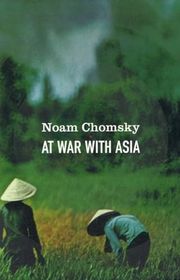
At War With Asia
by Noam Chomsky
1971
Drawing on visits and research, Chomsky examines American intervention in Vietnam, Cambodia and Laos. He connects military policy with political and economic interests, arguing that imperial ambitions carry destructive consequences both for affected populations and for society at home.
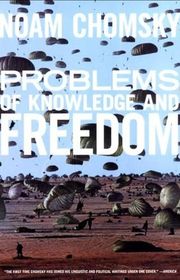
Problems of Knowledge and Freedom
by Noam Chomsky
1972
These lectures connect questions about human understanding with the moral responsibilities of political action. Chomsky moves from philosophical and linguistic inquiry to criticism of the Vietnam War, Cold War ideology and the institutions shaping American decision-making.
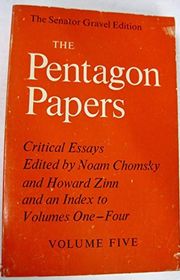
The Pentagon Papers
by Noam Chomsky
1972
Edited by Chomsky and Howard Zinn, these essays examine the Pentagon Papers and American decisions in Vietnam. The volume supplements the government documents with critical perspectives and an index to the preceding four volumes.
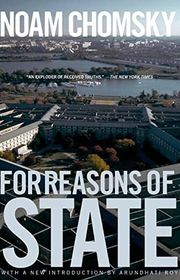
For Reasons of State
by Noam Chomsky
1973
Essays examine the Vietnam War, the Pentagon Papers and the use of force in international affairs. Alongside criticism of American foreign policy, Chomsky considers civil disobedience, universities and anarchism, connecting political events with broader questions about authority.
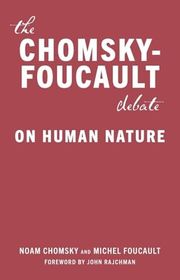
The Chomsky-Foucault Debate: On Human Nature
by Noam Chomsky
1974
Chomsky and Foucault debate whether an innate human nature exists independently of experience. Their exchange moves from language, knowledge and creativity into political freedom and justice, followed by additional writings that develop the contrasting positions of both thinkers.
Reflections on Language
by Noam Chomsky
1975
Noam Chomsky considers what studying language reveals about human knowledge and cognitive development. He argues that linguistic growth depends substantially on inherited capacities, examining disputes about learning, mental structures, and the implications of human nature.
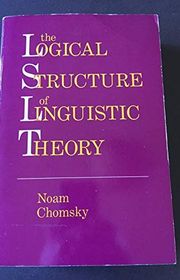
The Logical Structure of Linguistic Theory
by Noam Chomsky
1975
This foundational study sets out the principles of transformational generative grammar and their place within a general theory of language. Chomsky develops the theoretical framework through its application to English, examining how linguistic structures can be systematically described.
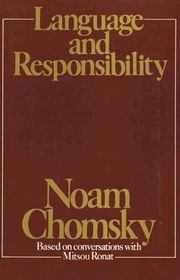
Language and Responsibility
by Noam Chomsky
1977
In conversations with Mitsou Ronat, Chomsky discusses the connections between his linguistic research, political criticism and moral commitments. The exchanges present his views on language alongside questions about contemporary public life, responsibility and the uses of intellectual work.
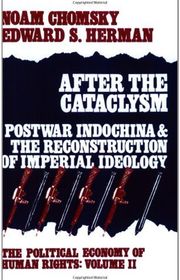
After the Cataclysm
by Noam Chomsky
1979
Chomsky and Edward Herman examine postwar Indochina, focusing on Cambodia and the aftermath of American intervention. They challenge Western media accounts of the region and explore how reporting reconstructs political narratives while obscuring the consequences of United States foreign policy.
The Washington Connection and Third World Fascism
by Noam Chomsky
1979
Noam Chomsky and Edward Herman examine American support for repressive regimes in Latin America, Asia, and Africa. They argue that official scholarship and news coverage obscure the relationship between United States policy and human rights abuses.
Rules and Representations
by Noam Chomsky
1980
Chomsky investigates human cognitive capacities through language, arguing for an inherited universal grammar shared across languages. Drawing on philosophy and biology, he considers how mental structures can be studied scientifically and whether comparable systems govern other forms of thought.
Lectures on Government and Binding
by Noam Chomsky
1981
Based on lectures delivered in Pisa, Noam Chomsky develops a framework for analyzing natural language syntax. The book examines core grammar, government and binding, and empty categories within his continuing investigation of universal grammatical principles.
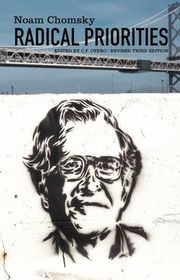
Radical Priorities
by Noam Chomsky
1981
This collection brings together essays and interviews outlining Chomsky’s libertarian political outlook. Edited by Carlos Otero, it explores the arguments and motivations behind his criticism of power, presenting related aspects of his social philosophy in one volume.
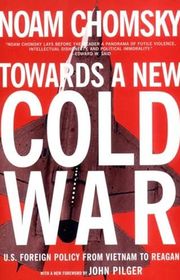
Toward a New Cold War
by Noam Chomsky
1982
Chomsky traces American foreign policy from the Vietnam era through the early Reagan administration. Essays examine military intervention, intellectuals’ relationship to state power and renewed superpower confrontation, with attention to Central America, the Middle East and East Timor.
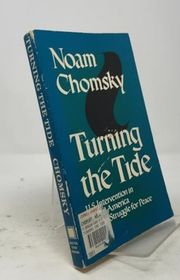
Turning the Tide
by Noam Chomsky
1985
Chomsky examines American intervention in Central America, connecting regional policy with wider military and economic goals. He also asks how domestic institutions shape public understanding and how citizens might challenge the policies carried out in their name.
Barriers
by Noam Chomsky
1986
This technical study examines how grammatical structures restrict relationships between words and the movement of elements within sentences. Chomsky investigates whether a unified account of syntactic barriers can explain patterns associated with government, locality and otherwise puzzling grammatical constructions.
Pirates and Emperors, Old and New
by Noam Chomsky
1986
Noam Chomsky examines how governments define terrorism and use selected violent incidents to justify military action. These essays contrast Western responses to attacks with state violence, focusing on international power, the Middle East, and political rhetoric.
Language and Problems of Knowledge
by Noam Chomsky
1987
These lectures introduce questions about what it means to know a language, how that knowledge develops and how people use it. Chomsky connects linguistic theory with the mind’s underlying mechanisms and broader inquiries into human nature.
The Chomsky Reader
by Noam Chomsky
1987
This selection of published and unpublished work brings together Chomsky’s political and linguistic thinking. Essays address war, state power, the media and human creativity, while an extended interview places those arguments in the context of his intellectual and personal development.
The Culture of Terrorism
by Noam Chomsky
1988
Chomsky examines the Iran-Contra scandal as a window onto American political culture. His critique connects the affair to the structures that sustain state violence while considering the possibility of public resistance to those policies.
Necessary Illusions
by Noam Chomsky
1989
Noam Chomsky examines how media and political power shape public understanding in democratic societies. Developing a propaganda model of analysis, he questions the limits of permitted debate and considers the possibility of resisting systems of thought control.
Recommended by
1 person Eric Weinstein recommended this book
Eric Weinstein
Eric Weinstein tweet about books that mattered enough to him.
Eric Weinstein's recommendation of this book
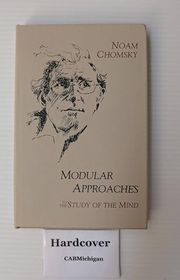
Modular Approaches to the Study of the Mind
by Noam Chomsky
1990
Chomsky draws on the history and methods of cognitive psychology to examine problems of thought and perception. He considers how studying the mind in terms of distinct capacities bears on the relationship between mental processes and the body.
Deterring Democracy
by Noam Chomsky
1991
Noam Chomsky examines American foreign policy during the Cold War and its aftermath, questioning official claims about defending freedom. He argues that the pursuit of global dominance helps explain support for authoritarian regimes and resistance to independent governments.
Terrorizing the Neighborhood
by Noam Chomsky
1991
Chomsky examines United States foreign policy as the Cold War ends. This short work considers American power in a changing international setting, asking how its exercise should be understood beyond the confrontation that previously shaped public debate.
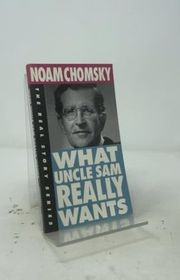
What Uncle Sam Really Wants
by Noam Chomsky
1991
Drawing on talks and interviews from the late 1980s and early 1990s, Chomsky examines the interests behind American foreign policy. Particular attention to Central America connects stated national aims with the consequences of intervention.
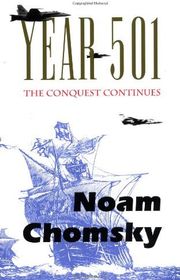
Year 501
by Noam Chomsky
1992
Chomsky examines a global order shaped by conquest and unequal power, with chapters addressing Haiti, Latin America and economic hierarchy. His analysis connects international domination with the conditions of marginalized people within wealthy countries.
Letters from Lexington
by Noam Chomsky
1993
Noam Chomsky scrutinizes American news coverage and its relationship to domestic and foreign policy. These essays examine reporting during the Reagan and first Bush administrations, challenging narratives about democracy, international conflict, and the exercise of power.
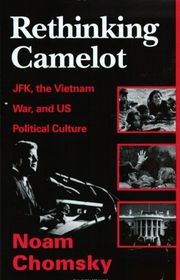
Rethinking Camelot
by Noam Chomsky
1993
Chomsky reexamines John F. Kennedy’s role in the Vietnam War and challenges assumptions surrounding his presidency. The analysis places decisions about intervention within an elite political culture shaped by the Cold War and its justifications.
The Prosperous Few and the Restless Many
by Noam Chomsky
1993
In conversations with David Barsamian, Noam Chomsky examines global economic power and widening social inequalities. Discussions address international trade, NAFTA, biotechnology, race, and class, presenting his critique of arrangements that weaken democratic participation and accountability.
World Orders Old and New
by Noam Chomsky
1994
Noam Chomsky examines international politics after the Second World War and the collapse of the Soviet Union. He challenges claims that a new global order fundamentally changed Western power, connecting foreign policy with growing economic inequality.
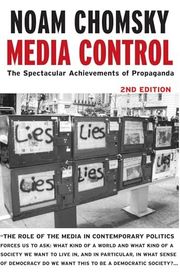
Media Control
by Noam Chomsky
1995
Chomsky examines how propaganda and public relations build public support for war, tracing examples from Woodrow Wilson to the Gulf War. He contrasts democratic participation with a model in which citizens are spectators whose opinions are managed.
The Minimalist Program
by Noam Chomsky
1995
In four essays, Noam Chomsky develops a minimalist approach to linguistic theory within cognitive science. He explores whether grammatical operations and representations can be explained through economy, computational efficiency, and constraints imposed by language's interfaces.
Powers and Prospects
by Noam Chomsky
1996
Chomsky brings reflections on language and human nature together with analysis of international politics. Discussions of the Middle East and East Timor connect questions about social order with the ways powerful institutions shape political possibilities.
Perspectives on Power
by Noam Chomsky
1997
Chomsky examines language, human nature, and the responsibilities of intellectuals alongside questions of democracy and international power. Essays on East Timor and the Middle East connect his political criticism with broader reflections on markets, consent, and social organization.
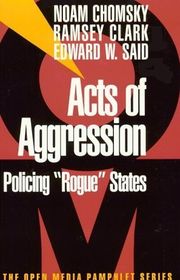
Acts of Aggression
by Noam Chomsky
1999
Chomsky, Edward Said, and Ramsey Clark examine the United States’ confrontation with Iraq in three essays. They question how governments define rogue states, assess American attitudes toward the Arab world, and consider the conflict’s relationship to international law.
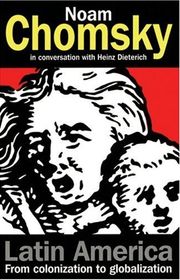
Latin America
by Noam Chomsky
1999
In conversations with Heinz Dieterich, Chomsky examines Latin America’s history of conquest and its position in a globalizing economy. Discussions connect colonial dependence with contemporary crises, regional autonomy, and the continuing influence of United States policy.
Profit Over People
by Noam Chomsky
1999
Noam Chomsky critiques neoliberal economic policies and their relationship to corporate power. He argues that market-centered reforms restrict democratic participation and subordinate public needs to profit, examining the political arrangements behind the contemporary global economy.
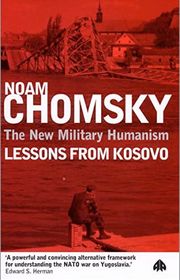
The New Military Humanism
by Noam Chomsky
1999
Examining NATO’s intervention in Kosovo, Chomsky asks whether humanitarian language accurately explains the decision to use force. He compares declared principles with diplomatic records and the behavior of Western powers, questioning the interests behind the military campaign.
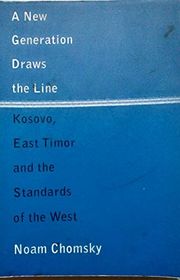
A New Generation Draws the Line
by Noam Chomsky
2000
Chomsky examines Western claims to humanitarian intervention through the conflicts in Kosovo and East Timor. Comparing official rhetoric with decisions made by powerful states, he questions whether the standards invoked to justify intervention are applied consistently.
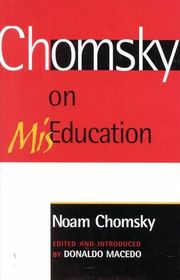
Chomsky on MisEducation
by Noam Chomsky
2000
Chomsky argues that democratic life depends on an education that encourages independent inquiry rather than obedience. His criticism connects schools and universities with media, global technological change, and the political assumptions that shape what students learn about society.
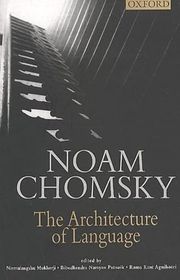
The Architecture of Language
by Noam Chomsky
2000
Based on a lecture at the University of Delhi, Chomsky reviews the development of generative linguistics and its implications for understanding the mind. He connects the history of the field with advances in grammatical theory and questions about human language.
9-11
by Noam Chomsky
2001
Noam Chomsky responds to the September 11 attacks by examining their international context and America's foreign policy history. He criticizes the escalating military response, arguing that retaliation risks further violence against civilians at home and abroad.
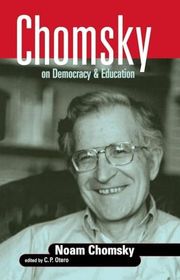
Chomsky on Democracy and Education
by Noam Chomsky
2002
This collection brings together Chomsky’s writings, talks, and interviews about education, language, and political power. He considers how schools and universities can support independent thought, democratic citizenship, and humane social arrangements rather than reproduce existing systems of authority.
Understanding Power
by Noam Chomsky
2002
Edited by Peter Mitchell and John Schoeffel, this collection presents Noam Chomsky's discussions of political power. Talks and exchanges range from the Vietnam War to domestic welfare policy, offering an accessible account of his analysis of modern institutions.
Power and Terror
by Noam Chomsky
2003
Drawing on public talks and an extended interview after September 11, Chomsky examines terrorism and American foreign policy. He argues for applying consistent moral standards to state violence and considers alternatives to militarism grounded in an informed, active public.
Getting Haiti Right This Time
by Noam Chomsky
2004
Noam Chomsky, Paul Farmer, and Amy Goodman examine the removal of Haitian president Jean-Bertrand Aristide in 2004. Their account situates the crisis within Haiti's political history, challenging American influence and prevailing explanations of the coup.
The Generative Enterprise Revisited
by Noam Chomsky
2004
Discussions conducted more than twenty years apart trace Chomsky’s thinking about generative grammar and its scientific aims. The conversations explore the reality of grammar, explanation in linguistic theory, and language evolution while showing how his approach developed over time.
Perilous Power
by Noam Chomsky
2006
In dialogue, Chomsky and Gilbert Achcar examine Middle Eastern conflicts and the role of United States policy. Their discussions address terrorism, fundamentalism, oil, democracy, racism, the Israeli-Palestinian conflict, and the wars in Afghanistan and Iraq.
The Essential Chomsky
by Noam Chomsky
2008
This selection gathers Chomsky’s writings on politics, language, philosophy, and media across several decades. Essays and excerpts examine intellectual freedom, human rights, American foreign policy, and the institutions that shape public understanding and protect entrenched power.
Gaza in Crisis
by Noam Chomsky
2010
Noam Chomsky and Ilan Pappe examine Gaza's crisis through essays and interviews about Israeli-Palestinian relations. They place Operation Cast Lead within the conflict's longer history, assessing its consequences and the political obstacles to a settlement.
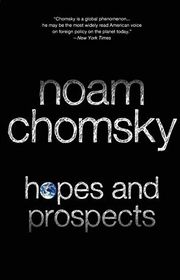
Hopes and Prospects
by Noam Chomsky
2010
Chomsky surveys early twenty-first-century conflicts, economic inequality, American exceptionalism, and the financial crisis. Alongside criticism of war and concentrated power, he considers democratic movements in Latin America and international solidarity as sources of hope for greater freedom and justice.
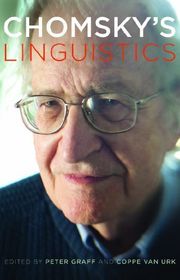
Chomsky's Linguistics
by Noam Chomsky
2012
Eleven papers trace the development of Chomsky’s work in generative linguistics across more than thirty-five years. Moving from nominalization to phase theory, the collection presents influential arguments about syntax, linguistic structure and the principles underlying human language.
Occupy
by Noam Chomsky
2012
Through talks and conversations with supporters, Noam Chomsky examines the Occupy movement's challenge to corporate power and economic inequality. He considers political participation, democratic elections, and the relationship between concentrated wealth and the experiences of ordinary people.
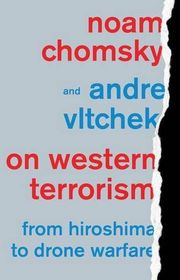
On Western Terrorism
by Noam Chomsky
2013
Chomsky and filmmaker André Vltchek discuss Western power, propaganda and imperial control through historical analysis and personal experience. Their conversation ranges across countries where they have worked, connecting political activism with criticism of dominant accounts of international affairs.
Democracy and Power: The Delhi Lectures
by Noam Chomsky
2014
Lectures delivered during Chomsky’s visits to India examine democracy, corporate propaganda, intellectual responsibility and international power. These talks introduce his political arguments while questioning prevailing explanations of inequality and defending both individual freedom and social equality.
Because We Say So
by Noam Chomsky
2015
More than thirty commentaries written between 2011 and 2015 challenge official accounts of American politics and global power. Chomsky addresses surveillance, climate change, war and state authority while connecting current disputes to broader questions about democracy and public responsibility.
On Palestine
by Noam Chomsky
2015
Chomsky and historian Ilan Pappé examine Palestinian prospects after the 2014 assault on Gaza. They consider international solidarity, Israeli policy and possible routes toward political change, arguing about how outside pressure might address continuing abuses and inequality.
What Kind of Creatures Are We?
by Noam Chomsky
2015
These lectures connect Chomsky’s work on language with questions about thought, human cognitive limits and political freedom. He examines rival theories of linguistic development before explaining the philosophical basis of his commitment to libertarian socialism.
The Climate Crisis and the Global Green New Deal
by Noam Chomsky
2020
Chomsky and economist Robert Pollin examine the consequences of unchecked climate change and propose a global Green New Deal. They argue that abandoning fossil fuels can improve workers’ lives, outlining political and economic changes needed for the transition.
Between Thought and Expression Lies a Lifetime
by James Kelman & Noam Chomsky
2021
James Kelman and Noam Chomsky explore how ideas shape understanding and action through essays, interviews and correspondence. Their exchanges connect political inquiry with personal experience, asking how people can resist imposed limits on thought and take control of their lives.
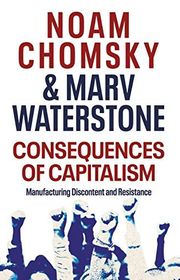
Consequences of Capitalism
by Noam Chomsky
2021
Drawing on a shared lecture course, Chomsky and Waterstone examine how capitalism shapes politics, everyday assumptions and structural power. They connect neoliberal ideology to divisions within social movements and consider how resistance might build a more sustainable, just society.
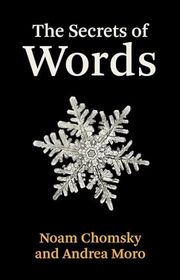
The Secrets of Words
by Noam Chomsky
2022
Linguists Chomsky and Andrea Moro discuss language, the brain and the limits of scientific explanation. Their exchange considers children’s language acquisition, artificial intelligence and impossible grammars, asking which familiar assumptions deserve surprise and which mysteries may remain unresolved.
The Withdrawal
by Noam Chomsky
2022
Chomsky and Vijay Prashad examine the American withdrawal from Afghanistan alongside the wars in Iraq and Libya. Their discussion traces military failure, its consequences for affected societies and the changing limits of United States power in the world.
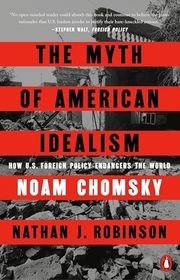
The Myth of American Idealism
by Noam Chomsky
2024
Chomsky and Nathan J. Robinson challenge the benevolent narratives used to justify American foreign policy. Reviewing wars, economic intervention, nuclear proliferation and climate change, they argue that the pursuit of global dominance repeatedly endangers the people it claims to protect.
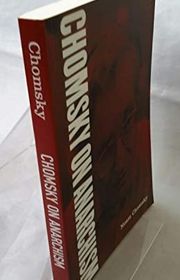
Chomsky on Anarchism
by Noam Chomsky
Essays and interviews explore the anarchist principles behind Chomsky’s political commitments. Drawing on both familiar and rarely published material, the collection considers authority, libertarian socialism, social change, and the possibilities for forms of cooperation that resist domination.
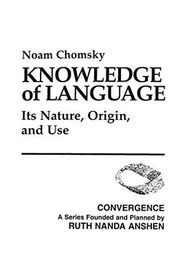
Knowledge of Language
by Noam Chomsky
Chomsky examines what linguistic knowledge reveals about the human mind, asking why people understand far more than their immediate evidence appears to justify. Questions about grammar, learning and the limits of knowledge connect language theory with broader philosophical concerns.
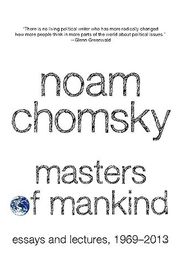
Masters of Mankind
by Noam Chomsky
Essays and lectures spanning decades examine the moral and legal questions surrounding state power, from the Cold War to the war on terror. Chomsky challenges the ideologies used to justify empire and defend privilege against wider public interests.
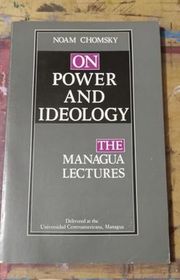
On Power and Ideology
by Noam Chomsky
These five lectures, delivered in Managua during the Nicaraguan civil war, outline Chomsky’s analysis of American power. He examines persistent patterns in foreign policy, Central America, the arms race, national security, and the relationship between international and domestic priorities.
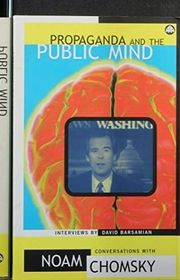
Propaganda and the Public Mind
by Noam Chomsky
In conversations with David Barsamian, Chomsky discusses media influence, activist movements, and American foreign policy. The interviews consider protests against the World Trade Organization, East Timor, and the movement toward another Iraq war, alongside his political influences.
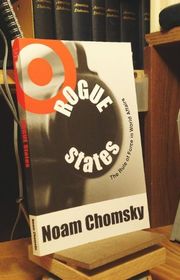
Rogue States
by Noam Chomsky
Chomsky questions the political use of the term rogue state, comparing official standards with the conduct of powerful nations. Essays examine international law, military intervention, East Timor, the Balkans, and United States policy across Latin America.
Standalone Noam Chomsky books







The Washington Connection and Third World Fascism
by Noam Chomsky
1979The Political Economy of Human Rights: Volume I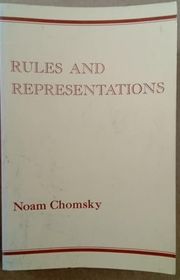














by Noam Chomsky
2006The Middle East and U.S. Foreign Policy: Dialogues on Terror, Democracy, War, and Justice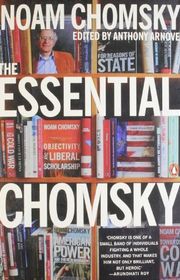



The Climate Crisis and the Global Green New Deal
by Noam Chomsky
2020The Political Economy of Saving the Planet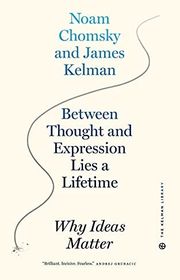

















Edited by
Software engineer whose passion for tracking book recommendations from podcasts inspired the creation of MRB.
Lead investor at 3one4 Capital whose startup expertise and love for books helped shape MRB and its growth.
Comments
Spotted a missing book, a wrong order or a mistake? Tell us and we'll fix this page.
We're a reading guide, not the author or publisher, so we can't send books or pass on messages.