
Noah Gordon Books in Order
Explore Noah Gordon books in order, with short summaries, Cole trilogy background, an author bio, and simple tips on where to start reading.
Last updated:
As an Amazon Associate, we earn from qualifying purchases (at no extra cost to you).
Noah Gordon books in publication order
10 books
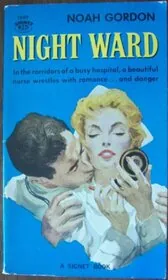
Night Ward
by Noah Gordon
1960
A nurse nursing a broken heart finds herself caught between a doctor and a policeman while a killer stalks the hospital grounds. Gordon mixes medical melodrama with a compact suspense plot.
Bamboo Ward
by Noah Gordon
1962
A United Nations medical mission enters a jungle country where disease, danger, and political tension are never far away. As doctors and nurses try to help, their own loyalties and desires become part of the crisis.
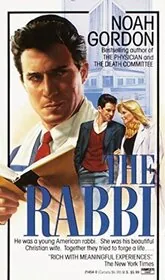
The Rabbi
by Noah Gordon
1965
Michael Kind, a young rabbi, falls for the daughter of a Protestant minister and finds love pulling against duty. Gordon uses his story to look closely at faith, family, and Jewish life in modern America.
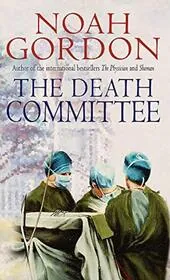
The Death Committee
by Noah Gordon
1969
At a Boston teaching hospital, three young surgical fellows learn under constant pressure and scrutiny. The monthly mortality conference hangs over everything, forcing them to face mistakes, ambition, and the human cost of becoming doctors.
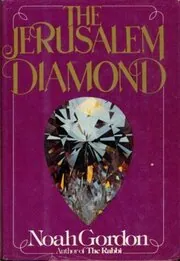
The Jerusalem Diamond
by Noah Gordon
1979
Harry Hopeman, born into a diamond-trading family, is drawn into the search for a legendary stone linked to Jewish history. Love, business, and archaeology collide in a wide-ranging story about obsession, inheritance, and the pull of the past.
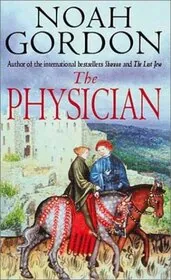
The Physician
by Noah Gordon
1986
Orphaned in eleventh-century England, Rob Cole crosses Europe to study medicine in Persia under Avicenna. It is a sweeping story of learning, faith, and ambition, shaped by one young healer's stubborn wish to understand illness and outwit death.
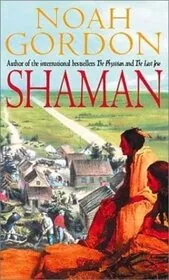
Shaman
by Noah Gordon
1992
In frontier Illinois, Robert Judson Cole builds a life as a doctor while his deaf son, Shaman, fights to claim a future of his own. Medicine, Native healing, prejudice, and the Civil War all press in on the family.
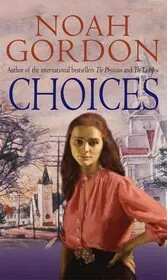
Choices / Matters of Choice
by Noah Gordon
1995
Dr. Roberta Cole, a modern descendant of the Cole medical line, faces hard choices about career, marriage, rural life, and abortion rights. Gordon brings the family saga into late twentieth-century medicine, where private convictions can reshape a whole life.
The Last Jew
by Noah Gordon
1999
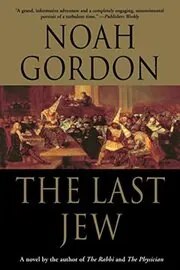
After violence destroys his family in 1492 Spain, young Yonah Toledano is left to survive the Inquisition alone. His long journey becomes a story of exile, hidden identity, and a stubborn refusal to give up his faith.
The Winemaker
by Noah Gordon
2006
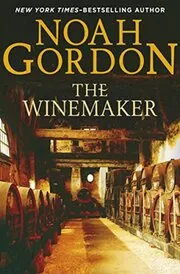
Josep Alvarez, a second son with no land to inherit, is pulled from a Catalan village into war and political intrigue. His struggle to survive, love, and learn the craft of wine drives this earthy, generous historical novel.
Where to start with Noah Gordon
If you want the big historical saga: The Physician → Shaman → Choices / Matters of Choice
If you want medicine at the center: The Death Committee → The Physician → Choices / Matters of Choice
If you want Jewish history and identity: The Rabbi → The Last Jew → The Jerusalem Diamond
If you want Spain on the page: The Last Jew → The Winemaker
Noah Gordon sub-series and character series
Cole Family Trilogy books in order
Explore this seriesCole Family Trilogy books in chronological order
Standalone Noah Gordon books
Author bio
Noah Gordon was born in Worcester, Massachusetts, on November 11, 1926, and grew up in a working-class Jewish family. He later wrote with real affection about the city, its streets, and the people around him. His grandmother Sarah Melnikoff lived with the family for decades and was, by his own account, a second mother, which says a lot about the close family world that shaped him.
He came of age during World War II.
Gordon hoped to serve in the Navy, but because he wore glasses and was color-blind, he ended up in the United States Infantry. The war ended before he saw combat, and he finished his service as an Army clerk in San Francisco. Like many veterans, he used the GI Bill for college. His parents wanted medicine for him, but after one semester of pre-med he quietly switched to journalism at Boston University, which suited the two things he had wanted since childhood, newspaper work and writing books.
That turn mattered. At Boston University he earned a journalism degree in 1950 and an M.A. in English and creative writing in 1951. Along the way he met Lorraine Seay, a Clark University student who became his wife and one of the steady supports of his life. The two spent some early years in New York, where Gordon worked at Avon and then at a small magazine called Focus, before returning to Massachusetts to build a family and a working life closer to home.
Back in Massachusetts, he reported for The Worcester Telegram and then the Boston Herald. At the Herald he moved toward science and medical reporting, watched autopsies, observed surgeons at work, and edited medical publications. That practical, up-close knowledge of hospitals and doctors fed straight into his fiction. You can feel it in books like The Death Committee, which looks hard at how young doctors learn, fail, and keep going.
He was a newspaperman first, but the novels kept pulling at him.
His debut novel, The Rabbi, arrived in 1965 and spent 26 weeks on the bestseller list. It drew on his own background in an American Jewish family, and it set the pattern for a lot of his later work, big questions of belief and identity, mixed with love stories, family pressure, and people trying to do decent work in a messy world. Later books widened the canvas. The Physician follows Rob Cole from England to Persia in search of medical knowledge, Shaman carries the family line into frontier America, and The Last Jew and The Winemaker show how deeply Gordon cared about Spanish history.
His biggest commercial success came a little late. The Physician had a slow start in the United States, then found a huge readership in Germany and Spain. Shaman won the first James Fenimore Cooper Prize for historical fiction, and his later work kept circling back to medicine, moral choice, exile, faith, and the stubborn business of surviving history. Readers often come to Gordon for the sweep of the settings, but stay for the people inside them.
For years Gordon and Lorraine lived in Ashfield, Massachusetts, on land with woods, a river, and plenty of room for gardening and writing. He worked in a space above the garage, volunteered as an EMT, and served on the local library board. In 1995 they moved back to the Boston area. Gordon died on November 22, 2021, in Dedham, Massachusetts, at 95. By then his books had found devoted readers around the world, and his long career had turned his early interests, medicine, newspapers, history, and family, into fiction that still feels warm, curious, and very human.




Edited by
Software engineer whose passion for tracking book recommendations from podcasts inspired the creation of MRB.
Lead investor at 3one4 Capital whose startup expertise and love for books helped shape MRB and its growth.
Comments
Did we miss something? Have feedback?
Help us improve this page by sharing your thoughts