
Naomi Klein Books in Order
Browse Naomi Klein books in order, with short summaries, where to start, and a clear guide to her key books on globalization, power, and climate.
Last updated: 1 new book added
As an Amazon Associate, we earn from qualifying purchases (at no extra cost to you).
Naomi Klein books in publication order
13 books
Fences and Windows
by Naomi Klein
2000
This collection of essays and speeches follows the globalization debate from the Seattle WTO protests into the post-9/11 years. Klein writes about free trade, dissent, activism, and what resistance looked like on the ground.

No Logo
by Naomi Klein
2000
Klein's breakthrough book examines the rise of branding, corporate power, sweatshop labor, and anti-corporate resistance. It connects advertising and consumer culture to the hidden labor and politics behind global brands.
Recommended by
1 person Richa Chadha recommended this book
Richa Chadha
"Made me reassess consumerism and greed." - Richa Chadha
Richa Chadha's recommendation of this book
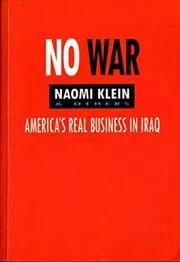
No War
by Naomi Klein
2005
Using Iraq as its focus, this short book looks at war, occupation, and the business interests tied to them. It asks who benefited from privatization and reconstruction, and who paid the human cost.
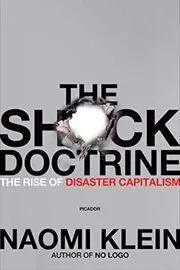
The Shock Doctrine
by Naomi Klein
2006
From Chile and Russia to Iraq and post-Katrina New Orleans, Klein traces how crisis can be used to force through privatization and austerity. It is a wide-ranging history of what she calls disaster capitalism.
Recommended by
1 person Brit Marling recommended this book
Brit Marling
"Amazing and important to read or re-read right now." - Brit Marling
Brit Marling's recommendation of this book
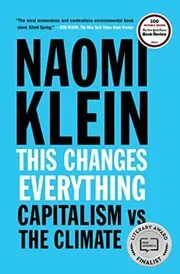
This Changes Everything
by Naomi Klein
2014
Klein argues that climate change is not just an environmental issue but a challenge to the economic rules that produced it. The book links emission cuts, local rebuilding, and social justice in one sweeping case for change.
Recommended by
1 person- Brit Marling recommended this book
Brit Marling
"An urgent read." - Brit Marling
Brit Marling's recommendation of this book
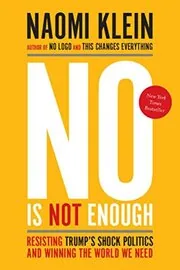
No Is Not Enough
by Naomi Klein
2017
Written in the wake of Donald Trump's 2016 victory, this book argues that he was not an accident but an extreme product of deeper political and corporate trends. Klein also lays out the kind of movement she believes could answer him.
Recommended by
1 person Olivia Wilde recommended this book
Olivia Wilde
"Inspiring kick in the ass." - Olivia Wilde
Olivia Wilde's recommendation of this book
The Battle For Paradise
by Naomi Klein
2018
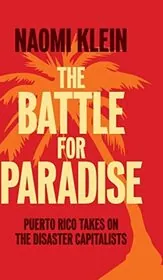
After Hurricane Maria, Puerto Rico becomes a battleground over who gets to shape the island's future. Klein follows local organizers, community projects, and outside investors in a sharp look at disaster capitalism.

A Planet to Win
by Naomi Klein
2019
This slim manifesto sketches a Green New Deal built around public investment, clean energy, jobs, housing, and transit. It treats the climate crisis and inequality as linked problems that have to be tackled together.
%20Case%20for%20a%20Green%20New%20Deal.jpg)
On Fire
by Naomi Klein
2019
This essay collection brings together Klein's climate reporting and political writing at a moment of deep urgency. She argues that a Green New Deal could tackle rising temperatures and inequality at the same time.
Hot Money
by Naomi Klein
2021
In this short volume, Klein argues that deregulated capitalism has fueled the climate crisis. She makes a compact case that any real response will require changing how the economy is organized.
How to Change Everything
by Naomi Klein
2021
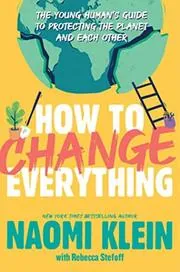
A clear, youth-focused guide to climate change that explains how we got here and what can still be done. Along the way, Klein highlights young activists and offers practical ways to join the fight for climate justice.
Doppelganger
by Naomi Klein
2023
Starting with years of being mistaken for Naomi Wolf, Klein uses the idea of the double to explore conspiracy culture, online identity, and political unreality. It is part memoir, part cultural analysis, and part map of the mirror world.
End Times Fascism
by Naomi Klein
2026
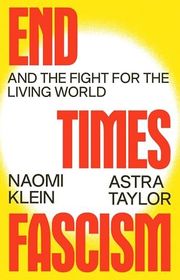
Naomi Klein and Astra Taylor examine how religious fundamentalists, technology elites and nationalists embrace visions of coming catastrophe. They argue that efforts to secure survival for a chosen few expose contradictions that collective politics grounded in shared life could challenge.
Where to start with Naomi Klein
If you want the breakout book on brands and globalization: No Logo → Fences and Windows
If you want her big argument about crisis and power: The Shock Doctrine → No Is Not Enough
If you're most interested in climate justice: This Changes Everything → On Fire → How to Change Everything
If you want the most personal recent book: Doppelganger
Naomi Klein collections, short stories, and related book types
Non-Fiction

by Naomi Klein
2021The Young Human's Guide to Protecting the Planet and Each Other

Jacobin Books
Standalone Naomi Klein books
Author bio
Naomi Klein was born in Montreal in 1970 to American parents who had moved to Canada because of the Vietnam War. She spent part of her childhood in Rochester, New York, before the family returned to Montreal. Her mother, Bonnie Sherr Klein, was a filmmaker. Her father, Michael Klein, was a doctor. Politics, media, and activism were part of the household from the start.
She did not grow up sounding like the writer readers know now.
As a teenager, Klein has said she was more interested in style and consumer culture than in joining every cause around her. Then life hit hard. After high school, her mother had a severe stroke, and Klein spent months helping care for her. Not long after, the 1989 massacre at Montreal's École Polytechnique pushed her toward feminism and politics in a more direct way. At the University of Toronto she threw herself into student journalism, became editor-in-chief of The Varsity, and eventually left school to work at The Globe and Mail and later This Magazine.
Her first book, No Logo, arrived at exactly the right moment. It looked at branding, sweatshops, outsourcing, and the way corporations were moving beyond products and into culture itself. What made the book stick was not just the argument. Klein could connect boardroom decisions to shopping malls, campuses, workplaces, and street protests, so the story felt lived in rather than abstract.
She has a knack for making huge systems feel close to hand.
That carried into Fences and Windows, a collection shaped by the protest years around Seattle and the post-9/11 turn, and then into The Shock Doctrine, probably her best-known work after No Logo. In that book she argued that wars, coups, market crashes, and natural disasters are often used to push through hardline privatization and deregulation while people are too shocked to resist. The book helped fix the phrase disaster capitalism in public debate, and it also fed into film work, including projects she made with journalist and filmmaker Avi Lewis.
Over time, climate became more and more central to her writing. This Changes Everything argues that climate change cannot be separated from the economic system driving extraction and inequality. On Fire gathers reporting and essays from the front lines of climate breakdown and makes the case for a Green New Deal. With How to Change Everything, adapted with Rebecca Stefoff for younger readers, she brought those ideas to kids and teens in a practical, less intimidating way.
Then Doppelganger took a more personal turn.
The book begins with years of being mistaken for Naomi Wolf, but it opens into something bigger: a study of online confusion, conspiracy thinking, political doubles, and the strange mirror world created by digital life. It is part memoir, part reported argument, and it shows another side of Klein's work. She is still following power, money, and ideology, but now she is also asking what happens when reality itself starts to splinter.
Across all these books, a few threads keep coming back. Klein writes about who benefits from crisis, who pays for it, and how ordinary people build movements in response. She returns again and again to questions of corporate power, war, privatization, climate justice, and the possibility of collective action. Even when the subject is huge, her instinct is to look for the people inside the system, not just the theory above it.
Today she is an associate professor in geography and UBC Professor of Climate Justice at the University of British Columbia, where she is also a founding co-director of the Centre for Climate Justice. She is also an honorary professor of Media and Climate at Rutgers. That mix of writing, teaching, and organizing suits her. She still works at the point where reporting meets argument, and where a book is meant to do more than sit quietly on a shelf.













Edited by
Software engineer whose passion for tracking book recommendations from podcasts inspired the creation of MRB.
Lead investor at 3one4 Capital whose startup expertise and love for books helped shape MRB and its growth.
Comments
Did we miss something? Have feedback?
Help us improve this page by sharing your thoughts