
N. Scott Momaday Books in Order
Find N. Scott Momaday books in order, with short summaries and guides to the author's series that help you choose where to start and what to read next.
Last updated:
As an Amazon Associate, we earn from qualifying purchases (at no extra cost to you).
N. Scott Momaday books in publication order
16 books
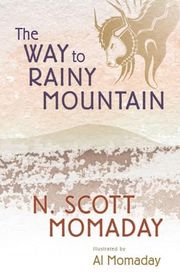
The Way to Rainy Mountain
by N. Scott Momaday
1969
Kiowa legends, historical accounts and personal memories follow a people’s migration and the sacred figure Tai-me. Returning to his grandmother’s grave, Momaday retraces his ancestors’ route and considers how landscape, family memory and storytelling preserve a disappearing way of life.
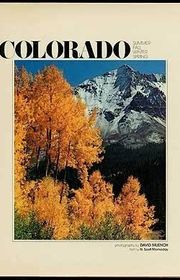
Colorado
by N. Scott Momaday
1973
N. Scott Momaday’s text accompanies David Muench’s photographs in a portrait of Colorado through summer, fall, winter and spring. The collaboration brings literary reflection and landscape photography together to present the state across the changing seasons.
Angle of Geese and Other Poems
by N. Scott Momaday
1974
This early poetry collection includes the title elegy, which reflects on a child’s death through language, memory and the natural world. Momaday’s poems draw on oral tradition while considering the mystery of nature and humanity’s relationship with it.
The Gourd Dancer
by N. Scott Momaday
1976
Drawing especially on Native American oral traditions, Momaday's poems move between the natural world and human society. Memories, legends and present experience meet in a collection shaped by several poetic traditions and ways of seeing.
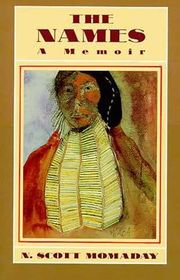
The Names
by N. Scott Momaday
1976
Momaday revisits his Oklahoma and Southwestern childhood through family memories, photographs and imaginative reconstruction. The memoir follows the people, places and inherited stories that shaped his identity, exploring how personal history connects with the life of his Kiowa ancestors.
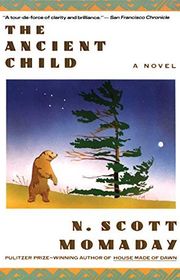
The Ancient Child
by N. Scott Momaday
1989
Raised away from his Native heritage, artist Locke Setman returns to tribal lands for his grandmother’s funeral. There he encounters a young medicine woman and the Kiowa story of a boy transformed into a bear, unsettling his understanding of himself.
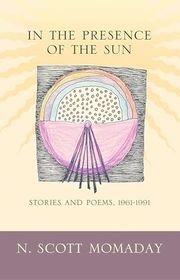
In the Presence of the Sun
by N. Scott Momaday
1992
Poems, stories and drawings bring together three decades of Momaday’s work, drawing on Kiowa rituals, landscapes and oral traditions. Animal dream-songs, imagined Western histories and meditations on sacred shields explore the relationship between memory, place and cultural survival.
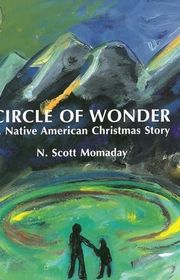
Circle of Wonder
by N. Scott Momaday
1993
After his grandfather dies, young Tolo retreats into loneliness. During the Christmas season, a vision leads him into the mountains and meadows, where encounters with wild creatures help him understand a sense of connection that reaches beyond his grief.
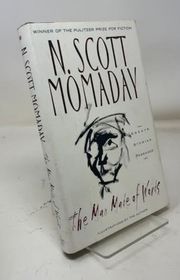
The Man Made of Words
by N. Scott Momaday
1997
Drawing on Kiowa family stories and memories of growing up at Jemez Pueblo, N. Scott Momaday explores language, identity, and relationships with the land. His essays consider Indigenous history, oral traditions, and the possibilities of American literature.
In the Bear's House
by N. Scott Momaday
1999
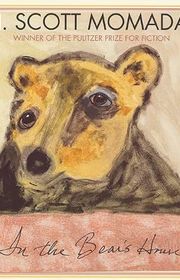
Using Bear as an expression of wilderness, Momaday explores solitude, violence and the sacred through prose, poetry and art. The collection considers the animal that has haunted his imagination and the relationships between human identity, spiritual life and the natural world.
Four Arrows & Magpie
by N. Scott Momaday
2006
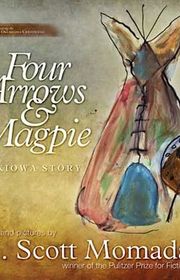
Two Kiowa children experience the dangers and wonders of a changing world in this illustrated retelling of their people's arrival in Oklahoma. Their story connects ancestral memory with the present, introducing young readers to Kiowa history and legend.
Three Plays
by N. Scott Momaday
2007
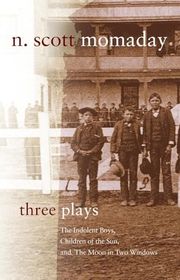
These theatrical works bring Momaday’s interest in Native history and storytelling to drama. Combining literary craft with oral traditions, the collection explores how a tribal community’s myths and cultural identity endure under pressure from an increasingly uniform surrounding society.
Again the Far Morning
by N. Scott Momaday
2011
New poems join selections from four earlier collections in a survey of Momaday’s poetic work. Kiowa traditions, the natural world and reflections on mortality recur alongside elegies, light verse and translations of songs, revealing the range of his forms and concerns.
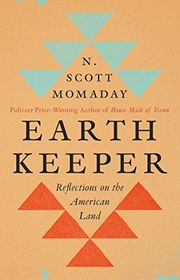
Earth Keeper
by N. Scott Momaday
2020
Drawing on personal memories and stories passed through generations, Momaday reflects on his people’s relationship with the American landscape. These meditations present the earth as a source of belonging and healing while urging respect for a natural world under threat.
The Death of Sitting Bear
by N. Scott Momaday
2020
More than two hundred new and selected poems trace Momaday’s relationship with Kiowa heritage, language and the Southwestern landscape. Alongside an honor song for Sitting Bear, the collection reflects on mortality, love, loss and the enduring power of oral tradition.
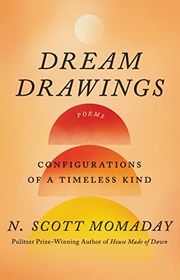
Dream Drawings
by N. Scott Momaday
2022
A hundred short prose pieces explore the meeting of language, dreams and imagination. Influenced by Native storytelling traditions and accompanied by Momaday’s paintings, these sketches consider animals, landscapes, warriors, memory, love and loss as expressions of the human spirit.
Where to start with N. Scott Momaday
For Kiowa stories, history and memory: The Way to Rainy Mountain
For his childhood memoir: The Names
For poetry: The Gourd Dancer → Again the Far Morning → The Death of Sitting Bear
For short prose and paintings: Dream Drawings
Standalone N. Scott Momaday books

by N. Scott Momaday
2007The Indolent Boys, Children of the Sun, and The Moon in Two Windows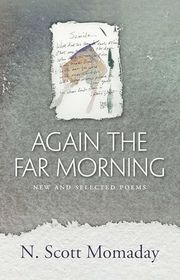

Author bio
N. Scott Momaday was a Kiowa writer born in Lawton, Oklahoma, in 1934. His father, Al, was a painter, and his mother was a writer of English and Cherokee descent. Both parents taught on reservations in the Southwest. Growing up among Navajo, Apache and Jemez Pueblo communities, Momaday came to writing with an early awareness of the different places, histories and spoken traditions surrounding him.
Words and images remained close companions throughout his career.
Momaday earned his undergraduate degree at the University of New Mexico, then completed a master's and doctorate at Stanford. His first novel, House Made of Dawn, won the Pulitzer Prize for Fiction in 1969. Although that novel established his place with a wide audience, his work also includes poems, memoir, essays, plays and stories for children. He was a painter as well, illustrating books and exhibiting his art. There isn't a single form through which a reader has to approach him.
The Way to Rainy Mountain is a strong starting point among the books here. Illustrated by his father, it brings together Kiowa oral tradition, historical commentary and Momaday's personal memories. The separate voices let a story exist at more than one distance: as something handed down, something considered through history, and something carried in a person's own experience. For readers interested in how memory belongs to a community as well as an individual, that structure is central to the book's appeal.
His memoir makes another kind of return.
The Names revisits his boyhood in Oklahoma and the Southwest, drawing on family photographs, remembered experience and imagination. Read it beside The Way to Rainy Mountain to follow the connections among family, place and identity. The two books offer different arrangements of material, but both make room for the way a childhood can be understood through the stories of people who came before it. Neither needs to be approached as a conventional novel with a plot to follow.
Poetry offers another entrance. The Gourd Dancer, In the Presence of the Sun and Again the Far Morning belong to that part of his work, while The Death of Sitting Bear gathers poems concerned with Kiowa heritage, mortality, love and the Southwestern landscape. For short prose accompanied by his paintings, try Dream Drawings. Its sketches bring animals, memory, dreams and imagination into a form that allows a reader to pause over a single piece rather than move quickly through a long narrative.
Momaday taught at Stanford, the University of California, Berkeley, and the University of Arizona, and received the National Medal of Arts in 2007. He died in Santa Fe on January 24, 2024. His books leave several paths into a life spent working with language and image: the joined voices of The Way to Rainy Mountain, the childhood memories of The Names, the poems, or the compact prose pieces of Dream Drawings. Begin with the form you most enjoy, then explore how the same attention to place and remembered stories moves between them.












Edited by
Software engineer whose passion for tracking book recommendations from podcasts inspired the creation of MRB.
Lead investor at 3one4 Capital whose startup expertise and love for books helped shape MRB and its growth.
Comments
Spotted a missing book, a wrong order or a mistake? Tell us and we'll fix this page.
We're a reading guide, not the author or publisher, so we can't send books or pass on messages.