
Mozart Books in Order
Part ofChristian Jacq Books in OrderSee the Mozart series by Christian Jacq in order, with book summaries, series background on Mozart, Freemasonry and Egypt, plus guidance on where to start this musical historical saga.
Last updated:
As an Amazon Associate, we earn from qualifying purchases (at no extra cost to you).
Mozart books in publication order
4 books
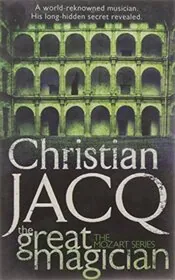
The Great Magician
by Christian Jacq
2006
Thamos, Count of Thebes and guardian of ancient Egyptian wisdom, is sent to Europe to find the foretold “Great Magician.” When he meets a six year old prodigy named Mozart, he suspects this child composer may be the one destined to carry the light forward.
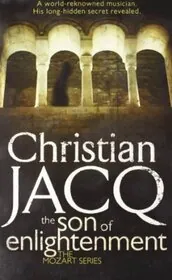
The Son of Enlightenment
by Christian Jacq
2006
Mozart can no longer bear the control of the Archbishop of Salzburg, so he breaks away for Vienna, where he meets Constance Weber and struggles to live by his music. Under Thamos’s guidance he enters Masonic circles, drawing both inspiration and political danger.
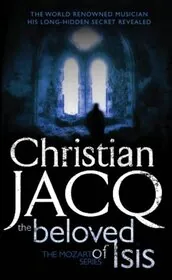
The Beloved of Isis
by Christian Jacq
2011
Vienna in 1789 is tense and suspicious, but an exhausted, debt ridden Mozart is determined to finish *The Magic Flute*. Guided by his friend Thamos and Masonic ideals, he pours the mysteries of Isis and Osiris into one last, dangerous masterpiece.
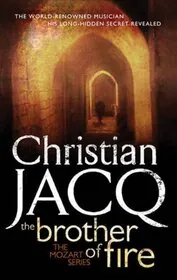
The Brother of Fire
by Christian Jacq
2011
In the third Mozart novel, Mozart throws himself into Masonic rites and channels their symbols into operas like Figaro and Don Giovanni. As his career peaks, surveillance, censorship and envious rivals threaten the fragile freedom that fuels his music.
Mozart books in chronological order
Series background & context
The Mozart series follows Wolfgang Amadeus Mozart’s life as a working composer, but it tells that story through the eyes of both Europe and ancient Egypt.
Jacq introduces Thamos, Count of Thebes, a fictional Egyptian noble who guards secret wisdom passed down from the pharaohs. Thamos is charged with finding the “Great Magician,” a genius whose art can carry that light into a troubled modern age. His search leads him not to a priest, but to a child prodigy racing between courts in Prague, Vienna and Frankfurt.
Across the four books, Mozart grows from a dazzling boy to an adult composer trying to earn a living, support a family and stay true to his imagination. Historical touchpoints are all here: service under the Prince‑Archbishop of Salzburg, the break that sends him to Vienna, his marriage to Constance Weber, and the struggle to keep work coming as fashions shift and debts mount. Jacq keeps the focus tight on rehearsals, quarrels and last minute rewrites, so the familiar legend feels more like the life of an overworked freelancer than a distant myth.
Threaded through this biography is the world of Freemasonry. Thamos slowly brings Mozart into Masonic circles inspired by Egyptian initiation rites, presenting them not as sinister cabals but as fraternities built on discipline, symbolism and mutual support. Meetings in candlelit lodges sit alongside rehearsals for Le nozze di Figaro and Don Giovanni, suggesting that the same search for harmony drives both ritual and music.
The later volumes follow Mozart as he uses these ideas more openly in his work. In The Brother of Fire he draws energy from Masonic rites and friendships even as church authorities and police begin to watch the lodges with suspicion. Rival musicians, jealous of his reach and his independence, scheme behind the scenes to shut down his productions. In The Beloved of Isis, set against the atmosphere of the French Revolution, he pours that esoteric symbolism into The Magic Flute, a fairy‑tale opera that doubles as a meditation on initiation and enlightenment.
Tone wise, the series reads like historical fiction with an esoteric twist. Vienna’s lanes, rehearsal rooms and gaming tables feel solid and lived in, while dreamlike scenes of Egyptian symbolism remind you that for Jacq, the past never really disappears. You can expect political tension, family worries, backstage rivalries and an undercurrent of spiritual adventure.
If you are curious about Mozart as a working artist, and you are interested in how eighteenth century Europe imagined ancient Egypt, this cycle gives you both. It is less about technical music analysis and more about the friendships, loyalties and ideas that might have shaped the man behind the scores.
Edited by
Software engineer whose passion for tracking book recommendations from podcasts inspired the creation of MRB.
Lead investor at 3one4 Capital whose startup expertise and love for books helped shape MRB and its growth.
Comments
Did we miss something? Have feedback?
Help us improve this page by sharing your thoughts