
Michel Benoit Books in Order
This page shows Michel Benoit books in order, with short summaries, background on his religious and historical writing, and easy where-to-start advice.
Last updated:
As an Amazon Associate, we earn from qualifying purchases (at no extra cost to you).
Michel Benoit books in publication order
3 books
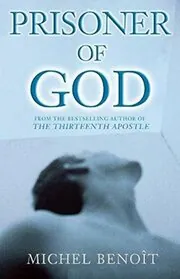
Prisoner of God
by Michel Benoit
1992
Benoit recounts leaving a promising scientific career to become Brother Irénée, then watching his monastic ideal collapse. It is part memoir, part critique of institutional power, and a close look at silence, obedience, and life inside an abbey.
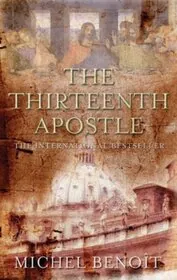
The Thirteenth Apostle
by Michel Benoit
2006
After Father Andrei dies on a train to Rome, his friend Father Nil follows a trail of notes, hidden texts, and church secrets. The search for a possible thirteenth apostle becomes a dangerous religious thriller stretching from the Vatican to Qumran.
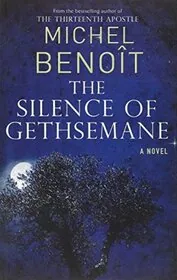
The Silence of Gethsemane
by Michel Benoit
2012
On the night before his arrest, Jesus waits in an olive grove and looks back on the path that brought him there. Benoit turns the Passion story into an intimate, reflective novel about message, misunderstanding, and betrayal.
Where to start with Michel Benoit
If you want the memoir first: Prisoner of God
If you want the bestselling religious thriller: The Thirteenth Apostle
If you want a reflective retelling of Jesus' final hours: The Silence of Gethsemane
If you want a simple introduction to his work: Prisoner of God → The Thirteenth Apostle → The Silence of Gethsemane
Michel Benoit collections, short stories, and related book types
Non-Fiction
Standalone Michel Benoit books
Author bio
Michel Benoit is a French writer whose books sit at an unusual crossroads. He came to literature through science, then spent about twenty years as a Benedictine monk, and later turned that lived experience into memoir, essays, and religious fiction. That mix helps explain why his books feel both argumentative and intensely personal.
Benoit has written about growing up in postwar Paris in a nonreligious family. In a later autobiographical piece, he remembered being shaken as a child by images of the crucifixion long before anyone had really explained Jesus or faith to him. It was an early jolt, and it seems to have stayed in the background until adulthood.
Before writing full time, he trained as a biologist and studied under Jacques Monod. At twenty-two, despite a promising scientific path, he chose monastic life instead and entered the Benedictine abbey at Saint-Benoit-sur-Loire, taking the name Brother Irénée. He would later borrow Benoit as his pen name from that place.
He stayed there for roughly two decades. Then the break came.
Benoit has described leaving the Church as the result of ideological conflict, not a loss of seriousness. That matters when you read him. Even in his most critical books, he does not write like someone who passed briefly through religion and moved on. He writes like someone who gave it years, structure, hope, work, and identity, and then had to reckon with what remained.
His first major book, Prisoner of God, published in 1992, came straight out of that experience. It tells the story of a gifted young scientist who enters the monastery looking for God and ends up confronting obedience, silence, sexuality, group pressure, and institutional control. Readers often come to it expecting a memoir of cloistered life and find, instead, a much wider book about what power can do inside any closed system.
Fiction gave him another way to press the same questions. The Thirteenth Apostle, published in 2006, turns his long research into Jesus and early Christianity into a thriller about murdered monks, hidden texts, and a truth that could shake the Church. It became a bestseller in several countries and was translated widely. Later books such as The Silence of Gethsemane stayed close to the same territory, but in a quieter register, imagining Jesus on the night before his arrest, looking back over his life, his message, and the misunderstandings that followed him.
He likes big subjects.
Across Benoit's work, the same concerns keep returning: the historical Jesus, the Jewish roots of the Christian story, the distance between spiritual experience and religious machinery, and the way institutions protect themselves when ideas become dangerous. His books are full of monks, seekers, scholars, lost texts, and people pulled between faith and doubt. Even when he uses suspense, the real tension is often intellectual and moral. What do we owe tradition? What happens when research collides with doctrine? How much of belief can survive contact with history?
In recent years he has kept publishing essays and reflections online about religion, history, and public life, and he still returns to many of the same old questions. That makes his bibliography feel less like a series of separate projects and more like one long conversation. Science led to faith, faith led to conflict, and conflict led to books. Benoit has been following that trail for a long time.



%20-%20Michel%20Faber.jpg)








Edited by
Software engineer whose passion for tracking book recommendations from podcasts inspired the creation of MRB.
Lead investor at 3one4 Capital whose startup expertise and love for books helped shape MRB and its growth.
Comments
Did we miss something? Have feedback?
Help us improve this page by sharing your thoughts