
Michael Shaara Books in Order
Explore Michael Shaara books in order, with quick summaries, series notes, and where to start, from The Killer Angels to his rediscovered short fiction.
Last updated:
As an Amazon Associate, we earn from qualifying purchases (at no extra cost to you).
Michael Shaara books in publication order
30 books

All the Way Back
by Michael Shaara
1952
Two men scouting a possible replacement for Earth think they have found an empty world, until a galactic ship interrupts the mission with a warning about a savage race called the Antha. The story builds toward a sharp reversal about who the real threat might be.

Be Fruitful and Multiply
by Michael Shaara
1952
In the year 2565, babies are grown in bottles and natural childbirth has nearly vanished. When Jean longs to conceive for herself, she discovers how unsettling a managed future can become once one person asks for something older and more human.

The Book
by Michael Shaara
1953
Young navigator Beauclaire travels into the Hole in Cygnus and reaches a hidden world shaped by a strange calm and an even stranger sacred text. What he learns there leaves him questioning faith, curiosity, and the restless human need to keep searching.

The Holes
by Michael Shaara
1954
A routine planetary survey goes bad when Frank Royal and his overeager partner discover perfectly round shafts dropping into darkness across an otherwise quiet world. Each new hole makes the planet feel less empty, and far more dangerous.

Time Payment
by Michael Shaara
1954
Built around a one-way gamble with time, this short science fiction story asks what happens when borrowed advantage finally comes due. Shaara turns a clever premise into a pointed warning about shortcuts and their hidden cost.

Wainer
by Michael Shaara
1954
In a future shaped by implanted intelligence, William Wainer is a reject who cannot fit the system everyone else depends on. His lonely life slowly reveals that being left behind may actually make him the first sign of what humanity becomes next.

A Man of Distinction
by Michael Shaara
1956
In the year 2180, wealthy entrepreneur Thatcher Blitt builds a fortune by tracing family histories, then grows obsessed with proving his own noble lineage. What he uncovers turns his idea of prestige, inheritance, and personal importance upside down.

Death for a Hunter
by Michael Shaara
1957
A hunter is hired to wipe out the last members of what he has been told is a dangerous pest species. The mission darkens fast when he realizes the prey may be intelligent, and the real moral danger may be his own assignment.

The Lightning
by Michael Shaara
1958
Set under a threatening storm, this tense short story turns a moment of fear into a revealing test of character. Shaara keeps the focus on how quickly ordinary lives can change when instinct, panic, and consequence arrive all at once.

The Peeping Tom Patrol
by Michael Shaara
1958
On his first outing with a veteran partner, a rookie policeman gets an uncomfortable look at the seamier side of the street beat. The story mixes curiosity, revulsion, and moral unease as the job starts showing him what it really asks people to stomach.

The Sea is Cruel
by Michael Shaara
1958
A hard, compact sea story about people at the mercy of water, weather, and one another. Shaara keeps the pressure on endurance, bad luck, and the choices that matter when the ocean stops caring what anyone deserves.

The Wide and Starry Sky
by Michael Shaara
1958
A quiet setup opens into unease and danger in this suspenseful short story, where open space offers no comfort at all. Shaara lets the mood tighten slowly, then shows how exposed ordinary people can become when something goes wrong.

You'll Have To Die Now
by Michael Shaara
1958
A young rookie cop follows his father into the force and quickly learns that one of the old veterans is tied to corruption. Trying to push the man toward honesty pulls him into mob danger and a much deadlier kind of police work.

Doctor in Doubt
by Michael Shaara
1959
A doctor who is expected to project certainty finds himself caught between professional duty and private uncertainty. It is a compact moral drama about conscience, judgment, and the cost of getting a life-and-death decision wrong.

Partisan
by Michael Shaara
1962
Years after the war, an American veteran drives back through Yugoslavia and finds the ruined landscape pulling old memories to the surface. As the past closes in, the story becomes a haunting reckoning with violence, comradeship, and what survival leaves behind.

Groomsday
by Michael Shaara
1968
What should be a happy wedding milestone turns into a day of nerves, second thoughts, and sharp emotional reckonings. Shaara uses a familiar rite of passage to look closely at pride, commitment, and the uneasy jump into adult life.
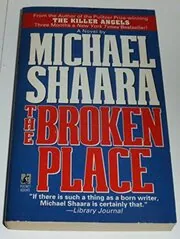
The Broken Place
by Michael Shaara
1968
Korean War veteran Tom McClain comes home badly damaged and finds that the boxing ring is the only place he still feels fully alive. His rise as a fighter forces him to face whether violence is saving him or finishing the job the war began.
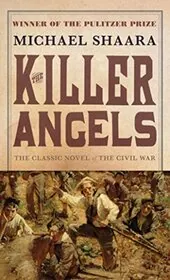
The Killer Angels
by Michael Shaara
1974
Shaara's Pulitzer Prize-winning novel brings the Battle of Gettysburg down to the level of choice, fear, and conviction. Following officers on both sides, it turns a famous turning point into a deeply human story about command, courage, and cost.

Border Incident
by Michael Shaara
1976
A tense border crossing becomes a study in suspicion and shifting power. Shaara is less interested in spectacle than in how quickly identity, fear, and authority can turn a line on a map into a deeply personal crisis.

Two Roads to Petra
by Michael Shaara
1976
Built around a journey and a difficult choice, this story follows a traveler drawn toward Petra while past loyalties and present desires pull in opposite directions. The result is reflective, tense, and quietly adventurous.
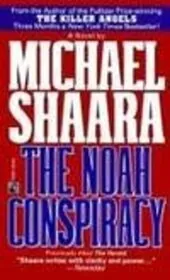
The Herald / The Noah Conspiracy
by Michael Shaara
1981
When pilot Nick Tesla lands in a Georgia college town and finds thousands dead from a mysterious radiation plague, he becomes part of a desperate search for answers. The deeper he goes, the more the crisis looks like the planned remaking of humanity.

Soldier Boy
by Michael Shaara
1982
On a remote colony world, Captain Dylan is one of the few people who understands the danger gathering around the settlers. As alien forces and hidden machines begin their attack, he must fight to save a society that has almost forgotten why soldiers exist.

Starface
by Michael Shaara
1982
Told through journal entries, this story follows a man undergoing extreme cosmetic surgery and the unsettling changes that come with it. Shaara uses the setup to probe vanity, identity, and the odd gap between the face we want and the self we keep.

The Dark Angel
by Michael Shaara
1982
More intimate than speculative, this story follows a boy trying to understand his father's mortality. Shaara keeps it simple and close to the heart, showing how fear, love, and helplessness can sit in the same room at once.
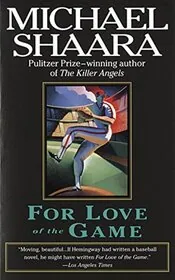
For Love of the Game
by Michael Shaara
1991
Aging pitcher Billy Chapel takes the mound for what may be his last game and tries to hold together his career, his pride, and his private heartbreak. As the innings pass, baseball and memory start keeping score together.
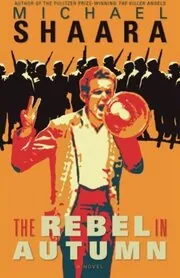
The Rebel in Autumn
by Michael Shaara
2013
Set on a small Southern campus in 1968, this novel follows history professor Max Rainer as censorship, protest, and rigid leadership push a student uprising toward violence. What starts with one suppressed story grows into a crisis no one can fully control.

2066 Election Day
by Michael Shaara
2014
In a future America, a supercomputer called UNCLE SAM is supposed to select the best possible president. When the system fails and a political science professor is sworn in during the chaos, the country teeters on the edge of breakdown.

Little Joe...The Hard Way
by Michael Shaara
2014
Little Joe learns there are no easy routes through pride, work, or trouble in this lean coming-of-age tale. Shaara keeps the focus on character, letting hard lessons and stubborn choices do most of the talking.

The Billion Dollar Grease Job
by Michael Shaara
2014
A sly, fast-moving caper with a science fiction edge, this story follows an apparently simple fix that starts getting more expensive, and more dangerous, the moment greed enters the equation. Shaara has fun with the mechanics and the human weakness behind them.

The Second Odd Man
by Michael Shaara
2014
This short speculative piece centers on the outsider who does not fit the pattern everyone else accepts. As that mismatch starts to matter, Shaara turns a small social puzzle into a sharp story about conformity, difference, and who gets left out.
Where to start with Michael Shaara
If you want his best-known historical novel: The Killer Angels
If you want a lean, emotional sports story: For Love of the Game
If you want tough postwar drama: The Broken Place → The Rebel in Autumn
If you want his speculative side: The Herald / The Noah Conspiracy → The Book → Wainer
Michael Shaara sub-series and character series
Civil War: 1861-1865 books in order
Explore this seriesMichael Shaara collections, short stories, and related book types
Short Stories/Novellas
Short Story Collections
Standalone Michael Shaara books
Author bio
Michael Shaara was born in Jersey City, New Jersey, in 1928, the son of Italian immigrants, and he seems to have known early that writing was the thing he wanted most. He graduated from Rutgers University in 1951, but the straight line from college to literary fame was not his story. His life moved through work, family, teaching, illness, and a lot of stubborn persistence before readers fully caught up with what he could do.
He did not come to writing by a tidy path.
Before and around his early publishing years, Shaara served in the 82nd Airborne, boxed as an amateur, worked as a police officer, and spent time as a merchant seaman. That background matters when you read him. His fiction often has the feel of someone who knew how pressure sits in the body, how pride can warp a decision, and how quickly fear and courage can trade places.
In the early 1950s he began selling science fiction short stories, first to genre magazines and then more widely to mainstream magazines as well. He published more than seventy short stories over the course of his career. Even in those early pieces, readers can see the things that would stay with him, damaged but determined characters, moral choices that refuse to stay simple, and a fascination with what people do when the world tilts out from under them.
By the mid-1950s he had moved his family to Tallahassee, where he taught English, literature, and creative writing at Florida State University. He was married to Helen, and their children, Jeff and Lila, would both later become novelists themselves. Teaching paid the bills, but writing stayed at the center of things. He wrote at night, often after full days in the classroom, and that rhythm of work and strain never really let up.
His first novel, The Broken Place, appeared in 1968. It follows a Korean War veteran who comes home carrying deep emotional damage and turns to boxing, a setup that fit Shaara's interest in wounded, driven men trying to survive themselves. The book won respect, but not a wide audience. That happened to him more than once.
A family trip to Gettysburg in the 1960s changed the direction of his career. Shaara became absorbed by the battle and by the idea of telling it not as a distant history lesson but as a lived human drama. The result was The Killer Angels, published in 1974 after a long stretch of research, writing, and rejection. It won the Pulitzer Prize for Fiction in 1975.
That novel is still the book most people start with, and for good reason. It brings the Battle of Gettysburg down to the level of choice, fatigue, conviction, and doubt, especially through figures like Joshua Chamberlain, James Longstreet, and Robert E. Lee. Readers who love it often point to the same thing, it feels intimate without losing the scale of history.
Shaara's range was wider than that one book suggests. The Herald, later republished as The Noah Conspiracy, is a dark speculative novel about mass death and the future of the human race. For Love of the Game, published after his death, is a spare and moving baseball novel about aging pitcher Billy Chapel facing the game and the life he has built around it. His long-unpublished campus novel The Rebel in Autumn eventually appeared decades later, giving readers another view of his interest in conflict, institutions, and people pushed to the brink.
His health was fragile for much of his adult life. He suffered a major heart attack while still a relatively young man, and a motorcycle accident in Italy in 1972 left lasting effects as well. He died in Tallahassee in 1988, at fifty-nine, from a second heart attack.
After his death, his readership grew. The 1993 film Gettysburg, based on The Killer Angels, brought a new audience to his work, and For Love of the Game later reached moviegoers too. In a way, that late recognition suits him. Shaara wrote about people tested by time, and his own books turned out to have staying power.






Edited by
Software engineer whose passion for tracking book recommendations from podcasts inspired the creation of MRB.
Lead investor at 3one4 Capital whose startup expertise and love for books helped shape MRB and its growth.
Comments
Did we miss something? Have feedback?
Help us improve this page by sharing your thoughts