
Michael Riedel Books in Order
Explore Michael Riedel books in order, with short summaries, Broadway context, and simple tips on where to start reading his nonfiction.
Last updated:
As an Amazon Associate, we earn from qualifying purchases (at no extra cost to you).
Michael Riedel books in publication order
4 books
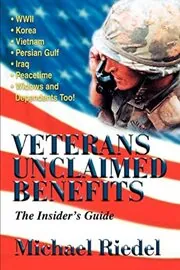
Veterans Unclaimed Benefits
by Michael Riedel
2003
A detailed guide to VA benefits for veterans and their families, this book explains eligibility, claims, and support programs in plain language. It is designed to help readers cut through bureaucracy and spot benefits they may not realize they can claim.
Michael Riedel
by Michael Riedel
2014
This large-format artist's book documents Michael Riedel's Oskar-von-Miller-Strasse 16 project and his wider interest in repetition, publishing, and performance. It works as both a record of a Frankfurt art space and a conceptual object in its own right.
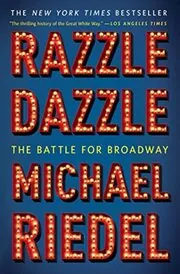
Razzle Dazzle
by Michael Riedel
2015
This lively history tracks Broadway's fight back from the seedy, cash-strapped Times Square years of the 1970s and 1980s. Riedel follows the producers, rivalries, and hit shows that helped revive both the theater district and the city around it.
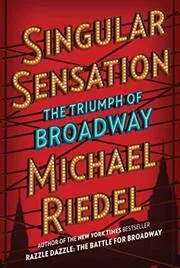
Singular Sensation
by Michael Riedel
2020
Picking up in the 1990s, this behind-the-scenes history follows Broadway through British imports, blockbuster hits, and the shock of 9/11. Riedel focuses on the deals, feuds, and personalities that shaped a new era for New York theater.
Where to start with Michael Riedel
If you want the best entry to his Broadway books: Razzle Dazzle → Singular Sensation
If you're most interested in Broadway's modern era: Singular Sensation → Razzle Dazzle
If you want a practical guide instead of theater history: Veterans Unclaimed Benefits
If you're curious about the art-world outlier on this page: Michael Riedel
Michael Riedel collections, short stories, and related book types
Non-Fiction
Author bio
Michael Riedel was born on December 24, 1966, and grew up in Geneseo, New York. His father worked as the athletic director at SUNY Geneseo, and his mother was a school librarian. That mix, sports on one side, books on the other, suits the way he later wrote about Broadway, with one eye on the spectacle and the other on the paperwork, money, and personalities behind it.
He got to Broadway through journalism, but the interest started early.
Riedel spent a year at Johns Hopkins before transferring to Columbia University. At Columbia he acted in campus productions, talked musical theater on student radio, and studied history, graduating magna cum laude and Phi Beta Kappa in 1989. One early turning point came when he interned for producer Liz McCann during the Broadway run of Les Liaisons Dangereuses, which gave him a close look at how shows were built offstage as well as on it.
After college he became managing editor of TheaterWeek, a now-defunct theater magazine. In 1993 he moved to the New York Daily News as a gossip columnist covering Broadway, and in 1998 he began the long stretch that made his name widely known in New York theater circles, writing the Broadway column at the New York Post. His style was sharp, funny, nosy, and very hard for insiders to ignore.
People in the theater world did not always enjoy being in his column.
But plenty of them read it anyway. Riedel also helped create Theater Talk, the long-running public television series that let him bring the same insider knowledge to interviews and panel conversations. Later he moved into radio and cohosted a New York morning show with Len Berman, which gave him a wider platform beyond theater people who already knew every Shubert alley and opening-night feud by heart.
His books took that reporting instinct and slowed it down into bigger, more detailed histories. Razzle Dazzle follows Broadway through the rough Times Square years and the power struggles that helped turn the district into a major business again. It won the 2015 Marfield Prize for arts writing. Singular Sensation picks up in the 1990s and early 2000s, moving through hits like Rent, Angels in America, The Lion King, and The Producers, and showing how art, ego, money, and disaster all shaped the theater.
That mix is what readers tend to like about Riedel. He writes history, but he also writes about who fought with whom, who got the deal done, who almost lost the theater, and why a show that looks effortless from row G was usually chaos a few weeks earlier. Even when the topic is Broadway legend or Times Square real estate, he keeps pulling it back to people making messy decisions under pressure.
His favorite territory is the place where show business becomes city history. He returns again and again to producers, theater owners, critics, stars, civic boosters, and the long tug-of-war between art and commerce. New York matters in his work, not just as a backdrop, but as part of the plot.
He has long been tied to the West Village and remains a familiar voice in Broadway conversation. If you read him, you quickly see that he is less interested in polite official stories than in the scramble behind the curtain, which is often where the real drama lives.






Edited by
Software engineer whose passion for tracking book recommendations from podcasts inspired the creation of MRB.
Lead investor at 3one4 Capital whose startup expertise and love for books helped shape MRB and its growth.
Comments
Did we miss something? Have feedback?
Help us improve this page by sharing your thoughts