
Michael Parenti Books in Order
Explore Michael Parenti books in order, with short summaries and a guide to the series and standalone titles to help you choose where to start reading.
Last updated:
As an Amazon Associate, we earn from qualifying purchases (at no extra cost to you).
Michael Parenti books in publication order
25 books
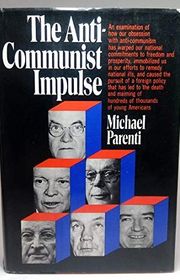
The Anti-Communist Impulse
by Michael Parenti
1969
Michael Parenti examines anticommunism's influence on American foreign policy, questioning its role as the overriding justification for decisions abroad. His critique considers the assumptions behind a policy organized around opposition to communist states and movements.

Trends and Tragedies in American Foreign Policy
by Michael Parenti
1971
This collection examines dissenting interpretations of American foreign policy, questioning its stated intentions and the interests behind its decisions. The contributors consider the consequences of overseas actions and challenge assumptions that commonly shape public understanding of international affairs.

Democracy for the Few
by Michael Parenti
1974
Michael Parenti examines American government through the relationships between wealth, class and institutional power. Connecting formal political structures with economic interests, he argues that understanding public policy requires looking beyond constitutional arrangements to the groups that benefit from them.
Power and the Powerless
by Michael Parenti
1978
An analysis of power in American society examines how institutions are structured and why authority tends to concentrate at the top. Parenti connects competing definitions of power with the social arrangements that distinguish influential groups from those with little control.
Ethnic And Political Attitudes
by Michael Parenti
1979
A study of Italian Americans in New York examines ethnic identity, assimilation and political attitudes. Based on Parenti's Yale doctoral research, it considers the relationship between community life and political outlook within an immigrant-descended population.
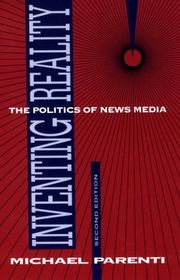
Inventing Reality
by Michael Parenti
1986
Michael Parenti challenges the idea of an impartial news media, examining how ownership, political interests and editorial choices shape public understanding. Case studies explore the distortion or omission of information and the consequences for democratic debate.

The Sword and the Dollar
by Michael Parenti
1988
Michael Parenti examines the economic interests behind American foreign policy, military intervention and the arms race. He argues that protecting corporate markets and access to resources often takes precedence over the democratic principles invoked to justify overseas actions.
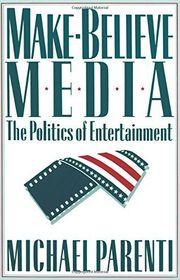
Make-Believe Media
by Michael Parenti
1991
Examining film and television, Michael Parenti explores how entertainment shapes assumptions about society and political life. He considers portrayals that reinforce militarism, racism, sexism and authority, alongside works that challenge prevailing values or offer more progressive perspectives.
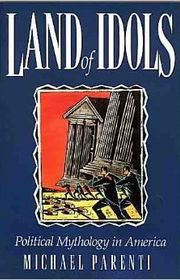
Land of Idols
by Michael Parenti
1993
Michael Parenti challenges the belief that American society lacks a dominant ideology. His analysis examines political myths and assumptions that, he argues, obscure concentrations of power, narrow public debate and make substantial social reform harder to imagine.

Against Empire
by Michael Parenti
1995
Michael Parenti critiques American imperial power and the political language used to justify intervention abroad. Connecting overseas policies with domestic consequences, he argues that globalization benefits financial and corporate elites while weakening democratic institutions and living standards.

Dirty Truths
by Michael Parenti
1996
These essays examine political ideology, news media, class power and ethnic identity. Michael Parenti challenges familiar explanations of contemporary events, considering topics from terrorism and the Kennedy assassination to the social assumptions that shape public debate.
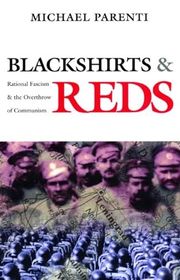
Blackshirts and Reds
by Michael Parenti
1997
Michael Parenti examines fascism, capitalism and communism through a framework of class conflict. He explores the relationship between corporate power and authoritarianism, the collapse of socialist states and the consequences of market reforms in Eastern Europe and the former Soviet Union.

America Besieged
by Michael Parenti
1998
Michael Parenti examines how moneyed interests shape American politics, media and public life. These essays connect economic power with everyday social problems, arguing that threats to democracy arise from concentrated influence within the country as well as external pressures.

History as Mystery
by Michael Parenti
1999
Michael Parenti examines how powerful groups influence the writing and preservation of history. Essays challenge accepted narratives, investigate suppressed evidence and consider how historians’ institutions, professional pressures and class assumptions affect what becomes the public record.

To Kill a Nation
by Michael Parenti
2001
Michael Parenti offers a critical account of the breakup of Yugoslavia and NATO’s intervention. Drawing on published sources and observations from a 1999 visit, he challenges prevailing explanations of the conflict and examines Western political and economic objectives.

The Terrorism Trap
by Michael Parenti
2002
Michael Parenti places the September 11 attacks and the subsequent war within a broader historical and political context. He examines religious violence, Afghanistan, American foreign policy and globalization while questioning how governments use crises to advance their agendas.
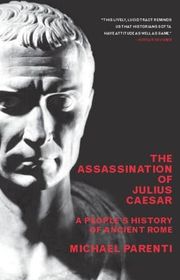
The Assassination of Julius Caesar
by Michael Parenti
2003
Michael Parenti reexamines the late Roman Republic and Julius Caesar’s assassination from the perspective of ordinary people. Focusing on class conflict, popular resistance and elite power, he challenges historical accounts shaped primarily by the interests of Rome’s wealthy nobility.

Superpatriotism
by Michael Parenti
2004
Michael Parenti distinguishes attachment to one’s country from unquestioning nationalism. Examining politics, religion, sport and the military, he argues that appeals to fear and national supremacy can suppress dissent and divert attention from democratic responsibilities.
The Culture Struggle
by Michael Parenti
2006
Michael Parenti examines culture as a field of political conflict rather than a fixed set of traditions. Examples from art, science, medicine and everyday life explore how power and commercial interests shape beliefs, practices and social identities.

Contrary Notions
by Michael Parenti
2007
This collection brings together Michael Parenti’s writings on class, empire, media, culture and political history, alongside reflections on his own life. Revised essays and new material connect personal experience with his broader critique of concentrated wealth and power.

God and His Demons
by Michael Parenti
2010
Michael Parenti examines the political power and historical abuses of organized religion, focusing on intolerance, exploitation and alliances with ruling elites. His critique distinguishes these institutions and movements from believers who pursue egalitarian or socially progressive aims.
The Face of Imperialism
by Michael Parenti
2011
Michael Parenti analyzes the relationship between American military expansion and global corporate power. He considers the effects on targeted societies and the domestic costs of empire, arguing that resources devoted to dominance abroad undermine public wellbeing at home.

Waiting For Yesterday
by Michael Parenti
2013
Michael Parenti recalls growing up in a working-class Italian family in East Harlem. Through portraits of relatives, neighbors, school and street life, he explores the experiences and inequalities that helped shape his later political commitments.

Profit Pathology and Other Indecencies
by Michael Parenti
2015
Michael Parenti examines how the pursuit of profit shapes institutions, public services and environmental policy. Drawing connections between historical exploitation and contemporary inequality, he argues that concentrated economic power threatens both democratic gains and the long-term stability of capitalism.

Yellow Parenti: Book I
by Michael Parenti
2023
This collection gathers Michael Parenti's articles, interviews, academic writing, and lecture transcripts. Subjects include imperialism, class conflict, religion, public utilities, and globalization, extending his political arguments across shorter works originally presented in several different forms.
Where to start with Michael Parenti
For his account of American government: Democracy for the Few
For media and public perception: Inventing Reality → Make-Believe Media
For his critique of imperialism: Against Empire → The Face of Imperialism
For history through class conflict: Blackshirts and Reds → The Assassination of Julius Caesar
For a personal introduction: Waiting For Yesterday
Standalone Michael Parenti books
Author bio
Michael Parenti wrote about politics by asking who held power, who benefited from it and who paid the costs. Born in 1933, he grew up in a working-class Italian American family in New York City. His books carried questions about class and institutions into subjects as different as American government, news reporting, imperialism and ancient Rome.
He worked for several years after high school before returning to formal education.
Parenti earned a bachelor’s degree at City College of New York, a master’s at Brown and a doctorate in political science at Yale. He taught at colleges and universities in the United States and abroad, while his books reached readers in numerous translations. The range of his writing gives newcomers several possible entrances, depending on whether they want to begin with political institutions, media or history.
Democracy for the Few is a broad starting point for his account of American government. It examines the tension between democratic participation and the economic power of capitalism, arguing that formal political rights do not remove unequal influence. Readers interested in how institutions operate, and whose interests they serve, can begin there. Inventing Reality moves the inquiry into news, examining how reporting shapes the public’s understanding of political and social life. Together, the two books introduce his recurring concern with power that operates through familiar institutions.
His foreign-policy writing extends that concern beyond national borders. In Against Empire, Parenti argues that American intervention and global economic policies advance powerful financial and corporate interests while imposing costs on other populations and on public life at home. It is a useful starting point for readers who want his critique of imperialism rather than an overview of domestic government. The page also includes The Sword and the Dollar and The Face of Imperialism, offering further routes through that part of his bibliography.
Class is also central to his reading of the past.
Blackshirts and Reds considers fascism, capitalism, revolution and the collapse of communist systems through class analysis. Its interpretations are an entry into Parenti’s political position as well as his historical concerns. The Assassination of Julius Caesar takes a different period, examining Roman politics through popular resistance to wealth and established power. Readers drawn to historical arguments can therefore choose between his treatment of modern ideological conflicts and a book focused on ancient Rome.
For a more personal introduction, Waiting For Yesterday turns to his childhood in East Harlem. The memoir describes a three-generation Italian family, schools, the neighborhood church and the experience of ethnic stereotypes. Its smaller scenes give another scale to the questions about social position and authority found in his political books. It can be read as a starting point in its own right, rather than as an appendix to the arguments.
Parenti died on January 24, 2026. His books remain separate works that can be chosen by subject, with shorter pieces collected in volumes such as Contrary Notions and Yellow Parenti: Book I. Readers can follow a single interest across several titles or use the collections to sample the range of his political criticism.

















Edited by
Software engineer whose passion for tracking book recommendations from podcasts inspired the creation of MRB.
Lead investor at 3one4 Capital whose startup expertise and love for books helped shape MRB and its growth.
Comments
Spotted a missing book, a wrong order or a mistake? Tell us and we'll fix this page.
We're a reading guide, not the author or publisher, so we can't send books or pass on messages.