
Mazo de la Roche Books in Order
Browse Mazo de la Roche books in order, with Whiteoak and Jalna reading paths, short summaries, series background, and easy guidance on where to start.
Last updated:
As an Amazon Associate, we earn from qualifying purchases (at no extra cost to you).
Mazo de la Roche books in publication order
31 books

Low Life A Comedy in One Act
by Mazo de la Roche
1925
This short stage comedy turns ordinary worries, class tensions, and sharp-edged talk into something funny and a little sad. It shows de la Roche's early skill with character, rhythm, and social detail.

Whiteoaks - A Play
by Mazo de la Roche
1925
De la Roche reshapes the Whiteoak family saga for the stage, tightening Jalna's rivalries into a more immediate domestic drama. Grandmother Adeline still dominates the room, even when everyone else thinks they are in charge.
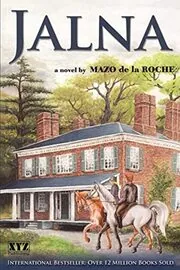
Jalna
by Mazo de la Roche
1927
At the Ontario estate called Jalna, the Whiteoaks live loudly, love badly, and fight over almost everything. An outsider drawn into the household discovers that the family's charm and cruelty are impossible to separate.

Whiteoaks of Jalna
by Mazo de la Roche
1929
The quarrels, loves, and private grievances of the Whiteoak clan deepen as the Jalna saga continues. Against that daily uproar stands Grandmother Adeline, whose looming presence shapes the family until the very end.

Finch's Fortune
by Mazo de la Roche
1931
On his twenty-first birthday, Finch Whiteoak inherits money that immediately stirs envy and argument. A trip to England gives him new freedoms and romantic confusion, but Jalna keeps pulling him back into its rivalries.

The Master of Jalna
by Mazo de la Roche
1933
Renny tries to hold Jalna together after loss has shifted the family's balance. Financial strain, a dangerous love affair, and the demands of the whole clan test how far the master of the house can bend.

Beside a Norman Tower
by Mazo de la Roche
1934
This quiet, unusual novel stays close to the world of two small children, Gillian and Diggory. Their games, fears, affections, and sudden storms of feeling become a whole drama in miniature.
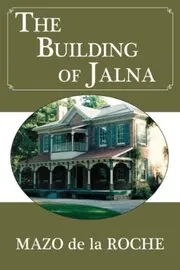
The Building of Jalna
by Mazo de la Roche
1935
Adeline and Captain Philip Whiteoak leave England for Canada and set out to build the house that will shape generations. Their marriage, ambitions, and brushes with hardship give the family saga its beginning.
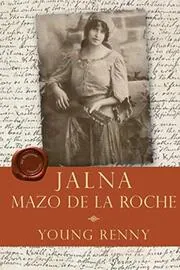
Young Renny
by Mazo de la Roche
1935
Eighteen-year-old Renny Whiteoak is proud, reckless, and not yet ready for the fallout of adult desire. A seductive outsider and a scheming Irish cousin disturb life at Jalna just as Meg's engagement begins to crack.
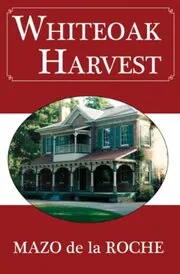
Whiteoak Harvest
by Mazo de la Roche
1936
Renny and Alayne try to steady Jalna in the 1930s, but fresh trouble keeps breaking through. Finch and Sarah return from honeymoon, Eden's private life causes an uproar, and Wakefield is torn by serious doubts.
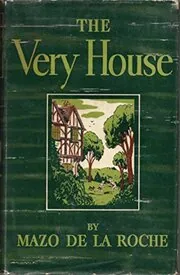
The Very House
by Mazo de la Roche
1937
Gillian and Diggory return, a little older and no less vivid, in this close-up of childhood life inside one busy home. De la Roche watches their rivalries, games, and feelings with unusual tenderness and precision.

Growth of a Man
by Mazo de la Roche
1938
Shaw Manifold grows from a lonely farm boy into a forester shaped by hard work, fierce loyalties, and ambition. Just as his career opens up, illness forces him into the hardest struggle of his life.
Whiteoak Heritage
by Mazo de la Roche
1940
Home from war, Renny Whiteoak finds Jalna changed and his younger brother entangled with the alluring Mrs. Stroud. Trying to restore order only pulls him deeper into the family's most dangerous emotional snare.

Wakefield's Course
by Mazo de la Roche
1941
In 1939, Renny sails to Ireland and England with his daughter, ostensibly to buy a racehorse. What he really finds is a tangle of love affairs and family complications involving Finch and Wakefield.
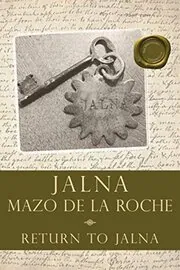
Return to Jalna
by Mazo de la Roche
1946
During the war years, the scattered Whiteoaks come home one by one after long separation. The reunion brings warmth, strain, and change, as old loyalties are tested by a very different world.
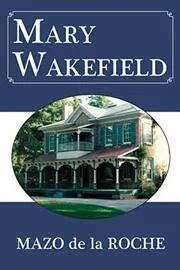
Mary Wakefield
by Mazo de la Roche
1949
Young English governess Mary Wakefield comes to Jalna to care for Philip's motherless children. When Philip falls in love with her, the match sets off resistance, pride, and emotional skirmishes inside the Whiteoak house.
Renny's Daughter
by Mazo de la Roche
1951
In 1948, Adeline Whiteoak sails for Ireland and London with Finch and Maurice, and quickly falls in love. Back at home, another threat is gathering, as outside interests begin to endanger Jalna's peace and beauty.
The Whiteoak Brothers
by Mazo de la Roche
1954
In 1923, love affairs, schemes, and money troubles stir the household at Jalna. While Piers and Pheasant face matters of the heart, Eden is drawn into a speculative venture that puts even family savings at risk.

Variable Winds at Jalna
by Mazo de la Roche
1954
New visitors from Ireland arrive at Jalna to settle Adeline's future, but they bring fresh complications with them. Maurice and Finch return as well, and a year that begins in ceremony turns into one of the estate's most unsettled.
The Song of Lambert
by Mazo de la Roche
1956
Lambert is a little lamb with a singing voice and a talent for winning hearts. Carried off by the gruff Mr. Van Grunt on an unlikely polar adventure, he turns captivity into an odd friendship.

Centenary at Jalna
by Mazo de la Roche
1958
As the Whiteoaks prepare to mark Jalna's hundredth year in 1953, celebration gives way to fresh strain. A troubled marriage, a reckless young man, and old family wounds threaten to overshadow the anniversary.
Morning at Jalna
by Mazo de la Roche
1960
It is 1863, and early life at Jalna is shaken when Carolina cousins arrive carrying the tensions of the American Civil War with them. Their polished manners hide a dangerous secret that unsettles the growing Whiteoak household.
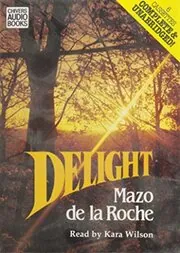
Delight
by Mazo de la Roche
1961
A striking young woman named Delight Mainprize arrives in a small Ontario town and upends it almost at once. Admired by men and resented by women, she becomes the spark for a sly social comedy about beauty, desire, and belonging.

The Sacred Bullock, And Other Stories
by Mazo de la Roche
1969
A collection of animal stories that mixes affection, observation, and a little mischief. De la Roche treats beasts as living creatures with their own temperaments, not just props in human dramas.

The Two Saplings
by Mazo de la Roche
1971
A hospital mix-up leaves an American boy and an English boy growing up in the wrong families. When the truth emerges, both households attempt an exchange, only to find war and loyalty complicating everything.

Selected Stories
by Mazo de la Roche
1979
This collection brings together de la Roche's shorter fiction across different periods of her career. The stories range from family sketches to darker emotional pieces, showing her feel for houses, outsiders, children, and animals.

Explorers of the Dawn
by Mazo de la Roche
2007
Three motherless boys are sent away while their father travels, and their new life becomes a lesson in freedom, discipline, and imagination. Early de la Roche, it blends boyhood adventure with a sharper look at authority.
Quebec - Historic Seaport
by Mazo de la Roche
2007
Part travel book, part history, this portrait of Quebec City lingers over its harbour, old streets, buildings, and long past. De la Roche writes with a strong feel for atmosphere, memory, and the life of the old port.

Low Life And Other Plays
by Mazo de la Roche
2012
This volume gathers three one-act plays about people living close to the bone: servants, old men, and working women. De la Roche finds humor and pathos in small rooms, sharp talk, and everyday disappointments.
Lark Ascending
by Mazo de la Roche
2014
In the seaside town of Saltport, brooding Diego Palmer and his restless mother Fay dream of escape from the family bakery. A chance to travel to Europe opens old desires and pulls the whole family toward trouble.
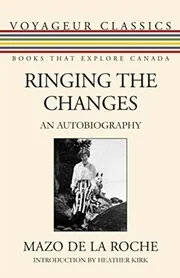
Ringing the Changes
by Mazo de la Roche
2015
De la Roche looks back on her childhood, writing life, and years with Caroline Clement in a memoir that is warm, guarded, and occasionally prickly. It is her closest self-portrait, though still full of reserve and mystery.
Where to start with Mazo de la Roche
If you want the classic Whiteoak entry point: Jalna → Whiteoaks of Jalna → Finch's Fortune
If you want the family story from the beginning: The Building of Jalna → Morning at Jalna → Mary Wakefield → Young Renny
If you want the later-generation drama: Return to Jalna → Renny's Daughter → Variable Winds at Jalna → Centenary at Jalna
If you want standalones outside Jalna: Delight → Lark Ascending → The Two Saplings
Mazo de la Roche sub-series and character series
Whiteoaks of Jalna Saga books in order
Explore this seriesWhiteoaks of Jalna Saga books in chronological order
Mazo de la Roche collections, short stories, and related book types
Plays
Collections
Non-Fiction
Standalone Mazo de la Roche books
Author bio
Mazo de la Roche was born in Newmarket, Ontario, in 1879 and spent much of her childhood moving around southern Ontario. Her mother's health was fragile, her father worked as a travelling salesman, and the family never stayed settled for long. That sense of wanting a lasting home would matter later, because houses, family rooms, and the pull of belonging sit at the heart of so much of her fiction.
She started making stories early.
As a child she built an imaginary world she called The Play, wrote her first story at nine, and filled her mind with characters long before she became famous for the Whiteoaks. She later studied in Toronto, including time at the University of Toronto, the Ontario School of Art, and the Metropolitan School of Music. Her interests were broad from the beginning. She loved words, but she also had a painter's eye for rooms, weather, and gesture.
At twenty-three she sold a story to Munsey's Magazine, which should have felt like a beginning. Instead, it was followed by a breakdown, then years of depression and insomnia that slowed her writing badly. In the early 1900s she also lived with her family in Acton, where they ran the Acton House hotel, and later in Bronte. Those places stayed with her. Delight grew out of her Acton years, and her early books, including Explorers of the Dawn and Possession, already show her interest in family tensions, restless people, and the strange power of a household.
After her father died in 1915 and her mother in 1920, writing became less of a hope and more of a practical necessity. Her cousin and lifelong companion Caroline Clement was an essential part of that life. Caroline had joined the household in childhood, and the two remained closely bound for the rest of de la Roche's life. By the 1920s de la Roche was publishing steadily, but real success still seemed far off.
Then Jalna changed everything.
In 1927 the novel won the Atlantic Monthly's $10,000 prize and turned de la Roche, at forty-eight, into an international bestseller. The Whiteoak books grew into a sixteen-novel saga, stretching from The Building of Jalna to Morning at Jalna and covering a full century of life on a southern Ontario estate. Readers loved the hot tempers, the family feuds, the romances, the births and deaths, and above all the feeling that the house itself mattered as much as any person in it. The saga was adapted for film, for the stage in Whiteoaks, and later for television, which gives some sense of how widely those books travelled.
She did not live only inside Jalna, though it always overshadowed everything else. Standalones such as Lark Ascending and The Two Saplings show her returning to themes she never quite left alone: home and exile, family duty, outsiders trying to find a place, and the way desire can throw ordinary lives off balance. Even when her plots move to England or Europe, there is often still a Canadian emotional weather underneath them.
Success gave de la Roche and Caroline Clement a different kind of life. They spent much of the 1930s abroad, especially in Italy and England, and in 1931 they adopted two children. Later they settled again in Toronto. She guarded her privacy closely, and that reserve became part of her reputation. In her later years, when arthritis made writing by hand harder, she often dictated her work to Clement.
Her autobiography, Ringing the Changes, came out in 1957 and offers the nearest thing to her own version of the story. Even there, she keeps some distance. That feels fitting. De la Roche understood that people reveal themselves in slants, in moods, in rooms, in what they circle around and what they leave unsaid.
She died in Toronto in 1961, a year after publishing Morning at Jalna. What lasts is her clear understanding that families are rarely simple. They can be loving, possessive, funny, exhausting, and impossible to quit. That truth, more than anything grander, is why her books still feel alive.





Edited by
Software engineer whose passion for tracking book recommendations from podcasts inspired the creation of MRB.
Lead investor at 3one4 Capital whose startup expertise and love for books helped shape MRB and its growth.
Comments
Did we miss something? Have feedback?
Help us improve this page by sharing your thoughts