
Mark Slouka Books in Order
Explore Mark Slouka’s books and series in order, with short summaries and reading lists to help you find your next book and decide where to begin reading.
Last updated:
As an Amazon Associate, we earn from qualifying purchases (at no extra cost to you).
Mark Slouka books in publication order
9 books
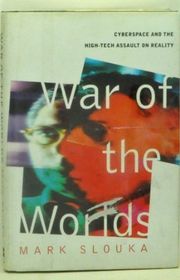
War Of The Worlds
by Mark Slouka
1995
Slouka examines the promises of emerging digital culture and challenges the belief that virtual experience can replace physical life. This humanist critique considers technology’s influence on communication, companionship and identity, questioning what might be lost as reality moves onto screens.
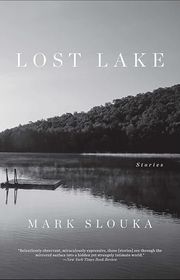
Lost Lake
by Mark Slouka
1998
Set within a small Czech community beside Lost Lake, these stories trace the lives of three generations. Slouka explores human attachment, private struggles and the natural landscape’s enduring presence, revealing the histories and emotional currents beneath an apparently quiet place.
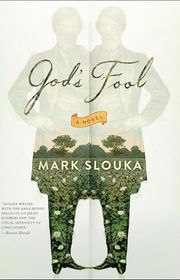
God's Fool
by Mark Slouka
2002
Born joined at the chest, Chang and Eng travel from Southeast Asia toward fame in America. Slouka’s novel imagines the private lives behind their extraordinary public identity, exploring intimacy, dependence and the ambitions that shape their shared journey.
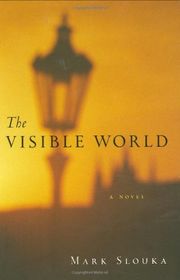
The Visible World
by Mark Slouka
2007
The American-born son of Czech immigrants travels to Prague to investigate the mysteries surrounding his mother’s past. Her romance with a resistance fighter and possible connection to a Nazi official’s assassination draw him into a history his family has concealed.
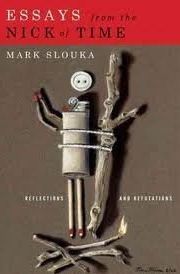
Essays from the Nick of Time
by Mark Slouka
2010
Essays written across fifteen years examine memory, history, media, nature and the pressures of modern life. Slouka argues for the value of silence, leisure and the humanities while questioning forces that narrow our understanding of what it means to be human.

Essentialism
by Mark Slouka
2011
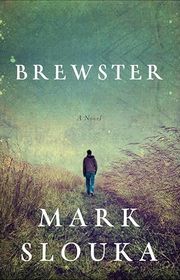
Brewster
by Mark Slouka
2013
In a small New York town in 1968, a guilt-ridden teenage runner befriends a boy trapped in an abusive home. Their bond and shared hopes of escape face increasing pressure when love and family violence complicate the future they imagine.
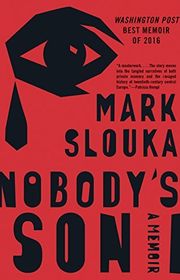
Nobody's Son
by Mark Slouka
2016
Slouka retraces his parents’ escape from Czechoslovakia after surviving Nazism, following their displacement across continents and its effects on family life. Memories, inherited stories and concealed truths become the means of approaching his mother’s troubled history and emotional distance.

All That Is Left Is All That Matters
by Mark Slouka
2018
Fifteen stories follow people confronting loss, injustice, failing relationships and the approach of death. Moving through Czechoslovakia and varied American landscapes, Slouka explores desperate attempts to hold onto life alongside unlikely opportunities for tenderness, connection and renewal.
Where to start with Mark Slouka
For a novel of young friendship: Brewster
For his short stories: Lost Lake → All That Is Left Is All That Matters
For family history in fiction and memoir: The Visible World → Nobody's Son
For his essays: Essays from the Nick of Time
Standalone Mark Slouka books
Author bio
Mark Slouka writes fiction, memoir and essays about the pressure of the past on ordinary lives. Czech family history and American places run through his work, alongside questions about what people remember, what they conceal and what a younger generation can understand. His books include the stories of Lost Lake, the novel Brewster and the family memoir Nobody's Son.
The child of Czech refugees, Slouka grew up in Brewster, New York. He has taught literature and writing at Harvard, Columbia and the University of Chicago, and is a contributing editor at Harper’s. His support includes Guggenheim and NEA fellowships. He lives in Prague with his wife, Leslie, a setting that connects his present life with a country repeatedly approached through the work.
Lost Lake makes a small community into a world of its own.
Its Czech community in upstate New York lives beside water and land that shape relationships across generations. The collection gives readers a way into Slouka through short fiction, with individual stories adding to a shared sense of place. Its attention to remembered experience also introduces a question that matters elsewhere in his writing: whether the version of the past handed down to someone can be trusted, and what might be missing from it.
Brewster turns to the town where Slouka grew up, setting its young people’s hopes against the limits of their surroundings. In 1968, Jon, Ray and Karen imagine getting away, with friendship and love offering possibilities unavailable at home. Readers who prefer a novel centered on the attachments of adolescence can begin here. The setting gives the wish to escape a concrete shape: leaving means more than changing an address, because the people who make departure imaginable are part of what must be left behind.
The family past becomes a different kind of inquiry in The Visible World.
An American-born son of Czech immigrants travels to Prague to investigate his mother’s hidden wartime history. Nobody's Son approaches Slouka’s own parents and the consequences of their displacement. The novel and memoir offer distinct forms for readers interested in inherited stories, emotional distance and the difficulty of understanding a parent’s life before one’s own. They can be read independently, but placing them together makes the difference between imagined reconstruction and personal testimony especially clear.
For the essayist, Essays from the Nick of Time is the natural entry. The collection considers memory and history, the natural world, silence, leisure and the place of the humanities. It received the PEN/Diamonstein-Spielvogel Award for the Art of the Essay in 2011. Readers who want Slouka’s arguments stated directly can choose these pieces, while those who prefer to encounter questions through characters can turn to the novels or stories.
The range of forms makes a single chronological path unnecessary. Lost Lake offers a community assembled through stories; Brewster gives the intensity of young friendship; The Visible World follows an inquiry into family secrecy. The later collection All That Is Left Is All That Matters returns to short fiction and people confronting loss, failing relationships and the approach of death, with connection still possible within those pressures.


Edited by
Software engineer whose passion for tracking book recommendations from podcasts inspired the creation of MRB.
Lead investor at 3one4 Capital whose startup expertise and love for books helped shape MRB and its growth.
Comments
Spotted a missing book, a wrong order or a mistake? Tell us and we'll fix this page.
We're a reading guide, not the author or publisher, so we can't send books or pass on messages.