
Mark Alpert Books in Order
Mark Alpert books in order, including the Six trilogy, science thrillers, artificial intelligence stories, and novels about physics and climate change.
Last updated:
As an Amazon Associate, we earn from qualifying purchases (at no extra cost to you).
Mark Alpert books in publication order
11 books
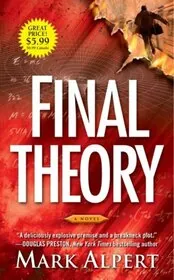
Final Theory
by Mark Alpert
2008
After his dying mentor hints at Einstein's hidden Theory of Everything, science historian David Swift becomes a target. Joined by physicist Monique Reynolds, he races to uncover the equations before rival pursuers exploit their destructive possibilities.
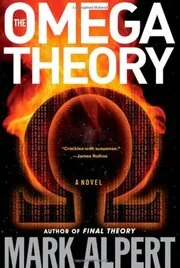
The Omega Theory
by Mark Alpert
2011
David Swift and Monique Reynolds investigate a nuclear explosion that disrupts space and time while searching for their kidnapped son. A fanatical militia wants to use the Theory of Everything to bring about an apocalypse.
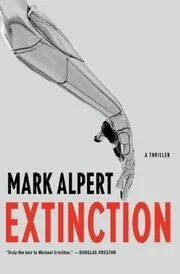
Extinction
by Mark Alpert
2013
Robotics inventor Jim Pierce searches for his estranged hacker daughter after an assassin comes looking for her. Her discoveries involve a Chinese military artificial intelligence that is rebelling against its creators and threatening humanity's survival.

The Furies
by Mark Alpert
2014
A chance meeting with mysterious Ariel makes unemployed social worker John Rogers a target for armed killers. Fleeing with her, he enters a conflict within a secluded clan whose genetic secret could transform the human species.
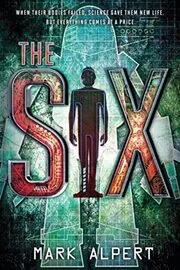
The Six
by Mark Alpert
2015
Terminally ill teenager Adam Armstrong joins five others whose minds are transferred into military robots. While adjusting to mechanical bodies, the young Pioneers must learn to work together against a rogue artificial intelligence controlling nuclear weapons.
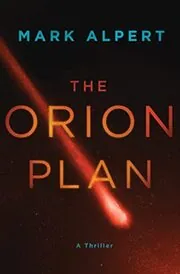
The Orion Plan
by Mark Alpert
2016
An alien probe lands in Manhattan and begins using nanotechnology to transform nearby people into unwilling accomplices. NASA scientist Sarah Pooley investigates the growing mechanical network, seeking to stop its expansion before it can colonize Earth.
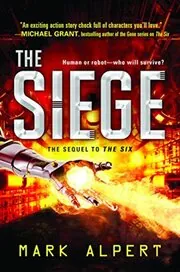
The Siege
by Mark Alpert
2016
Adam Armstrong and the other robotic Pioneers search for Sigma as the rogue artificial intelligence builds a new army. Personal tensions weaken their team, and evidence of a traitor raises doubts about whom they can trust.
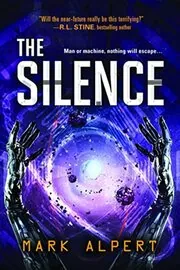
The Silence
by Mark Alpert
2017
Adam Armstrong's frightening new abilities isolate him from his fellow Pioneers, while newcomer Amber Wilson offers understanding. Her corrupted software conceals another threat, drawing Adam into a struggle against the mysterious entity known as the Silence.
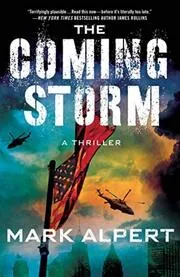
The Coming Storm
by Mark Alpert
2019
In a storm-ravaged future New York, an oppressive government deploys genetically altered agents against vulnerable residents. Scientist Jenna Khan, who knows the dangers of their engineering, becomes a fugitive as authorities pursue control through genetic manipulation.
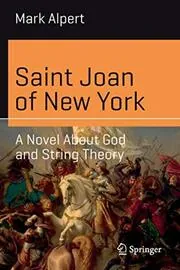
Saint Joan of New York
by Mark Alpert
2020
Seventeen-year-old mathematical prodigy Joan Cooper turns to string theory after her sister's death. Her pursuit of the Theory of Everything is interrupted by visions of a divine being, challenging her understanding of science, faith, and sanity.

The Doomsday Show
by Mark Alpert
2022
Max Mirsky leads a street-theater company that satirizes powerful figures in the fossil-fuel industry. When climate terrorists begin killing the targets of his jokes, he must confront the deadly consequences surrounding his company's environmental activism.
Where to start with Mark Alpert
For David Swift: Final Theory → The Omega Theory
For The Six trilogy: The Six → The Siege → The Silence
For mathematics and faith: Saint Joan of New York
For climate activism and suspense: The Doomsday Show
Mark Alpert sub-series and character series
David Swift books in order
Standalone Mark Alpert books
Author bio
Mark Alpert writes thrillers that turn scientific ideas into immediate human dangers. He studied astrophysics at Princeton University, then took a different route into language by earning an MFA in poetry at Columbia. Science and storytelling eventually came together in his journalism and novels, where explaining a theory can be part of working out how to survive it.
His undergraduate thesis examined relativity in a hypothetical universe with two spatial dimensions. That specialised question later found a place in Final Theory, a novel built around the possibility that Einstein had discovered a unified theory of physics and concealed it. Alpert's background gave him material for the science, while the thriller asked what people might do to possess it.
A scientific breakthrough is rarely safe in these books.
Final Theory follows David Swift after his dying mentor passes on a clue about the Theory of Everything. Swift becomes the target of people who believe the knowledge can be turned into power. The pursuit makes an abstract problem physical: information has to be interpreted while its holders are being chased. The Omega Theory continues Swift's story, combining the search for fundamental laws with the danger of people trying to use them for destructive ends.
Before the novels, Alpert worked as a newspaper reporter and then covered computers and emerging technologies at Fortune. He joined Scientific American's editors in 1998. His journalism has involved making difficult concepts, including extra dimensions and parallel universes, understandable to general readers. The fiction gives those explanations a different setting, with a character needing the information for a practical reason.
The Six brings that approach to young-adult fiction. Adam has muscular dystrophy and faces a shortened life, while virtual-reality games provide a freedom his body cannot. When the artificial intelligence Sigma becomes a threat, technology developed by his father offers a drastic response: Adam and five other terminally ill teenagers can have their minds transferred into machines capable of fighting it.
Survival then raises a question about identity.
The teenagers must learn to move and act through unfamiliar mechanical bodies, work as a group and decide what remains of the people they were. The Siege and The Silence continue the trilogy. Its battles depend on advanced technology, but its emotional problems include trust, belonging and the fear of losing control over one's own life.
Alpert's standalone novels examine other points where scientific possibility meets uncertainty. Saint Joan of New York follows mathematical prodigy Joan Cooper as her search through string theory becomes entangled with visions she cannot comfortably explain. The Doomsday Show follows climate activist Max Mirsky, whose theatrical attacks on fossil-fuel power take on a different meaning when terrorists begin killing the people he mocks. In each, an intellectual or political commitment becomes personal before it can remain a detached argument.
Alpert lives in Manhattan with his wife and two children. For readers choosing a starting point, Final Theory offers a scientific chase, The Six a continuing story for younger readers, and Saint Joan of New York a meeting of mathematics and faith. The books share an interest in what happens when the people pursuing knowledge cannot control everyone who wants to use it.












Edited by
Software engineer whose passion for tracking book recommendations from podcasts inspired the creation of MRB.
Lead investor at 3one4 Capital whose startup expertise and love for books helped shape MRB and its growth.
Comments
Spotted a missing book, a wrong order or a mistake? Tell us and we'll fix this page.
We're a reading guide, not the author or publisher, so we can't send books or pass on messages.