
Marjan Kamali Books in Order
Explore Marjan Kamali’s books in order, with short summaries, where to start tips, and background on her novels of love, family, and Iranian history.
Last updated:
As an Amazon Associate, we earn from qualifying purchases (at no extra cost to you).
Marjan Kamali books in publication order
3 books
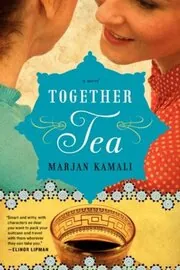
Together Tea
by Marjan Kamali
2013
Mina is tired of her mother Darya’s spreadsheet-driven matchmaking and the pressure to marry. A trip from New York back to Iran forces both women to face old hurts, family expectations, and what home really means.
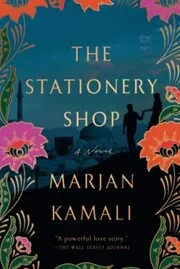
The Stationery Shop
by Marjan Kamali
2019
In 1953 Tehran, bookish Roya falls for Bahman after meeting him in a beloved stationery shop. When political turmoil and family pressure tear them apart, one unanswered question follows her across decades and continents.
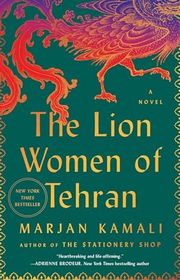
The Lion Women of Tehran
by Marjan Kamali
2024
After losing her father, young Ellie finds an unlikely best friend in bold, warmhearted Homa in 1950s Tehran. Their bond shapes the rest of their lives as ambition, class, and political upheaval test loyalty and forgiveness.
Where to start with Marjan Kamali
If you want the big love story first: The Stationery Shop
If you want family comedy and mother-daughter tension: Together Tea
If you want friendship shaped by history: The Lion Women of Tehran
If you want to read in publication order: Together Tea → The Stationery Shop → The Lion Women of Tehran
Standalone Marjan Kamali books
Author bio
Marjan Kamali was born in Turkey to Iranian parents and grew up moving from country to country. Her childhood took her through Turkey, Iran, Germany, Kenya, and eventually the United States. That early sense of crossing borders shows up all through her fiction. Her novels are full of people trying to make a home, hold on to family, and figure out who they are when one life pulls against another.
Books were one steady thing.
Kamali has said she was a serious reader as a child, the kind of kid who wanted to disappear into stories for hours. She read widely, including the British classics her mother kept around the house, and Persian poetry was part of everyday family life. That mix matters. You can feel it in her work, where love stories sit beside history, and where food, memory, and language carry as much weight as plot. When she left Iran during the war and arrived in New York City at age ten, she saw both the shock of a new place and something simpler underneath it, people were still people everywhere.
She studied English literature at UC Berkeley, which fits with how long books had already been at the center of her life. After college she married, moved to Basel, and worked as an editor of scientific publications. During those years she wrote little stories on the side and kept thinking about fiction, even while her life looked practical and orderly from the outside.
Then came business school, and a very specific spark.
While working toward an MBA at Columbia, Kamali got the idea that would grow into Together Tea. A class on spreadsheets made her imagine an Iranian mother using charts and numbers to rank possible husbands for her daughter. She showed the early pages to her former Berkeley teacher Leonard Michaels, and he told her she already had the first chapter of a novel. That nudge changed things. She went on to earn an MFA in creative writing from New York University, living what she has described as a double life, business classes by day, writing workshops by night.
Like a lot of writers, she did not move in a straight line. Raising children and moving between cities slowed the work, and the manuscript for Together Tea sat for a while. When she returned to it later, she saw the mother character with fresh sympathy and revised the novel in a deeper, warmer way. Published in 2013, Together Tea follows Mina and her mother, Darya, from New York to Iran in a story about matchmaking, family pressure, and the push and pull of two cultures.
Her second novel, The Stationery Shop, brought her to a much wider audience. Set partly in Tehran in 1953, it follows Roya and Bahman, two young people whose love story is shaped by political upheaval and family interference. Kamali has said the book was sparked in part by meeting an elderly Iranian man whose remarkable life story was not being fully heard. Readers often respond to the way the novel blends romance, history, food, and poetry while staying close to ordinary heartbreak. Together Tea was adapted for the stage, and The Stationery Shop became a bestseller.
Her third novel, The Lion Women of Tehran, turns to female friendship, class, and political change across decades in Iran. It shows another side of what Kamali does well. She writes about coups, revolution, migration, and public pressure, but she keeps bringing the story back to kitchens, schoolrooms, sisters, friends, and the private choices that shape a life. Big history is always there, but so is the small daily business of being human.
She now lives in the Boston area with her family. Across her books, you can see the same interests again and again: Iranian and Iranian American lives, women trying to claim room for themselves, the ache of leaving home, and the comfort of books, food, and memory. Her fiction is serious about history, but it never forgets the people living inside it.












Edited by
Software engineer whose passion for tracking book recommendations from podcasts inspired the creation of MRB.
Lead investor at 3one4 Capital whose startup expertise and love for books helped shape MRB and its growth.
Comments
Did we miss something? Have feedback?
Help us improve this page by sharing your thoughts