
Marian Womack Books in Order
This page lists Marian Womack books in order, with quick summaries, where to start tips, and a clear guide to her eerie, eco-gothic speculative fiction.
Last updated:
As an Amazon Associate, we earn from qualifying purchases (at no extra cost to you).
Marian Womack books in publication order
4 books
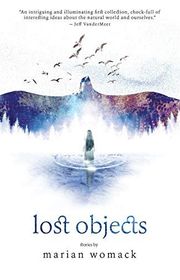
Lost Objects
by Marian Womack
2018
This story collection moves through damaged landscapes, haunted relationships, and futures warped by ecological collapse. Across Andalusia, Scotland, and Norfolk, Marian Womack links loss, absence, and the uncanny in stories that feel both intimate and unsettling.
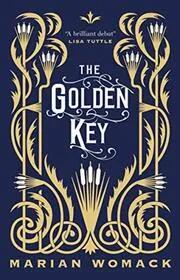
The Golden Key
by Marian Womack
2020
In 1901, Helena Walton-Cisneros is hired to solve the decades-old disappearance of three girls on the Norfolk Fens. The case leads her into séances, folklore, and a landscape that seems determined to keep its secrets.
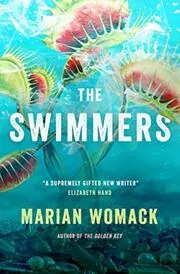
The Swimmers
by Marian Womack
2021
After climate catastrophe remakes Earth, Pearl lives in the forests of Gobari, caught between her troubled home life and a promised marriage to the starborn Arlo. Marian Womack turns survival, desire, and ecological damage into something feverish and uncanny.
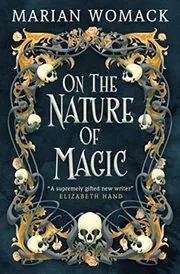
On the Nature of Magic
by Marian Womack
2023
In 1902 Paris, Helena Walton-Cisneros and her colleague Eliza investigate a ghostly sighting at Versailles and strange vanishings at Méliès's film studio. The result is an occult mystery where early cinema, espionage, and the supernatural blur together.
Where to start with Marian Womack
If you want eerie historical mystery: The Golden Key → On the Nature of Magic
If you want climate fiction with a Gothic edge: The Swimmers
If you want short fiction first: Lost Objects
If you want a quick sense of her range: Lost Objects → The Golden Key → The Swimmers → On the Nature of Magic
Marian Womack collections, short stories, and related book types
Collections
Standalone Marian Womack books
Author bio
Marian Womack was born in Andalusia, Spain, and grew up with the sense that the ordinary world could tilt into something stranger. In interviews, she has recalled family superstitions, card reading, and a daily life where the supernatural never felt very far away.
That early mix of heat, landscape, folklore, and unease still runs through her fiction. Womack writes in both Spanish and English, and she was educated in the UK, studying at Glasgow, Oxford, and Cambridge before later completing a PhD in Creative Writing and Environmental Humanities. The academic path sounds formal on paper, but her work has always stayed close to weather, place, and physical things.
Books were the day job, and the long game.
Before more readers found her fiction, she spent years working around books from several angles, as an editor, translator, occasional bookseller, and later in academic libraries. She has also taught creative writing, publishing studies, and book history in Spain and the UK, including four years on Oxford's MSt writing programme. That mix of practical book work and scholarly study helps explain why her stories feel carefully made but never too tidy.
She has said she wrote all her life, but a major turning point came with the Clarion Writers' Workshop in San Diego in 2014. Womack later became the first Spanish graduate of Clarion, and she has described those six intense weeks as a real boost to her writing. One story she drafted there eventually grew into The Golden Key, which she later developed further during her Creative Writing master's at Cambridge.
She likes thresholds, missing people, and landscapes that refuse to behave.
That shows up clearly in Lost Objects, the 2018 collection that helped introduce her English-language fiction to a wider audience. The stories move through Andalusia, Scotland, and Norfolk, returning again and again to decay, extinction, grief, and strange natural life. Then came The Golden Key, a Victorian mystery set on the Norfolk Fens, and The Swimmers, a near-future eco-gothic novel set in an altered Andalusia after climate catastrophe remakes the world.
In On the Nature of Magic, she returned to investigator Helena Walton-Cisneros for another uncanny case, this time in Paris, with spiritualism, early film, and the occult brushing up against detective work. Across these books, Womack keeps circling similar questions: what people do to the land, what the land does back, and how memory, myth, and fear can blur together. Even when the settings shift, her stories tend to feel haunted and just a little unstable underfoot.
She has also published fiction in Spanish, including Memoria de la nieve and, with Sofía Rhei, Calle Andersen. Alongside her own books, she has translated writers such as Mary Shelley, Charles Dickens, Lord Dunsany, Lisa Tuttle, and Daphne du Maurier into Spanish, and she has edited and co-edited projects connected to speculative fiction and ecofiction. She has even worked on a videogame collaboration, which fits her interest in stories that spill beyond one neat shelf.
Now based in Cambridge, near the Fens that helped inspire some of her fiction, Womack still moves between writing, teaching, editing, and making books by hand. She lives with her husband, the poet James Womack, their children, and a Spanish rescue cat, and she is keen on bookbinding and printing. It feels like the right hobby for a writer so interested in objects, traces, and the marks people leave behind.




Edited by
Software engineer whose passion for tracking book recommendations from podcasts inspired the creation of MRB.
Lead investor at 3one4 Capital whose startup expertise and love for books helped shape MRB and its growth.
Comments
Did we miss something? Have feedback?
Help us improve this page by sharing your thoughts