
Margot Bennett Books in Order
Browse Margot Bennett's books in order, with short summaries, genre notes, and easy where-to-start tips for her crime, thriller, and science fiction.
Last updated:
As an Amazon Associate, we earn from qualifying purchases (at no extra cost to you).
Margot Bennett books in publication order
10 books
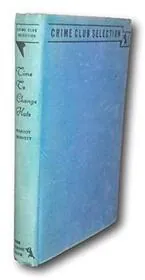
Time to Change Hats
by Margot Bennett
1945
Amateur sleuth John Davies answers a plea from a woman troubled by sinister death cards in an English village. Before he can get his bearings, a shooting and a baffling double puzzle pull him into a witty, character-rich wartime mystery.
Away Went the Little Fish
by Margot Bennett
1946
Posted to a sleepy town near London, John Davies expects boredom until a corpse turns up inside a chest at an auction. The case mixes suburb satire, locked-room touches, and a steadily widening circle of suspects.
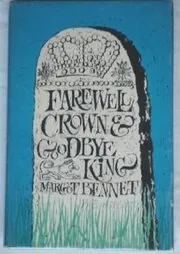
Farewell Crown and Goodbye King
by Margot Bennett
1952
When shady operator Roger Maple vanishes, film producer Duncan Stewart goes looking for him and walks straight into fraud, murder, and political intrigue. An exiled king, borrowed money, and too many secrets turn the search into a sly thriller.

The Widow of Bath
by Margot Bennett
1952
Hugh Everton, newly out of prison and trying to keep life simple, runs into old flame Lucy and her husband, Judge Bath. When the judge is murdered and his body disappears, Hugh is drawn into a dangerous maze of lies and suspicion.
The Long Way Back
by Margot Bennett
1955
In a far-future world after atomic war, an expedition from Africa travels to ruined Britain in search of lost civilization. What they find is a harsh land of mutants, superstition, and colonial ambition turned upside down.

The Man Who Didn't Fly
by Margot Bennett
1955
Four men are meant to fly to Dublin, but when the plane crashes into the Irish Sea only three were aboard. The investigation becomes a brilliant question of identity: who stayed behind, and what did he stand to gain?
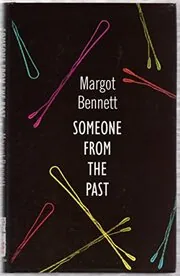
Someone from the Past
by Margot Bennett
1958
After Nancy Graham meets her old friend Sarah for dinner, Sarah is dead by morning and Nancy falls under suspicion. To clear herself, she has to pick through the bitter history of Sarah's former lovers and old betrayals.
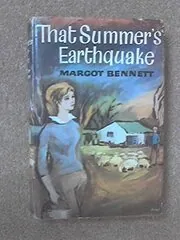
That Summer's Earthquake
by Margot Bennett
1963
Jenny Wallace grows up on a New Zealand sheep station under the stern control of her older brother, Andrew. As love and jealousy build around the farm, Bennett turns the rugged landscape into the backdrop for a tense family drama.
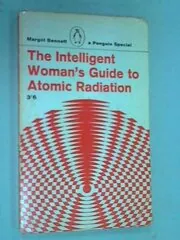
The Intelligent Woman's Guide to Atomic Radiation
by Margot Bennett
1964
Bennett turns from fiction to plainspoken science, explaining atomic energy, radiation, fallout, and the fears of the nuclear age for general readers. It is a compact guide meant to make a difficult subject clearer and less mysterious.
The Furious Masters
by Margot Bennett
1968
A mysterious spacecraft crashes near the Yorkshire town of Higherfield, and curiosity soon gives way to panic. As madness, rumor, and public hysteria spread, Bennett uses an alien-contact setup to satirize fear and mass reaction.
Where to start with Margot Bennett
If you want a first taste of her mystery writing: The Widow of Bath → The Man Who Didn't Fly → Someone from the Past
If you like linked amateur-sleuth mysteries: Time to Change Hats → Away Went the Little Fish
If you want her speculative side: The Long Way Back → The Furious Masters
If you want her wider range beyond crime: Farewell Crown and Goodbye King → That Summer's Earthquake → The Intelligent Woman's Guide to Atomic Radiation
Standalone Margot Bennett books
Author bio
Margot Bennett was born Margot Mitchell on January 19, 1912, in Lenzie, Dunbartonshire, Scotland. Her school years were split between Scotland and Australia, which gave her a life that was less settled than many British crime writers of her generation. Long before she published novels, she had already lived across countries and through political upheaval.
In the 1930s she worked as an advertising copywriter in Sydney and London. Then the Spanish Civil War changed the direction of her life. She worked there as a nurse, translator, and broadcaster for the Spanish Medical Aid, and the experience was not distant or safe: a truck accident broke her arm, and she was also shot in both legs.
That kind of history leaves a mark.
During the war she met Richard Lawrence Bennett, an English journalist and writer who had served with the Republicans. They married in Barcelona in 1937, in a ceremony conducted by a Republican soldier, and went on to have four children. In later years Bennett lived in London and supported left-wing causes, including the Campaign for Nuclear Disarmament.
Her writing life took shape in the 1940s. She was a regular contributor to Lilliput between 1943 and 1950, and her first novel, Time to Change Hats, appeared in 1945. That book and its follow-up, Away Went the Little Fish, introduced John Davies and showed what Bennett was good at from the start: dry humor, sharp social observation, and plots that care as much about people as puzzles.
She is still best known for her crime novels from the 1940s and 1950s. The Widow of Bath brings together an ex-prisoner, an old lover, and a vanished body. The Man Who Didn't Fly starts with a plane crash and one of those hooks that is hard to forget: four men were meant to travel, but only three were on board. Then Someone from the Past won the Gold Dagger in 1958, confirming that Bennett could write mysteries that were both tightly built and emotionally prickly.
She didn't stay in one lane for long.
Bennett also moved into science fiction and nonfiction. The Long Way Back imagines a future Britain devastated by nuclear war and visited by an expedition from Africa, while The Furious Masters begins with a crashed spacecraft near a Yorkshire town and lets public panic do the rest. In 1964 she published The Intelligent Woman's Guide to Atomic Radiation, a plain-language book that tried to explain the fears and facts of the atomic age to ordinary readers.
She wrote widely for television too, with credits on Maigret, Emergency-Ward 10, Quick Before They Catch Us, and Market in Honey Lane. She was also briefly connected with Doctor Who in 1964, though the story she was meant to contribute never reached the screen. Bennett even adapted The Widow of Bath for television herself, which feels fitting for a writer so comfortable moving between forms.
Margot Bennett died in London on December 6, 1980. Her list of books is not huge, but it has range: classic detective fiction, tough thrillers, unusual speculative novels, and a nonfiction guide to radiation. Readers who find her now usually come for the mystery plots and stay for the wit, the cool eye, and the sense that she had seen much more of life than most writers ever need to imagine.







Edited by
Software engineer whose passion for tracking book recommendations from podcasts inspired the creation of MRB.
Lead investor at 3one4 Capital whose startup expertise and love for books helped shape MRB and its growth.
Comments
Did we miss something? Have feedback?
Help us improve this page by sharing your thoughts