
Louis de Bernieres Books in Order
Explore Louis de Bernières books in order, with short summaries, series guides, and clear suggestions on where to start with his novels, stories, and poetry.
Last updated:
As an Amazon Associate, we earn from qualifying purchases (at no extra cost to you).
Louis de Bernieres books in publication order
26 books

The War of Don Emmanuel's Nether Parts
by Louis de Bernieres
1990
When a rich woman tries to divert a river for her swimming pool, a remote South American community is pushed into conflict with soldiers and state power. Wildly comic and often savage, it turns political absurdity into a human story.

Señor Vivo and the Coca Lord
by Louis de Bernieres
1991
Dionisio Vivo, a philosophy lecturer in a corrupt South American state, becomes a target after denouncing drug barons in the press. Bodies appear, loyalties shift, and his private life is pulled into a dangerous public war.

The Troublesome Offspring of Cardinal Guzman
by Louis de Bernieres
1992
As an economy collapses and a bizarre new community pursues pleasure and freedom, Cardinal Guzman answers with a private inquisition. The trilogy's finale is grotesque, funny, and sharply alert to power and hypocrisy.

Labels
by Louis de Bernieres
1993
This early story collection opens with a man whose hobby of collecting cat-food labels takes over his life. Elsewhere, de Bernières mixes comic obsession, odd romance, and small human disasters with warmth and mischief.

Captain Corelli's Mandolin
by Louis de Bernieres
1994
Posted to occupied Cephalonia in 1941, Captain Antonio Corelli charms locals with music and humor, then falls in love with Pelagia. Their romance unfolds against invasion, resistance, and the steady moral wreckage of war.

Corelli's Mandolin
by Louis de Bernieres
1994
On wartime Cephalonia, Pelagia, a local doctor's daughter, finds her loyalty tested when she falls for Captain Antonio Corelli, an Italian officer and gifted musician. Love, occupation, and brutal history collide on every page.
Recommended by
1 person Lisa Ling recommended this book
Lisa Ling
"One of the most beautifully written books I’ve ever read." - Lisa Ling
Lisa Ling's recommendation of this book

Gunter Weber's Confession
by Louis de Bernieres
1998
This short piece returns to the island world of Corelli and lets a new voice speak. It is a confession shaped by occupation, guilt, and memory, interested less in innocence than in the compromises war leaves behind.

Red Dog
by Louis de Bernieres
1999
Inspired by the real Pilbara legend, this short novel follows a free-roaming red kelpie who drifts through Dampier, wins over miners and drifters, and becomes the heart of a whole town. Funny, sunbaked, and unexpectedly moving.

Sunday Morning at the Centre of the World
by Louis de Bernieres
2001
This play for voices listens in on a South London neighborhood over the course of one Sunday morning. The result is funny, sad, crowded, and deeply interested in how a community sounds when everyone gets a turn.

Birds Without Wings
by Louis de Bernieres
2004
In a mixed Christian and Muslim village in southwest Anatolia, neighbors live together until war and nationalism tear their world apart. Through many voices, de Bernières shows how history crushes ordinary lives and long friendships.

A Partisan's Daughter
by Louis de Bernieres
2008
In late 1970s London, lonely middle-aged Chris mistakes Roza for a prostitute, and she gets into his car anyway. What follows is an odd, tender love story built on storytelling, doubt, and the question of who she really is.

Notwithstanding
by Louis de Bernieres
2009
Set in a slightly vanished English village, these linked stories follow eccentrics, children, gardeners, ghosts, and retirees with equal affection. The book is funny and strange, but it also knows how close comedy sits to loneliness.

Talking to George
by Louis de Bernieres
2011
John the gardener, his assistant Alan, and stable girl Sylvie are linked by friendship, longing, and a spider named George. In a few pages, de Bernières turns small talk and daily disappointment into something oddly tender.

The Death of Miss Agatha Feakes
by Louis de Bernieres
2011
Agatha Feakes spends what seems like an ordinary day looking back over her life, unaware it will be her last. It is brief, rueful, and quietly sharp about memory, routine, and mortality.

The Girt Pike
by Louis de Bernieres
2011
Eleven-year-old Robert is asked to catch the monstrous pike in Mrs. Rendall's pond, but he cannot afford the right gear. His homemade solution becomes a small test of pride, ingenuity, and the hard edge behind village life.

Imagining Alexandria
by Louis de Bernieres
2013
In this poetry collection, de Bernières writes in dialogue with C. P. Cavafy and the world of Alexandria. The poems circle history, desire, memory, and the pleasures and embarrassments of looking backward.

The Dust That Falls from Dreams
by Louis de Bernieres
2015
Before the First World War, Rosie McCosh, her sisters, and the neighboring Pitt and Pendennis boys grow up in Kent. Then war scatters them across trenches, hospitals, and the air, forcing them to build adult lives from loss.

Blue Dog
by Louis de Bernieres
2016
After a family tragedy, young Mick is sent to his grandfather's cattle station in the outback, where he rescues a half-drowned puppy after a cyclone. Their bond turns loneliness and hard country into a tender coming-of-age story.

Of Love and Desire
by Louis de Bernieres
2016
These love poems range from infatuation and longing to sorrow and disillusion, drawing on influences from several traditions. The mood changes often, but the book keeps returning to how desire reshapes memory and speech.

So Much Life Left Over
by Louis de Bernieres
2018
Home from the First World War, fighter pilot Daniel Pitt tries to begin again with Rosie on a tea plantation in Ceylon. As their marriage strains and Europe darkens, the whole family learns that survival is only the first step.

The Cat in the Treble Clef
by Louis de Bernieres
2018
De Bernières' third poetry collection moves through family, music, places, time, and love in its many forms. It is a personal, varied set of poems that feels especially close to the rhythms of everyday life.

Labels and Other Stories
by Louis de Bernieres
2019
This later collection travels across Europe and South America through comic, wistful, and faintly magical tales. Its memorable oddballs include hobbyists, thieves, lovers, and, in Gunter Weber's confession, a return to Cephalonia.

Station Jim
by Louis de Bernieres
2019
A railway guard finds an abandoned puppy on a steam train, and Jim soon turns one family's orderly life upside down. Full of mishaps, affection, and old-fashioned charm, it is a dog story made for children and adults alike.

A Day Out For Mehmet Erbil
by Louis de Bernieres
2020
Mehmet Erbil heads out to collect cans for a little extra money and stumbles into a gentle, awkward meeting with a foreign visitor. It is a small story about language, dignity, and the strange kindness of brief encounters.
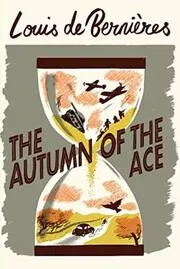
The Autumn of the Ace
by Louis de Bernieres
2021
After the Second World War, Daniel Pitt is older, damaged, and estranged from his son. A journey through grief, memory, and family duty gives this final Daniel Pitt novel its quiet emotional pull.

Light Over Liskeard
by Louis de Bernieres
2023
Q, a government cryptographer convinced civilization is heading for trouble, retreats to a ruined farmhouse in Cornwall and tries to live off-grid. What follows is part midlife reinvention, part social satire, and part modern fable.
Where to start with Louis de Bernieres
If you want the big wartime love story: Captain Corelli's Mandolin
If you want a sweeping historical epic: Birds Without Wings → The Dust That Falls from Dreams → So Much Life Left Over
If you want his wildest comic satire: The War of Don Emmanuel's Nether Parts → Señor Vivo and the Coca Lord → The Troublesome Offspring of Cardinal Guzman
If you want something shorter and warmer: Red Dog → Blue Dog
Louis de Bernieres sub-series and character series
Dog books in order
Explore this seriesLatin American Trilogy books in order
Explore this seriesLatin American Trilogy books in chronological order
The Dust That Falls from Dreams books in order
Explore this seriesThe Dust That Falls from Dreams books in chronological order
Louis de Bernieres collections, short stories, and related book types
Short Stories/Novellas
Plays
Collections
Standalone Louis de Bernieres books
Author bio
Louis de Bernières was born near Woolwich in London in 1954 and grew up in Surrey. He has one of those names that sounds as if it should belong to a traveler or exile, and in a way it does, because his fiction is always moving outward, toward Greece, Turkey, Latin America, Australia, or whatever place a story needs.
He did not move in a straight line toward writing. At eighteen he began officer training at Sandhurst and left after a few months. He later studied at the Victoria University of Manchester and at the Institute of Education in London, and before books paid the bills he worked a long list of jobs, including mechanic, motorcycle messenger, and English teacher in Colombia.
Poetry came first.
He has often said that he thought of himself as a poet before he thought of himself as a novelist. Music sits close to the work too. He plays guitar, mandolin, flute, and clarinet, which helps explain why music keeps turning up in his fiction, not as decoration, but as part of how people flirt, mourn, argue, and remember.
Colombia mattered. Time there, along with his love of Gabriel García Márquez, helped shape his first three novels, The War of Don Emmanuel's Nether Parts, Señor Vivo and the Coca Lord, and The Troublesome Offspring of Cardinal Guzman. Those books are funny, strange, violent, and full of communities trying to stay human while power becomes ridiculous and cruel.
Then came Captain Corelli's Mandolin, the book that made his name far beyond Britain. Set on Cephalonia during the Second World War, it mixes romance, comedy, occupation, brutality, and music in a way readers still remember. It won the Commonwealth Writers' Prize for Best Book, and its film adaptation helped carry the novel to an even wider audience.
He kept changing scale and setting after that. Birds Without Wings looks at a mixed community in Anatolia as the Ottoman world breaks apart. A Partisan's Daughter becomes an intimate, sly love story built on storytelling itself. Red Dog is brief, affectionate, and sunstruck, while Notwithstanding returns to village England and finds comedy, oddness, and sadness in close quarters.
His later sequence beginning with The Dust That Falls from Dreams follows Rosie McCosh, Daniel Pitt, and their extended circle from the years before the First World War into the decades after it. Those books show another side of his writing, patient about family life, class, aviation, empire, and the long aftershock of survival.
What links all this work is less a single genre than a way of looking. De Bernières is drawn to ordinary people caught inside wars, political folly, migration, appetite, faith, and love. Even in the funniest books there is usually a shadow nearby. Even in the saddest, there is room for appetite, music, or a joke.
He was named one of Granta's Best of Young British Novelists in 1993, later became a Fellow of the Royal Society of Literature, and received an honorary doctorate from De Montfort University. He has spent much of his adult life in the English countryside, still moving between fiction, stories, and poetry. That range suits him. He has never sounded like a writer who wanted to stay in one lane for long.









Edited by
Software engineer whose passion for tracking book recommendations from podcasts inspired the creation of MRB.
Lead investor at 3one4 Capital whose startup expertise and love for books helped shape MRB and its growth.
Comments
Did we miss something? Have feedback?
Help us improve this page by sharing your thoughts