
Lost Millennium Books in Order
Part ofMike Moscoe Books in OrderSee the Lost Millennium books in order by Mike Moscoe, with brief summaries, series background, and a simple guide to this time-travel trilogy.
Last updated:
As an Amazon Associate, we earn from qualifying purchases (at no extra cost to you).
Lost Millennium books in publication order
3 books
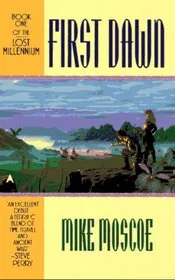
First Dawn
by Mike Moscoe
1996
From a plague-ravaged future, Jack Walking Bear and Launa Obrian are sent six thousand years into the past. To save humanity, they must change a fatal chain of events at the dawn of civilization.
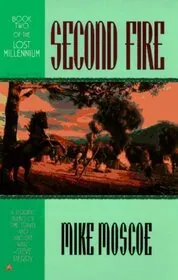
Second Fire
by Mike Moscoe
1997
Living among the people they came to save, Jack and Launa try to turn peaceful farmers into a force that can survive the coming raiders. Every lesson in war risks changing the very future they hope to protect.
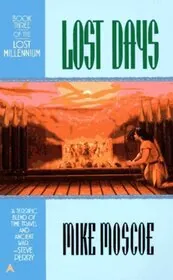
Lost Days
by Mike Moscoe
1998
Jack and Launa may have changed prehistory, but the future they return to is still not right. To save humanity for real, they may have to risk everything and do it all over again.
Lost Millennium books in chronological order
Series background & context
Lost Millennium is one of Mike Moscoe's earliest big science fiction projects, and it starts with a clean, unsettling premise. The near future has been gutted by a designer plague. Civilization is effectively finished. Humanity's last shot is not a miracle cure or a last stand, but time travel.
That is where Captain Jack Walking Bear and Lieutenant Launa Obrian come in.
In First Dawn, they are sent six thousand years into the past, into the world before recorded empires, to try to change a pattern of violence before it hardens into history. Their mission is not to save one city or stop one tyrant. It is much larger and stranger than that. They have to live among prehistoric people, earn trust, survive with limited supplies, and use knowledge instead of numbers to push events in a different direction.
The setting matters a lot here. These books spend real time on the texture of ancient life, camps, fields, weather, language barriers, tools, and the distance between what the visitors know and what the people around them can even imagine. That gives the trilogy a different feel from a lot of time-travel fiction. Once the jump happens, this is not a gadget-heavy story. It becomes a story about culture, persuasion, and leadership under extreme pressure.
The ongoing problem across the trilogy is simple to say and hard to solve. How do you teach people to fight without destroying the very qualities you came back to protect? In Second Fire, Jack and Launa are still trying to guide a peaceful farming people away from extinction, but doing that means training them for war against steppe raiders. Every success costs them something.
Then Lost Days pushes the idea even further. Even if you change the past, there is no guarantee you will get the future you wanted. The trilogy keeps circling that question. Is a better world something you can build from the outside, or does every intervention create a new mess of its own?
That moral tension is really the heart of the series.
Readers who come here should expect a blend of military planning, survival fiction, and big historical what-if speculation. The cast stays close enough that the books feel personal, even when the stakes are as large as human history. Jack and Launa are not just tourists in the past. They become part of the problem, part of the hope, and eventually part of the world they were sent to change.
If you like science fiction that starts with a huge premise and then follows it down to the human level, Lost Millennium is a good fit. It is thoughtful without being fussy, action-minded without losing sight of character, and interested in the hard truth that saving the future might begin with changing people one village, one argument, and one impossible decision at a time.






Edited by
Software engineer whose passion for tracking book recommendations from podcasts inspired the creation of MRB.
Lead investor at 3one4 Capital whose startup expertise and love for books helped shape MRB and its growth.
Comments
Did we miss something? Have feedback?
Help us improve this page by sharing your thoughts