
Lorena Hughes Books in Order
This page lists Lorena Hughes books in order, with quick summaries, historical context, and easy where-to-start tips for her Ecuador-set dramas and mysteries.
Last updated:
As an Amazon Associate, we earn from qualifying purchases (at no extra cost to you).
Lorena Hughes books in publication order
4 books
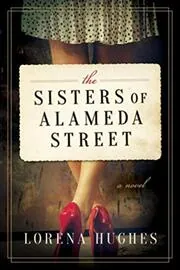
The Sisters of Alameda Street
by Lorena Hughes
2017
After her father's suicide, Malena Sevilla follows a letter to a mountain town in Ecuador and meets four possible sisters on Alameda Street. Hiding her identity, she searches for her mother and stirs up secrets that could shatter the whole family.
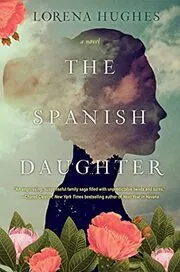
The Spanish Daughter
by Lorena Hughes
2021
After inheriting a cacao estate in 1920s Ecuador, Puri sails from Spain to claim it, only to lose her husband in a deadly attack. Disguised as a man, she reaches the plantation and uncovers dangerous secrets, new siblings, and an enemy still hunting her.

The Queen of the Valley
by Lorena Hughes
2023
In 1925, Puri travels to Colombia to find Martín Sabater after his cacao shipments stop without explanation. Disguised as a novice nun, she lands at his hacienda, now a hospital after the Cali earthquake, where missing people, cholera, and old lies close in.

The Night We Became Strangers
by Lorena Hughes
2025
In 1957 Quito, aspiring photojournalist Valeria returns home determined to learn how her parents really died in the 1949 radio riot that ruined two families. Teaming up with her former love, Matías, she digs into old lies that still shape both their futures.
Where to start with Lorena Hughes
If you want the best first stop: The Spanish Daughter → The Queen of the Valley
If you want a family saga full of secrets: The Sisters of Alameda Street
If you want historical suspense with old lovers and newsroom tension: The Night We Became Strangers
If you want to read Hughes in publication order: The Sisters of Alameda Street → The Spanish Daughter → The Queen of the Valley → The Night We Became Strangers
Standalone Lorena Hughes books
Author bio
Lorena Hughes was born and raised in Ecuador, and the country still sits at the heart of her fiction. At eighteen she moved to the United States to study fine arts, mass communication, and journalism at the University of New Mexico. That mix, visual art on one side and storytelling on the other, helps explain why her novels feel so vivid on the page.
She has said she felt like a writer long before she called herself one. As a girl, while other kids played house with their dolls, Hughes had her Barbies reenact the telenovelas she watched with her mother, full of heartbreak, betrayal, and impossible love. At eight she wrote a picture book for art class called El Pozo Mágico, about a doll trapped in a well who needs magic to escape.
The notebooks came next. She filled old pages with letters, journal entries, and scraps of fiction, and she spent hours trying to turn everyday anecdotes into something bigger. Around the same time, she discovered she could draw, took painting classes, joined group exhibitions, and briefly imagined a future in the visual arts.
Then life got busy.
After college, Hughes worked in advertising, graphic design, and illustration. Later, while raising her children, she returned to fiction in the margins of the day, between naps and diaper changes. Her first major project began as a Latin American soap opera, but living in an English-speaking country made her rethink the form, so she reshaped it into a novel.
That long road eventually led to The Sisters of Alameda Street, her 2017 debut. Set in 1960s Ecuador, it follows a woman searching for her mother and walking straight into a knot of family secrets. It already shows many of the things Hughes keeps coming back to, women looking for the truth about themselves, old scandals that refuse to stay buried, and communities where reputation can matter as much as love.
The Spanish Daughter brought her to a wider audience. Set in the cacao world of early 20th century Ecuador, it follows Puri, a chocolatier who crosses the Atlantic, loses her husband to violence, takes on a man's identity, and tries to claim the inheritance her father left behind. The book became an Editors' Pick and a popular book club choice. It has romance, danger, family conflict, and a strong feel for place, food, and social rules.
Hughes returned to Puri in The Queen of the Valley, which carries the story into Colombia and layers in a disappearance, an earthquake, a cholera outbreak, and more painful family history. In The Night We Became Strangers, she turns to a real radio tragedy in Quito and builds a story around two young journalists trying to understand what one terrible night did to their families. Readers who start with The Spanish Daughter often keep going straight into The Queen of the Valley. The plots move quickly, but the emotional stakes stay personal.
Research matters to her.
Across her books, certain threads repeat, secret histories, divided families, women improvising their way through rigid expectations, and settings that are never just scenery. Many of her heroines are caught between countries, languages, names, or social roles, and that tension gives the novels much of their drive. Ecuador, especially, comes through as memory, class, weather, beauty, business, and danger all at once. Hughes still works as a family photographer, which feels like a neat companion to the way she writes fiction. You can sense that eye for composition in her scenes, whether she is describing a mountain town, a cacao estate, or a crowded city street. Even when the plots turn dramatic, the deeper pull is usually about belonging, reinvention, and the cost of telling the truth.



Edited by
Software engineer whose passion for tracking book recommendations from podcasts inspired the creation of MRB.
Lead investor at 3one4 Capital whose startup expertise and love for books helped shape MRB and its growth.
Comments
Did we miss something? Have feedback?
Help us improve this page by sharing your thoughts