
Little Pip Books in Order
Part ofKarma Wilson Books in OrderThis page lists the Little Pip books by Karma Wilson in order, with quick summaries, series background, and where-to-start help.
Last updated:
As an Amazon Associate, we earn from qualifying purchases (at no extra cost to you).
Little Pip books in publication order
3 books
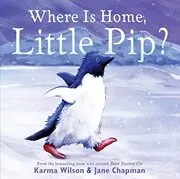
Where Is Home, Little Pip?
by Karma Wilson
2008
Little Pip chases a feather and wanders far from her Antarctic nest. As she asks other animals about home, she learns that home is tied to the family who loves her.
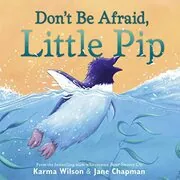
Don't Be Afraid, Little Pip
by Karma Wilson
2009
Little Pip is supposed to learn to swim, but the ocean feels too deep and scary. She tries to fly instead, then discovers that penguins have their own wonderful way through the water.
What's in the Egg, Little Pip?
by Karma Wilson
2010
Little Pip is not sure what to think when a new egg takes up her parents’ attention. Curiosity, jealousy, and care all mix together as she waits to meet the chick inside.
Little Pip books in chronological order
Series background & context
The Little Pip books move Karma Wilson’s storytelling from the forest to the cold Antarctic shore. The star is Little Pip, a young penguin with loving parents, a strong will, and the kind of worries that make sense to preschool and early elementary readers. She is small in a big white world, and that scale matters. Ice, ocean, sky, wind, and other animals all help make Pip’s questions feel real.
This is a gentle series about finding your place.
In Where Is Home, Little Pip?, Pip wanders too far after chasing a black feather. She asks other animals where home is, but their answers are not quite right for a penguin chick. A whale, a gull, and a sled dog may know their own homes, yet none can lead Pip straight back to hers. The story turns on a simple truth, home is tied to the ones who love you.
Don't Be Afraid, Little Pip gives Pip a different kind of problem. She is a bird with wings, so she thinks flying sounds far better than swimming. The ocean feels deep and frightening. Other birds can offer examples, but Pip has to learn what penguins are built to do. The book works well for children who are nervous about a new skill, especially one everyone else seems to expect them to learn.
The third main story, What's in the Egg, Little Pip?, brings the focus home again. A new egg arrives, and Pip has to deal with the strange mix of curiosity, jealousy, and uncertainty that can come with a new sibling. Her friend Merry is facing a similar change, which gives Pip someone beside her while she works through those feelings.
The tone is warm, not jokey. These books are less rowdy than the Bear stories and less toddler-simple than the Calico board books. They are still rhythmic and friendly, but they leave a little more room for tenderness, questions, and quiet reassurance.
Jane Chapman’s penguins give the series a soft visual continuity. Pip’s world can look wide and chilly, yet the family scenes feel close and safe. That contrast is the heart of the series: the world is big, but a small penguin can learn it piece by piece.
For most readers, Where Is Home, Little Pip? is the natural place to begin. It introduces Pip, her family, and the emotional center of the series. After that, choose Don't Be Afraid, Little Pip for courage and What's in the Egg, Little Pip? for new-baby conversations.


Edited by
Software engineer whose passion for tracking book recommendations from podcasts inspired the creation of MRB.
Lead investor at 3one4 Capital whose startup expertise and love for books helped shape MRB and its growth.
Comments
Did we miss something? Have feedback?
Help us improve this page by sharing your thoughts