
Lisa Feldman Barrett Books in Order
Explore Lisa Feldman Barrett books in order, with short summaries, where to start tips, and background on her writing about emotion and the brain.
Last updated:
As an Amazon Associate, we earn from qualifying purchases (at no extra cost to you).
Lisa Feldman Barrett books in publication order
7 books
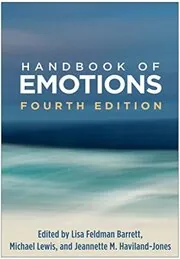
Handbook of Emotions
by Lisa Feldman Barrett
1993
This large reference brings together leading researchers to survey the science of emotion across the brain, development, health, personality, and social life. It is the place to go when you want the field in one volume.
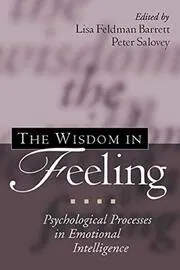
The Wisdom in Feeling
by Lisa Feldman Barrett
2002
This edited volume looks past pop ideas about EQ to ask what emotional intelligence actually depends on. Essays link perception, appraisal, communication, and self-regulation with research spanning neuroscience, cognition, and culture.
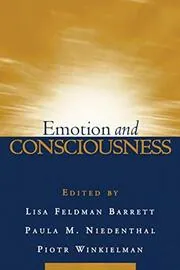
Emotion and Consciousness
by Lisa Feldman Barrett
2005
This edited collection asks how emotion becomes conscious experience. Bringing together psychology, neuroscience, and philosophy, it explores bodily signals, unconscious feeling, emotional contagion, and the brain processes behind what reaches awareness.
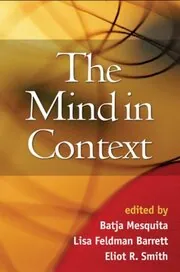
The Mind in Context
by Lisa Feldman Barrett
2010
This edited volume argues that minds do not operate in a vacuum. Across topics like perception, learning, personality, and emotion, it shows how mental life emerges through ongoing exchanges with social, cultural, and physical surroundings.
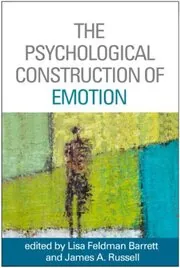
The Psychological Construction of Emotion
by Lisa Feldman Barrett
2014
This collection lays out the case for emotions as constructed events, not fixed programs wired into the brain. It examines the cognitive, social, and biological ingredients that combine into experiences like fear, anger, and sadness.
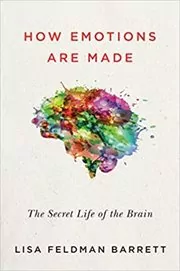
How Emotions Are Made
by Lisa Feldman Barrett
2016
Barrett argues that emotions are not hardwired reactions but experiences the brain builds from body signals, past experience, and context. It offers a clear, practical entry point into the ideas that made her best known.
Recommended by
1 person Lex Fridman recommended this book
Lex Fridman
"A great read." - Lex Fridman
Lex Fridman's recommendation of this book
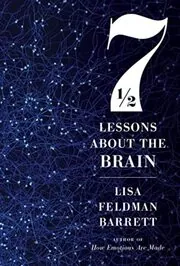
Seven and a Half Lessons About the Brain
by Lisa Feldman Barrett
2020
In seven brisk essays and a short story about evolution, Barrett explains what brains are for and why familiar myths miss the mark. It is a lively, accessible tour of brains, bodies, and the social world they help create.
Recommended by
1 person David Brooks recommended this book
David Brooks
"A fantastic short book on your mind." - David Brooks
David Brooks's recommendation of this book
Where to start with Lisa Feldman Barrett
If you want her central idea about emotion: How Emotions Are Made → Seven and a Half Lessons About the Brain
If you want the shortest, easiest entry point: Seven and a Half Lessons About the Brain → How Emotions Are Made
If you want the academic path into emotion theory: The Wisdom in Feeling → Emotion and Consciousness → The Psychological Construction of Emotion
If you want broad reference reading: Handbook of Emotions → The Mind in Context
Lisa Feldman Barrett collections, short stories, and related book types
Non-Fiction
Standalone Lisa Feldman Barrett books
Author bio
Lisa Feldman Barrett grew up in Toronto, in a working-poor family, and she has said she was the first person in her extended family to attend university. School mattered early. It was not just something she was good at, it was the path that could open a different kind of life.
At first she planned on medicine. Then university widened the map. She started in biology, switched to psychology, and also fell hard for anthropology and linguistics. She worked two jobs to pay her way, which feels fitting for a scientist who keeps asking how bodies, minds, culture, and daily life fit together.
Graduate school changed the whole story.
Barrett entered the University of Waterloo expecting to become a clinical psychologist. Instead, while trying to replicate a standard finding in the research literature, she kept getting results that did not behave the way the textbooks said they should. She has spoken openly about nearly losing confidence during that stretch. The puzzle pulled her away from a therapy career and into a life of research on emotion, the brain, and the hidden assumptions inside psychology.
That turn shaped everything that came after. She taught at Penn State and Boston College before moving to Northeastern University, where she built an interdisciplinary research program that draws from psychology, neuroscience, physiology, anthropology, philosophy, linguistics, and more. Her lab's work helped push a simple but disruptive idea into the center of debate, that emotions are not little packages buried in the brain, waiting to fire, but experiences the brain constructs in context. Those ideas have mattered well beyond psychology, touching conversations in medicine, education, and law.
A lot of her work is about context.
Readers who come to Barrett through How Emotions Are Made usually find a book that questions old certainties without losing the thread. She argues that feelings are built from body signals, past experience, and the situation at hand, which helps explain why emotions can feel personal, variable, and culturally shaped. For many general readers, that book is the main doorway into her thinking.
Then came Seven and a Half Lessons About the Brain, a shorter and more playful book that strips away familiar myths about how brains work. It is slim, sharp, and easy to hand to a curious friend. Her academic books, including Handbook of Emotions, The Wisdom in Feeling, Emotion and Consciousness, The Mind in Context, and The Psychological Construction of Emotion, show the other side of her career, the editor, theorist, and field-builder speaking to students, researchers, and serious nonfiction readers.
Across those books, some themes keep returning. The brain is always in conversation with the body. Emotion and reason are not clean opposites. Language and culture matter more than people often assume. And if minds are shaped in context, then understanding a person means looking beyond the skull.
These days Barrett is a University Distinguished Professor of Psychology at Northeastern University, with appointments at Harvard Medical School and Massachusetts General Hospital, where she also serves as Chief Science Officer for the Center for Law, Brain & Behavior. She co-founded the Society for Affective Science and served as president of the Association for Psychological Science from 2019 to 2020. She has received an NIH Director's Pioneer Award, a Guggenheim Fellowship, and major honors from psychology organizations, but the through line is still the same old question: what, exactly, is an emotion? She has also said she loves living in Boston, and in one small, very human detail, she once started making her own challah when she could not find one she liked nearby.














Edited by
Software engineer whose passion for tracking book recommendations from podcasts inspired the creation of MRB.
Lead investor at 3one4 Capital whose startup expertise and love for books helped shape MRB and its growth.
Comments
Did we miss something? Have feedback?
Help us improve this page by sharing your thoughts