
Lisa Barr Books in Order
Explore Lisa Barr's books in order, with concise summaries, standalone reading guidance, and background on her historical suspense, art-world intrigue, and drama.
Last updated:
As an Amazon Associate, we earn from qualifying purchases (at no extra cost to you).
Lisa Barr books in publication order
4 books
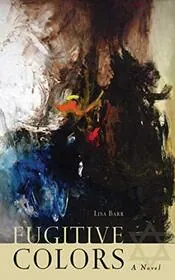
Fugitive Colors
by Lisa Barr
2012
Young American painter Julian Klein leaves Chicago for the freedom of 1930s Paris, where friendship, desire, and artistic rivalry pull him toward danger. As Nazi power grows, a circle of artists faces betrayal, stolen art, and choices that could cost them everything.
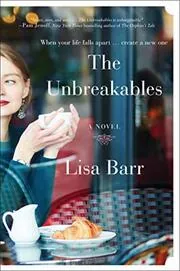
The Unbreakables
by Lisa Barr
2019
On her forty-second birthday, Sophie Bloom learns her husband has been unfaithful and flees Chicago for France. In Paris and Provence, she reconnects with art, her own ambitions, and the difficult question of what kind of life she wants next.
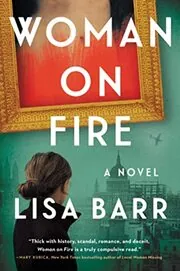
Woman on Fire
by Lisa Barr
2022
Rookie Chicago journalist Jules Roth is sent to find Woman on Fire, a Nazi-looted Expressionist painting coveted by a dying designer. With ruthless gallery owner Margaux de Laurent closing in, Jules and the designer's grandson race through a dangerous art-world hunt.
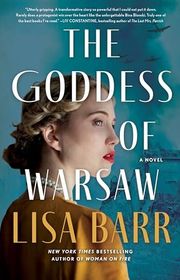
The Goddess of Warsaw
by Lisa Barr
2024
In 2005, aspiring filmmaker Sienna Hayes hopes to tell Golden Age star Lena Browning's life story. Lena's hidden past leads to 1943 Warsaw, where she was Bina Blonski, a Jewish woman who becomes a resistance spy and carries the war's consequences forward.
Where to start with Lisa Barr
For historical suspense with art at its center: Fugitive Colors → Woman on Fire
For a contemporary story of reinvention: The Unbreakables
For a wartime thriller about resistance and reckoning: The Goddess of Warsaw
Standalone Lisa Barr books
Author bio
Lisa Barr is a Chicago-area novelist and journalist whose books mix art, history, family memory, danger, and women who won't stay inside the roles assigned to them. She lives in the Chicago area with her husband and three daughters, and the city remains one of the touchstones in her work. Her novels are standalone stories, yet each asks what people will risk for freedom, truth, or a second chance.
Long before publishing fiction, Barr built a career in journalism. She worked as an editor at The Jerusalem Post, led Today’s Chicago Woman and Moment magazine as managing editor, and reported and edited for the Chicago Sun-Times. Her reporting took her from politics and terrorism to culture and relationships. She also covered the White House meeting between Yitzhak Rabin, Yasser Arafat, and Bill Clinton. That work taught her to chase details, listen closely, and keep going until the missing piece appeared.
But fiction was always there.
Barr has said she wrote stories and manuscripts alongside her day jobs. While on nine months of bed rest during her first pregnancy, she drafted the novel that became Fugitive Colors. Its starting spark had come earlier, when a magazine assignment sent her to see an exhibition about so-called “degenerate art,” the Nazi campaign against modern art. She saw the subject as more than background history. It gave her a way to write about ambition, beauty, power, and the cost of survival.
Published as her debut, Fugitive Colors follows young artists caught in Paris and Berlin as the Nazis gain power. It won the Independent Publisher Book Award gold medal for literary fiction. Barr returned to art, stolen cultural treasures, and moral pressure in Woman on Fire, where a young journalist searches for a Nazi-looted painting while rival forces close in. Both books suit readers who like art-world suspense with historical stakes.
With The Unbreakables, Barr moved into contemporary fiction. The novel begins with Sophie Bloom’s marriage falling apart and follows her trip from Chicago to France, where she reconnects with her artistic ambitions. It is a different setup, but the questions are familiar: What happens after betrayal? How do people rebuild? Barr gives the story room for friendship, sex, humor, anger, and a fresh start.
Her fourth novel, The Goddess of Warsaw, reaches back to the Warsaw Ghetto uprising and forward to Hollywood. It centers on a Jewish woman forced to survive wartime Poland, then live with the identities and choices survival demands. The material is personal for Barr, whose father survived the Holocaust. She has spoken about her grandmother's lasting influence and about doing years of research, including firsthand interviews, to ground the novel's history. Her books return again and again to art, secrets, revenge, women with agency, and the past refusing to stay buried.
The through line is curiosity. Barr brings a reporter’s habit of asking one more question, then builds stories around people who have something important to protect.






Edited by
Software engineer whose passion for tracking book recommendations from podcasts inspired the creation of MRB.
Lead investor at 3one4 Capital whose startup expertise and love for books helped shape MRB and its growth.
Comments
Did we miss something? Have feedback?
Help us improve this page by sharing your thoughts