
Lestrade Books in Order
Part ofMJ Trow Books in OrderFind M.J. Trow's Lestrade books in order, with summaries of the inspector's historical murder mysteries and guidance for choosing your first read.
Last updated:
As an Amazon Associate, we earn from qualifying purchases (at no extra cost to you).
Lestrade books in publication order
19 books
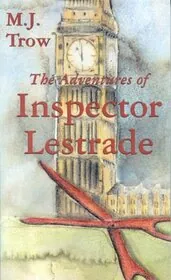
The Adventures of Inspector Lestrade
by MJ Trow
1985
Inspector Lestrade investigates a body discovered on the Isle of Wight and a sequence of apparently unrelated murders. Anonymous verses provide disturbing clues, sending the Scotland Yard detective after a killer whose crimes span the country.
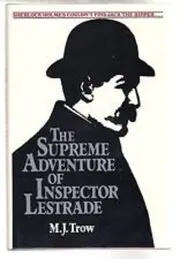
The Supreme Adventure of Inspector Lestrade
by MJ Trow
1985
A corpse hidden on the Isle of Wight draws Inspector Lestrade into a widening murder investigation. With anonymous poems pointing toward further crimes, he must untangle the connections behind killings that initially seem to have no common purpose.
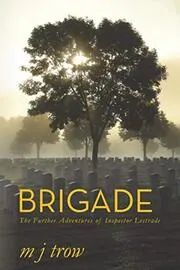
Brigade
by MJ Trow
1986
Sent to investigate strange deaths across England, Lestrade encounters an apparent animal attack, poisoning, and a lighthouse keeper's demise. His inquiries gradually uncover a connection between the victims and the soldiers who charged at Balaclava decades earlier.

Lestrade and the Hallowed House
by MJ Trow
1987
The violent death of a member of Parliament draws Lestrade into a politically sensitive investigation after Queen Victoria's death. As further murders and threats unsettle Westminster, he must navigate powerful interests and dangers reaching into the royal household.
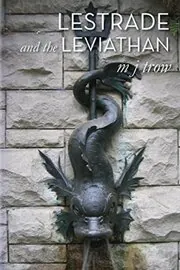
Lestrade and the Leviathan
by MJ Trow
1987
A boating tragedy involving Lestrade's daughter interrupts an already troubled period for the detective. With unusual murders accumulating around him and George V's coronation approaching, he investigates a case involving family danger, anarchists, and unexpected connections.
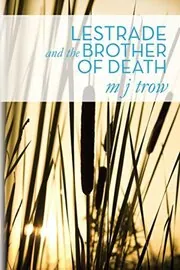
Recovering from a broken leg, Lestrade confronts an attack on his prospective father-in-law and a cryptic letter about the Four Gospel Makers. The clues send him back toward unresolved cases from his earliest years as a constable.
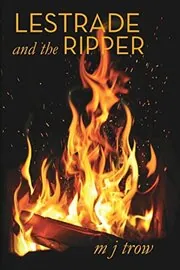
Lestrade and the Ripper
by MJ Trow
1988
While the Whitechapel murders dominate London in 1888, Lestrade inherits another investigation from a dead colleague. His pursuit of unresolved deaths leads beyond the capital to Nottinghamshire, where a visit to Rhadegund Hall brings another disturbing discovery.

Lestrade and the Deadly Game
by MJ Trow
1990
During the 1908 Olympic Games, Lestrade investigates a lieutenant's apparent suicide after the dead man's father insists he was murdered. Further killings involving a journalist and a yachtsman draw the detective into a case shadowing the sporting celebrations.
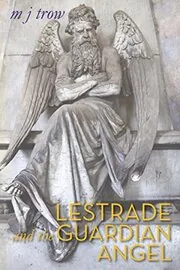
Lestrade and the Guardian Angel
by MJ Trow
1990
A military officer's body is recovered from the Thames with a medal between his teeth, followed by other deaths marked by strange objects. Lestrade goes undercover among the Yeomanry to uncover the connection behind these carefully arranged murders.
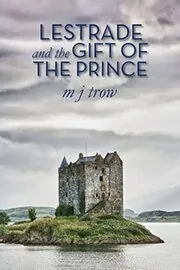
Lestrade and the Gift of the Prince
by MJ Trow
1991
When servant Amy Macpherson is murdered at Balmoral, Lestrade investigates a crime within Queen Victoria's household. Access to powerful suspects and the sensitivities of royal life complicate his effort to establish what happened and identify the killer.

Lestrade and the Magpie
by MJ Trow
1991
In 1920, a dead war hero appears to have survived his previously recorded death, unsettling Lestrade and his daughter. Another similarly impossible discovery draws them toward wartime secrets, official intrigue, and questions about the identities of the victims.
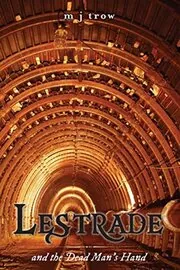
Lestrade and the Dead Man's Hand
by MJ Trow
1992
Murders on London's Underground leave Lestrade facing seemingly random attacks and an increasingly frightened city. As bodies appear at different stations, tensions with the railway police complicate his search for the pattern linking the victims and their killer.
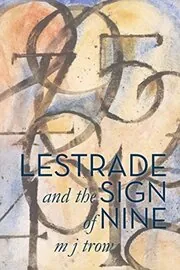
Lestrade and the Sign of Nine
by MJ Trow
1992
A mutilated body discovered at Scotland Yard becomes the first clue in a series of grisly killings. In the politically uneasy atmosphere of 1886, Lestrade investigates victims whose differing professions conceal the connection that has made them targets.
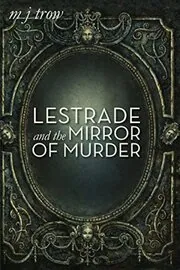
Lestrade and the Mirror of Murder
by MJ Trow
1993
An apparent carriage accident leaves a broken mirror among the dead man's possessions, and further deaths carry similar fragments. Lestrade investigates the recurring clue, questioning whether these apparently unconnected fatalities are accidents or the work of a murderer.
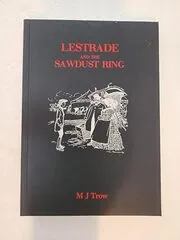
Lestrade and the Sawdust Ring
by MJ Trow
1993
Murders disrupt George Sanger's circus, where performances turn fatal and danger extends beyond the ring. Lestrade enters the circus undercover, trying to identify the killer among its performers while navigating a world of elaborate acts and concealed rivalries.
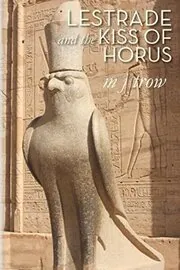
Lestrade and the Kiss of Horus
by MJ Trow
1995
Retired Superintendent Lestrade travels to Egypt after Howard Carter's discovery of Tutankhamun's tomb is followed by suspicious deaths. Surrounded by archaeological excitement and rumors of a pharaoh's curse, he seeks a human explanation for the mounting fatalities.

Lestrade and the Devil's Own
by MJ Trow
1996
A woman dies in Lestrade's arms during a London fog, leaving him accused of her murder. With other killings marked by a mysterious devil's calling card, the detective faces imprisonment while those closest to him seek the truth.
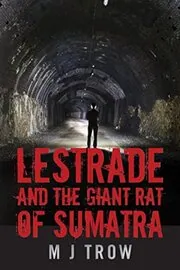
Lestrade and the Giant Rat of Sumatra
by MJ Trow
2014
Strange disturbances beneath London accompany a series of deaths that threaten the city's infrastructure. Superintendent Lestrade, Walter Dew, and two rookie officers venture below the streets to confront the source of the danger and uncover a murderer's scheme.
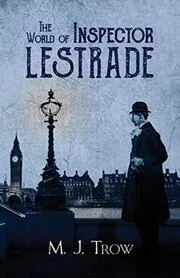
The World of Inspector Lestrade
by MJ Trow
2019
Trow explores the Victorian and Edwardian people, places, and social history behind his Inspector Lestrade mysteries. The companion distinguishes historical material from invention, examining the celebrated and obscure figures whose appearances help populate Lestrade's fictional world.
Series background & context
M. J. Trow’s Lestrade series gives Scotland Yard’s inspector the leading role in a world usually viewed through Sherlock Holmes. Lestrade has his own cases, associates and long investigative career. The shift matters because he is no longer present chiefly to make another detective look clever. He has work to do, and the novels follow him into an unruly version of historical Britain where murder, public affairs and literary jokes can become entangled.
The policeman gets the centre of the story.
The Adventures of Inspector Lestrade is the starting point in publication order. From there, the books build a career rather than keeping their detective fixed in a single unchanging moment. Publication order and the order of events are different, however. Lestrade and the Sawdust Ring returns to an early investigation involving a circus and a series of murders. Readers who prefer to meet the character as the original audience did can begin with the first published novel; those interested in his life as a timeline have another possible route through the cases.
The historical settings supply very different kinds of social world. A circus offers performance, concealment and life behind the spectacle. Lestrade and the Ripper places the inspector amid the fear surrounding Whitechapel, while also taking his inquiry to Brighton and the fictional school at Rhadegund Hall. Those settings widen the field beyond a familiar criminal legend. The school and the city streets make different demands on an investigator, even when the inquiries sit within the same novel. Trow uses a recognisable historical background as room for invention, rather than asking the reader to mistake a mystery plot for a settled historical explanation.
Politics can be just as troublesome as private motives. In Lestrade and the Hallowed House, murders with apparent political connections and a bomb at Westminster create a problem that reaches beyond the circumstances of a single victim. The inspector’s job can bring him close to public institutions and people with reasons to protect them. These are investigations in which social position and national affairs can keep complicating the practical question of who committed a crime.
The tone is deliberately comic and irreverent. Historical people, literary references and invented circumstances share the page, with humour that plays on the reader’s expectations about this detective’s usual place in fiction. That makes the series a fit for readers who enjoy historical mysteries with room for jokes and a change of viewpoint. The recurring connection is Lestrade himself: a working investigator given the chance to occupy his own complicated world, rather than wait at the edge of someone else’s case.






Edited by
Software engineer whose passion for tracking book recommendations from podcasts inspired the creation of MRB.
Lead investor at 3one4 Capital whose startup expertise and love for books helped shape MRB and its growth.
Comments
Spotted a missing book, a wrong order or a mistake? Tell us and we'll fix this page.
We're a reading guide, not the author or publisher, so we can't send books or pass on messages.