
Last Hundred Years Books in Order
Part ofJane Smiley Books in OrderFollow the Last Hundred Years trilogy by Jane Smiley in order, with book summaries, family saga background, timelines, and simple advice on how to approach the Langdon books.
Last updated:
As an Amazon Associate, we earn from qualifying purchases (at no extra cost to you).
Last Hundred Years books in publication order
3 books

Some Luck
by Jane Smiley
2014
Beginning in 1920 on an Iowa farm, this first volume of the Last Hundred Years trilogy follows Walter and Rosanna Langdon and their children one year at a time. Births, droughts, wars, and quiet domestic dramas accumulate into a rich portrait of midwestern family life through the early 1950s.
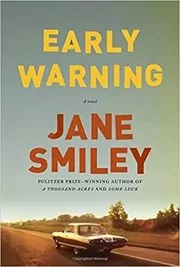
Early Warning
by Jane Smiley
2015
Picking up where Some Luck leaves off, Early Warning traces the Langdon children into adulthood from the 1950s through the Cold War decades. As they scatter to suburbs, cities, and military bases, the novel tracks shifting ideas about work, marriage, politics, and what it means to leave the farm behind.

Golden Age
by Jane Smiley
2015
The final Langdon novel carries the sprawling family into the era of deregulation, global finance, and the war on terror. Children and grandchildren wrestle with inherited land, political power, climate anxiety, and personal disappointments, testing how much of a family’s character can survive rapid change.
Last Hundred Years books in chronological order
Series background & context
The Last Hundred Years trilogy follows the Langdons, an Iowa farm family whose story stretches across most of the twentieth century and into the twenty first. The three novels, Some Luck, Early Warning, and Golden Age, work together as one long narrative that keeps circling back to the same patch of ground while the wider world changes around it.
Some Luck opens in 1920, when Walter and Rosanna Langdon are newly married and nervously watching over their fields and their first child. Each chapter covers a single year, so readers watch babies become schoolchildren, farm kids leave for college or war, and parents age into grandparents as the Great Depression, World War II, and the early Cold War slide past in the background.
In Early Warning, the center of gravity moves away from the original homestead as the Langdon children start lives of their own in Washington, D.C., Chicago, California, and beyond. The novel tracks the boom years after World War II, the shock of the assassinations and Vietnam, and the rise of suburbia and big finance, all filtered through the everyday concerns of marriages, jobs, and children.
Golden Age carries the family into the era of deregulation, culture wars, and the war on terror. Grandchildren and great grandchildren argue about politics, join the intelligence world, run farms, work on Wall Street, or fall into new kinds of trouble. Questions about money, inheritance, and the damage done by power sit next to quieter moments, like Thanksgiving dinners and sibling jokes.
Across all three books, the focus is deliberately steady and unspectacular. Smiley is less interested in sudden twists than in the way small decisions accumulate over decades, shaping a family’s sense of itself. Because chapters jump from one relative to another, minor characters in one book can slowly move into the foreground in the next.
The result is a patient, absorbing saga about American life that connects soil and weather to global events without losing sight of individual moods and mistakes. Readers who like long, detail rich family stories can start with Some Luck and then move straight through to Golden Age or take breaks between volumes and let the Langdons age in real time.













Edited by
Software engineer whose passion for tracking book recommendations from podcasts inspired the creation of MRB.
Lead investor at 3one4 Capital whose startup expertise and love for books helped shape MRB and its growth.
Comments
Did we miss something? Have feedback?
Help us improve this page by sharing your thoughts