
Larry Watson Books in Order
See Larry Watson books in order, with short summaries, where to start, and background on his quietly intense novels set across the Midwest and West.
Last updated:
As an Amazon Associate, we earn from qualifying purchases (at no extra cost to you).
Larry Watson books in publication order
12 books
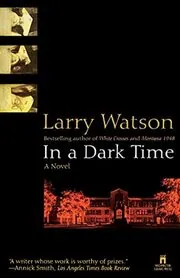
In a Dark Time
by Larry Watson
1980
At a Minnesota high school shaken by a string of stranglings, quiet teacher Peter becomes obsessed with the killings and with his own response to them. The mystery deepens into a sharp look at fear, desire, and violence.
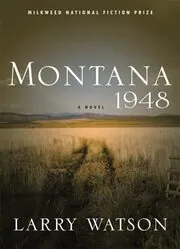
Montana 1948
by Larry Watson
1993
Twelve-year-old David Hayden watches his Montana family crack apart after accusations against his admired doctor uncle. In a town ruled by loyalty, status, and silence, his sheriff father must decide what justice will really cost.

Justice
by Larry Watson
1994
This linked fiction collection returns to the Hayden family of Montana 1948. Spanning generations in Mercer County, it traces power, marriage, violence, and the moral choices that shape Bentrock long before and beyond the novel.
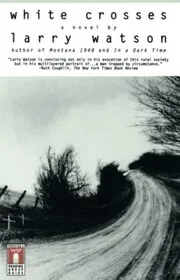
White Crosses
by Larry Watson
1997
When a teenage girl and a school principal die in a crash outside Bentrock, Sheriff Jack Nevelsen sees the scandal beneath it. Hiding the truth may protect his town's innocence for a moment, but it also poisons it.
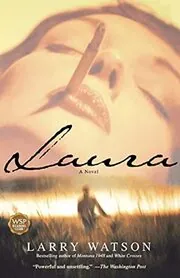
Laura
by Larry Watson
2000
When eleven-year-old Paul Finley meets the older, magnetic Laura Pettit, the moment marks him for life. The novel follows his long fixation across decades, as love, memory, and longing harden into something far more consuming.

Orchard
by Larry Watson
2003
In Door County, painter Ned Weaver begins an affair with Sonja Skordahl, a Norwegian immigrant who becomes his most important model. As art, marriage, jealousy, and possession collide, four lives move toward betrayal and violence.
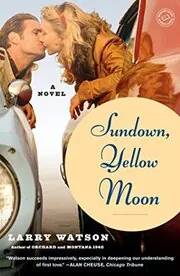
Sundown, Yellow Moon
by Larry Watson
2007
In 1961 Bismarck, a state senator is murdered and the killer, a friend's father, soon dies by suicide. Decades later, a writer returns to the case, trying to make sense of memory, motive, friendship, and first love.
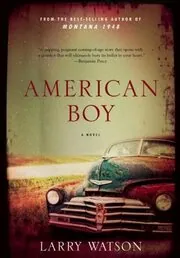
American Boy
by Larry Watson
2011
After a young woman is shot on Thanksgiving Day in 1962, Matthew Garth is drawn toward the mysterious Louisa Lindahl and the comfortable world of the Dunbars. Desire and ambition pull him into choices that alter his life.
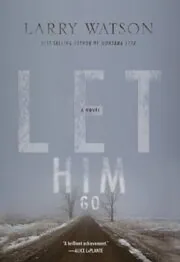
Let Him Go
by Larry Watson
2013
After their son's widow remarries and disappears with their grandson, George and Margaret Blackledge travel from North Dakota to Montana to bring the boy home. What they find is a family that will not let him go easily.
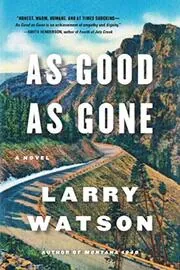
As Good as Gone
by Larry Watson
2016
In the early 1960s, hard-edged loner Calvin Sidey returns to town to watch his grandchildren for a week. When trouble closes in around them, he answers with an older code that may protect them, or damage them.

Late Assignments
by Larry Watson
2019
Watson's poetry collection turns to memory, time, and everyday life. These reflective poems show how a remembered image or incident can open into feeling, story, and recognition.

The Lives of Edie Pritchard
by Larry Watson
2020
Across three periods in Montana, Edie fights to define herself as husbands, lovers, and family try to pin her down. The novel follows her from young wife to grandmother, with violence and regret never far away.
Where to start with Larry Watson
If you want the book most people start with: Montana 1948 → Justice → White Crosses
If you want a tense family story: Let Him Go → As Good as Gone
If you like coming-of-age fiction: American Boy → Sundown, Yellow Moon
If you want character-driven drama: Laura → Orchard → The Lives of Edie Pritchard
Larry Watson collections, short stories, and related book types
Collections
Standalone Larry Watson books
Author bio
Larry Watson was born in 1947 in Rugby, North Dakota, and grew up in Bismarck. He went through Bismarck's public schools, and the country he knew there, prairie towns, long weather, family networks, people who said less than they felt, would later become the ground under much of his fiction.
That landscape never really left him.
He has said that writing started for him in college, in an advanced composition class where he was given room to try his own thing. He began with poems, then kept working at both poetry and fiction. At the University of Utah, where he studied in the creative writing program, a little encouragement went a long way. Watson has also said that he writes from memory more than observation, which helps explain why his novels feel so rooted in remembered places and old tensions.
Before he was known as a novelist, he was a teacher. He earned his BA and MA from the University of North Dakota, completed a PhD at the University of Utah, and then moved to Wisconsin. He taught writing and literature at the University of Wisconsin-Stevens Point for twenty-five years, joined Marquette University as a visiting professor in 2003, and retired from teaching in 2018.
Teaching and writing ran side by side for a long time.
His first novel, In a Dark Time, appeared in 1980, but Montana 1948 was the book that changed his reach as a writer. Published in 1993, it won the Milkweed National Fiction Prize and found a wide readership with its story of a twelve-year-old boy watching his family split along the fault line between loyalty and justice. Readers still come to Watson for that mix of moral pressure, clear prose, and small-town life that never feels simple.
He returned to the same fictional Montana country in Justice and White Crosses, building out Bentrock and the Hayden world from different angles. Across his work, he often writes about sheriffs, doctors, ranchers, teachers, teenagers, widows, and restless men and women who are trying to do right, or at least live with what they have done. The settings shift between Montana, the Dakotas, Wisconsin, and Minnesota, but the concerns stay familiar: family duty, buried desire, violence close to the surface, and the hard cost of silence.
Other novels show different sides of what he does well. Laura follows a fixation that lasts for decades. Orchard turns to art, marriage, jealousy, and betrayal in Door County. Sundown, Yellow Moon and American Boy both look closely at young men coming of age as shocking violence changes the world around them.
Then there is Let Him Go.
That novel, about a retired sheriff and his wife going after their grandson, brought Watson to another large audience and was adapted into a film released in 2020. Later books like As Good as Gone and The Lives of Edie Pritchard keep asking the kinds of questions that run through all his work: what makes a good man, what damage old ideas of toughness can do, and how women hold their ground when the men around them keep trying to define the story.
Watson has also published the fiction collection Justice, the poetry collection Late Assignments, and an earlier poetry chapbook, Leaving Dakota. His stories, poems, essays, and reviews have appeared in literary journals and newspapers over the years. He lives in Wisconsin with his wife, Susan, and even after decades of teaching and publishing, his work still circles back to the same durable material: memory, place, conscience, and the lives people build in open country.










Edited by
Software engineer whose passion for tracking book recommendations from podcasts inspired the creation of MRB.
Lead investor at 3one4 Capital whose startup expertise and love for books helped shape MRB and its growth.
Comments
Did we miss something? Have feedback?
Help us improve this page by sharing your thoughts