
Lance Horner Books in Order
Explore Lance Horner books in order, from Falconhurst to his historical standalones, with quick summaries, series notes, and help choosing where to start.
Last updated:
As an Amazon Associate, we earn from qualifying purchases (at no extra cost to you).
Lance Horner books in publication order
16 books
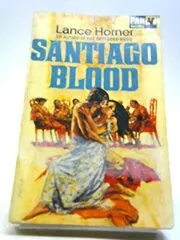
Santiago Blood
by Lance Horner
1956
In old Havana, Miguel de Santiago believes he was born free and dreams of a fairer world. Forged papers, family rivalry, and the city's slave economy threaten to strip away both his name and his future.
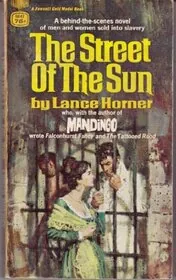
The Street of the Sun
by Lance Horner
1956
Set in late eighteenth-century Havana, this historical melodrama pits favored heir Miguel de Santiago against the embittered cousin who wants his place. Love, slavery, and a dangerous question of birth drive the story.
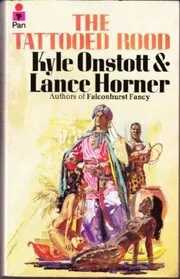
Tattooed Rood
by Lance Horner
1960
From Havana's docks to the Spanish court, Mario rises from street survivor to reluctant nobleman. Marked by the Inquisition and trapped in schemes of sex and power, he must keep reinventing himself to stay alive.

Rogue Roman
by Lance Horner
1965
Cleon moves through the Roman world as pirate, actor, slave, and gladiator before reaching Nero's court. His climb is bold and reckless, and every new role brings fresh danger, intrigue, and desire.
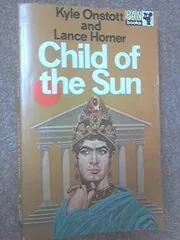
Child of the Sun
by Lance Horner
1966
This novel follows Varius Avitus Bassianus, the youth who becomes the emperor Elagabalus. Family ambition, religious ritual, and erotic excess shape his rise, even as Rome recoils from the ruler it helped create.
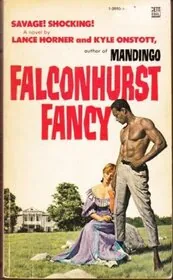
Falconhurst Fancy
by Lance Horner
1966
Tommy Verder's impulsive choices leave Dovie Verder trapped in a bitter marriage and fighting to hold family and land together. Around them, Falconhurst's brutal economy of breeding, rivalry, and status keeps grinding on.
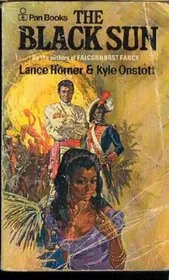
The Black Sun
by Lance Horner
1966
Armes Holbrook arrives in Haiti to claim a plantation and is pulled into love, voodoo, and the island's violent upheaval. As revolt gathers around Henry Christophe, personal longing and history crash together.
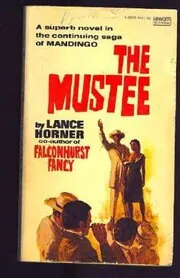
The Mustee
by Lance Horner
1967
A mixed-race man forced to pass as white must play both master and slave to preserve Falconhurst. His divided loyalties make every choice dangerous in a world ruled by blood, status, and fear.
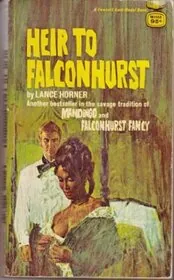
Heir To Falconhurst
by Lance Horner
1968
Raised as white in Boston, Drum Maxwell heads south after society rejects his ancestry and claims his inheritance at Falconhurst. Rebuilding the notorious plantation is hard enough before desire, schemers, and old racial codes close in.
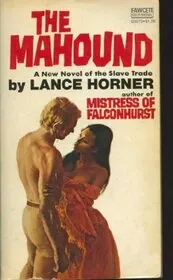
The Mahound
by Lance Horner
1969
Rory Mahound, a broke nobleman turned fighter and slaver, is drawn into the brutal trade routes of North Africa. His appetite for danger thrives until an English girl in a royal harem changes the stakes.
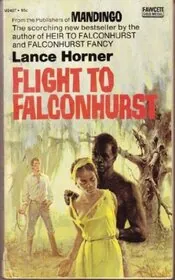
Flight to Falconhurst
by Lance Horner
1971
Calico, a former Falconhurst slave, seizes a chance to pass as the white heir Tommy Verder. His gamble offers wealth and freedom, but one mistake could expose him and turn the whole plantation against him.

Black Sun
by Lance Horner
1973
In Haiti, Armes Holbrook inherits a plantation and gets caught between forbidden love, voodoo, and revolution. The island's beauty and violence pull him toward Henry Christophe's uprising and a future he never expected.
Mistress of Falconhurst
by Lance Horner
1973
On Falconhurst, the capable slave Lucretia Borgia holds real influence through labor, skill, and nerve. Her forbidden desire for the powerful Omar could raise her standing, or bring ruin down on them both.

Golden Stud
by Lance Horner
1975
Bricktop, a mixed-race runaway hiding behind the name Jeff Carson, passes as white in New Orleans. With a slave brand on his back and an enemy from his past closing in, freedom is never secure.
Golden Stud / Six-Fingered Stud
by Lance Horner
1975
This Falconhurst-adjacent tale follows Bricktop, later known as Jeff Carson, a mixed-race fugitive passing as white. Whether published as Golden Stud or Six-Fingered Stud, the story turns on exposure, revenge, and a desperate bid for freedom.
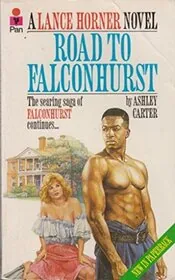
Road to Falconhurst
by Lance Horner
1983
This later Falconhurst tale follows a young Yankee slave trader, a rising actress with a hidden past, and the violent pull of the Maxwell plantation. Love, ambition, and racial passing collide on the road back to Alabama.
Where to start with Lance Horner
If you want Lance Horner's Falconhurst run: Falconhurst Fancy → The Mustee → Heir To Falconhurst → Flight to Falconhurst → Mistress of Falconhurst
If you want a passing-as-white spin on the Falconhurst world: Flight to Falconhurst → Golden Stud
If you want Caribbean and colonial drama: The Street of the Sun → Tattooed Rood → The Black Sun
If you want ancient power and court intrigue: Rogue Roman → Child of the Sun
If you want one of his darkest standalones: The Mahound
Lance Horner sub-series and character series
Standalone Lance Horner books
Author bio
Lance Horner is one of those paperback-era writers you mostly get to know through the novels themselves. Reliable public details about his early life are scarce, and that is part of the story with Horner. What lasts in the record is the work, a run of fast, dark historical novels that moved from old Havana to ancient Rome to the slave South.
The books are what survived.
His first known novels appeared in the 1950s, with The Street of the Sun, later also published as Santiago Blood, arriving in 1956. Right from the start, Horner seemed drawn to big historical settings and characters caught in hard systems of power. Class, slavery, contested identity, and people trying to outrun the place society has fixed for them show up early and keep showing up.
He soon became closely tied to Kyle Onstott and the Falconhurst saga. Horner collaborated on Falconhurst Fancy, The Black Sun, Child of the Sun, and Tattooed Rood, then carried Falconhurst forward on his own with The Mustee, Heir To Falconhurst, Flight to Falconhurst, and Mistress of Falconhurst. For many readers, that stretch is the center of his career.
That Falconhurst run is the reason his name still turns up.
Those books are set around a brutal Alabama plantation world, but Horner did not stay in one place for long. Rogue Roman heads into Nero's Rome. The Black Sun turns to Haiti and revolution. Child of the Sun follows the future emperor Elagabalus. The Mahound moves into the violence and commerce of the African slave trade. Even when the settings change, the pressure points do not.
What ties Horner's fiction together is a steady interest in power and the cost of living inside it. He wrote again and again about bloodlines, race, status, sexual control, captivity, and passing from one identity into another. His characters often try to cross social boundaries, sometimes by force, sometimes by performance, sometimes by luck. They rarely get to do it safely.
He also liked history at full volume. These are not quiet, careful domestic novels. They are mass-market historical melodramas built around plantations, ports, palaces, revolts, and scandals. Readers still come to Horner for that blunt energy. It also helps to know what you are walking into, because the books can be graphic, especially around slavery, coercion, and violence.
The short Golden Stud line shows the same pattern in a tighter form. A mixed-race fugitive passes as white, reinvents himself, and keeps moving because exposure is always one step away. That setup, identity as survival, could almost stand as a summary of Horner's fiction as a whole.
There is still a lot we do not know about his life away from the page. But if you start with Falconhurst Fancy or Heir To Falconhurst, then try Rogue Roman or The Mahound, you can see his lane very clearly. Lance Horner wrote historical pulp that was meant to move fast, hit hard, and stay a little unsettling after you put it down.









Edited by
Software engineer whose passion for tracking book recommendations from podcasts inspired the creation of MRB.
Lead investor at 3one4 Capital whose startup expertise and love for books helped shape MRB and its growth.
Comments
Did we miss something? Have feedback?
Help us improve this page by sharing your thoughts