
Kenneth Roberts Books in Order
See all Kenneth Roberts books in order, with summaries, reading guides and where-to-start suggestions across his historical novels and non-fiction.
Last updated:
As an Amazon Associate, we earn from qualifying purchases (at no extra cost to you).
Kenneth Roberts books in publication order
25 books

Europe's Morning After
by Kenneth Roberts
1921
Roberts’s first book collects his magazine pieces on a Europe still reeling from the First World War, describing politics, refugees and daily life in countries from Poland to Italy, and laying the groundwork for his later arguments about immigration and American policy.

Sun Hunting
by Kenneth Roberts
1922
This exuberant travel book pokes fun at the wealthy winter crowd in Palm Beach and Miami, the thrifty tin-can tourists of inland Florida and the state’s sales pitches, offering a humorous snapshot of tourism and boosterism in the early 1920s.

Why Europe Leaves Home
by Kenneth Roberts
1922
Based on Roberts’s postwar reporting, this controversial book explains why people from various parts of Europe were emigrating and urges tighter U.S. immigration laws, reflecting the author’s strong nativist views and language that many readers now find openly prejudiced.

Black Magic
by Kenneth Roberts
1924
Drawing on his reporting trips in the early 1920s, Roberts examines the rise of fascism in Italy, its violent offshoots in Bavaria and related trends in the United States, arguing from a perspective that now reads as a revealing but troubling period piece.
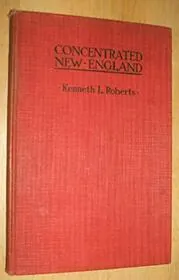
Concentrated New England
by Kenneth Roberts
1924
In this brief portrait of President Calvin Coolidge, Roberts sketches the Vermonter’s upbringing, political rise and reserved manner, using him as a kind of distilled symbol of New England habits, virtues and blind spots in the 1920s.

Florida Loafing
by Kenneth Roberts
1925
Written during the Florida land boom, this light nonfiction book surveys winter tourists, real-estate schemes and Spanish-style resorts, investigating why so many Americans flock south to loaf in the sun and help reshape Florida’s towns and coasts.
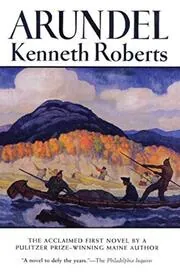
Arundel
by Kenneth Roberts
1930
Opening the Chronicles of Arundel, this novel has Steven Nason tell how life along the Maine coast draws him into Benedict Arnold’s march to Quebec in 1775, blending frontier boyhood, river travel, Abenaki allies and the hazards of a wilderness campaign.
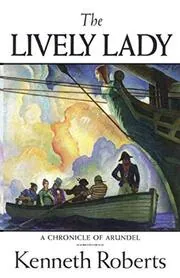
The Lively Lady
by Kenneth Roberts
1931
This chronicle of Arundel in the War of 1812 centers on Richard Nason, sailing master of the privateer Lively Lady, as he clashes with the British at sea, endures imprisonment and struggles to keep his crew and ship intact amid shifting fortunes.
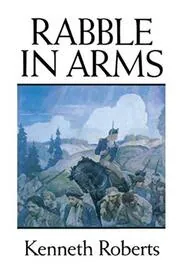
Rabble in Arms
by Kenneth Roberts
1933
In the second Arundel novel, Roberts picks up after the failed attack on Quebec and follows Steven Nason and his comrades through retreat, the desperate naval fighting on Lake Champlain and the Saratoga campaign, emphasizing how thin and improvised the American war effort often felt.
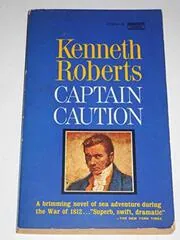
Captain Caution
by Kenneth Roberts
1934
Set during the War of 1812, this sea story follows cautious young captain Dan Marvin and Corunna Dorman after their ship Olive Branch is seized by the British, taking them through convoy duty, prison hulks, Dartmoor Prison and a daring escape toward home.

For Authors Only and Other Gloomy Essays
by Kenneth Roberts
1935
A collection of wry essays about the working life of a writer, covering everything from contracts, agents and publicity to reviewers and taxes, along with a few pieces on New England and travel that show Roberts’s dry sense of humor off the battlefield.

It Must Be Your Tonsils
by Kenneth Roberts
1936
In this short, humorous piece Roberts recounts how English and American doctors insisted that a range of vague ailments must be cured by removing his tonsils, using his own experience to poke fun at medical fashions and overused surgery.
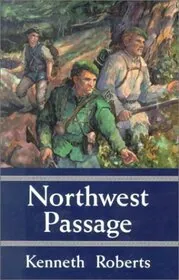
Northwest Passage
by Kenneth Roberts
1937
An expansive novel of the French and Indian War, this book follows aspiring artist Langdon Towne as he joins Major Robert Rogers and his Rangers, chronicling their brutal raid on the Abenaki village of Saint Francis and Rogers’s troubled later years in Michigan and London.
March To Quebec
by Kenneth Roberts
1938
Roberts assembles and annotates the journals of Benedict Arnold and other participants in the 1775 march through the Maine wilderness to attack Quebec, adding narrative bridges that make the disastrous expedition readable as a single, gripping campaign history.
Trending into Maine
by Kenneth Roberts
1938
Nonfiction sketches and essays about his home state, this book blends stories of coastal towns, lumber camps, weather, food and local characters, drawing on Roberts’s own experiences to explain why Maine’s landscape and history run so deeply through his fiction.
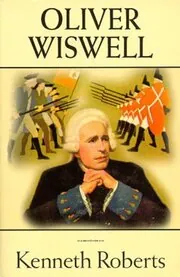
Oliver Wiswell
by Kenneth Roberts
1940
This sweeping Revolutionary War epic is told from the viewpoint of Oliver Wiswell, a Yale student turned Loyalist who flees mob violence in Massachusetts and spends the war spying, fighting and finally resettling among other displaced Loyalists in the British Empire.

The Kenneth Roberts Reader
by Kenneth Roberts
1945
This anthology gathers essays, travel pieces and chapters from Roberts’s novels, including many items first printed in For Authors Only, giving readers a one-volume sampling of his humor, historical storytelling and sharp opinions about writing and New England.
Lydia Bailey
by Kenneth Roberts
1947
Set during the Haitian Revolution and the early years of the United States, this novel follows young American lawyer Albion Hamlin, whose search for the elusive Lydia Bailey pulls him into slave uprisings, French politics and naval warfare in the Mediterranean.

Moreau de St. Mery's American Journey
by Kenneth Roberts
1947
Roberts and his wife Anna translate and edit the travel journals of French revolutionary figure Moreau de Saint-Méry, capturing his observations of Philadelphia and other parts of the early United States between 1793 and 1798, with introductions that frame his era.
I Wanted to Write
by Kenneth Roberts
1949
Part memoir and part craft book, this long narrative traces Roberts’s life from small-town Maine and newspaper offices to bestselling historical novels, focusing on how he researches, revises and deals with editors, critics and the business side of writing.
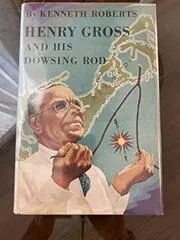
Henry Gross and His Dowsing Rod
by Kenneth Roberts
1951
Here Roberts introduces Henry Gross, a Maine game warden whose use of a forked twig to locate water astonishes the author, and recounts dozens of early well-finding jobs that convinced him dowsing could work over surprising distances.
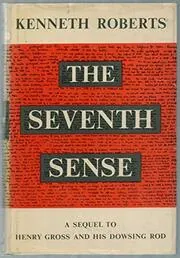
The Seventh Sense
by Kenneth Roberts
1953
A sequel to Henry Gross and His Dowsing Rod, this volume follows a busy year of Water Unlimited, detailing large-scale dowsing projects, mixed successes and failures, and Roberts’s belief that Gross’s abilities point to a little understood human sense.
Battle of Cowpens
by Kenneth Roberts
1956
In this brief historical study Roberts tells the story of the 1781 Battle of Cowpens in South Carolina, highlighting Daniel Morgan’s tactics and challenging earlier historians’ views of what went wrong for both American and British commanders.
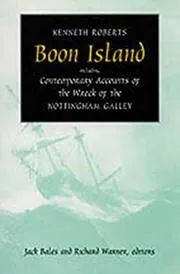
Boon Island
by Kenneth Roberts
1956
Set on a barren rock off the Maine coast, this novel reimagines the 1710 wreck of the ship Nottingham Galley, following the stranded crew through hunger, storms and moral choices as they struggle to survive weeks of winter exposure.
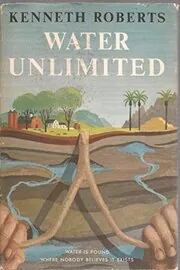
Water Unlimited
by Kenneth Roberts
1957
Roberts’s third dowsing book gathers case histories from Water Unlimited, the company he formed with Henry Gross, arguing that Gross repeatedly located underground water for farms, towns and industry across long distances despite ongoing scientific skepticism.
Where to start with Kenneth Roberts
If you want the big Revolutionary War saga: Arundel → Rabble in Arms → Oliver Wiswell.
If you like sea adventures and the War of 1812: The Lively Lady → Captain Caution → Boon Island.
If you prefer one sweeping standalone: Northwest Passage.
If you enjoy memoir and essays: I Wanted to Write → Trending into Maine → The Kenneth Roberts Reader.
If you are curious about the dowsing books: Henry Gross and His Dowsing Rod → The Seventh Sense → Water Unlimited.
Kenneth Roberts sub-series and character series
Chronicles of Arundel books in order
Explore this seriesChronicles of Arundel books in chronological order
Kenneth Roberts collections, short stories, and related book types
Non-Fiction
Collections
Standalone Kenneth Roberts books
Author bio
Kenneth Roberts was born in Kennebunk, Maine, in 1885 and grew up between the Maine coast and suburban Boston. For a boy who loved stories and the outdoors, that mix of tidal rivers, small towns and nearby cities never really left him.
At Cornell University he edited the campus humor magazine, wrote song lyrics for football games and joined a senior honor society before graduating in 1908. Within a year he was at the Boston Post, turning out columns and sketches that taught him how to write fast and clearly for a wide audience.
For almost a decade, newspapers were his training ground.
In 1917 Roberts enlisted in the U.S. Army, expecting the trenches of France and instead landing in Vladivostok as a lieutenant in military intelligence. After the war he became a roving correspondent for a national weekly magazine, covering postwar Europe, the Near East and immigration in a long series of energetic, opinionated reports.
Those travels produced early nonfiction books such as Europe’s Morning After, Why Europe Leaves Home, and a trio of breezy Florida volumes that helped sell the 1920s land boom. They also carried some bluntly nativist views on immigration and race that echoed the fears of the time and sit uneasily on the page today.
Back in Maine, Roberts found both a permanent base and a mentor. In Kennebunkport he struck up a friendship with novelist Booth Tarkington, who insisted that Roberts could not become a serious novelist while chasing weekly deadlines and volunteered to edit his early fiction line by line.
Roberts finally left full-time journalism in 1928, spent winters writing in a bare farmhouse on the Italian coast, and poured his energy into early American history. Out of that came the novels that still define him: Arundel and Rabble in Arms on Benedict Arnold’s march to Quebec and the Saratoga campaign, Northwest Passage on Robert Rogers and his Rangers during the French and Indian War, Oliver Wiswell on the Revolution from a Loyalist’s point of view, Lydia Bailey on the Haitian Revolution and the Barbary coast, and Boon Island, his stark tale of an eighteenth-century shipwreck off Maine.
He approached all of them like a working historian.
Roberts hunted down out-of-print journals, court-martial transcripts and letters, hired researchers in London, and walked the actual ground whenever he could. The result is fiction thick with real officers and obscure privates, shifting alliances, and the stubborn geography of rivers, portages and shoal-filled harbors, all anchored to everyday details of food, weather and fatigue.
In the 1940s his curiosity swerved into stranger territory. Fascinated by Henry Gross, a Maine game warden who used a forked twig to locate underground water, he helped create a company called Water Unlimited and wrote Henry Gross and His Dowsing Rod, The Seventh Sense and Water Unlimited, defending Gross’s long-distance water-finding in the face of sharp scientific criticism.
Those dowsing books did little to change scientific opinion, but they do show the same persistence that marked his historical work, as he piled up case histories, letters and field trips in an effort to make sense of what he had seen.
Through all the travel and controversy, Roberts kept circling back to Maine. He built a farmhouse called Rocky Pastures in Kennebunkport, wrote affectionately and sometimes crankily about local food, weather and politics in books like Trending into Maine, and lived with one foot in the world of small-town neighbors and the other in far-off battlefields and archives.
In 1957, two months before he died at Rocky Pastures, he received a special Pulitzer Prize citation for his historical novels and the way they revived interest in early American history. He died that July at seventy-one and is buried at Arlington National Cemetery, leaving behind a shelf of books that still pull readers into the woods, harbors and political arguments of another America.






Edited by
Software engineer whose passion for tracking book recommendations from podcasts inspired the creation of MRB.
Lead investor at 3one4 Capital whose startup expertise and love for books helped shape MRB and its growth.
Comments
Did we miss something? Have feedback?
Help us improve this page by sharing your thoughts