
John Hersey Books in Order
Explore John Hersey books in order, with short summaries, key novels and nonfiction, and simple guidance on where to start reading his work.
Last updated:
As an Amazon Associate, we earn from qualifying purchases (at no extra cost to you).
John Hersey books in publication order
28 books
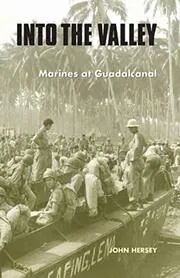
Into the Valley
by John Hersey
1943
Based on Hersey's reporting on Guadalcanal, this short book follows one company of Marines through a small but brutal jungle action. It is lean and immediate, with close attention to the waiting, confusion, and labor around combat.
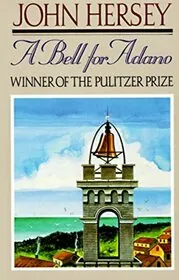
A Bell for Adano
by John Hersey
1944
Major Victor Joppolo arrives in a Sicilian town newly freed from Fascist rule and tries to help it breathe again. His search for a replacement bell becomes a warm, pointed story about occupation, dignity, and practical decency.
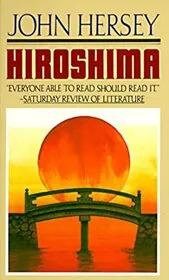
Hiroshima
by John Hersey
1946
Hersey tells the story of the atomic bombing through six survivors, starting on the morning the bomb falls and following the aftermath. The book's calm, close focus makes the scale of the disaster feel personal and unforgettable.
Recommended by
1 person Alex Blumberg recommended this book
Alex Blumberg
"I had always been interested in this kind of [...] long form narrative nonfiction." - Alex Blumberg
Alex Blumberg's recommendation of this book
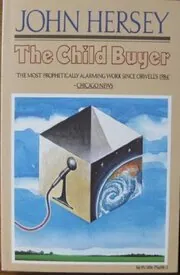
The Child Buyer
by John Hersey
1947
In the form of state senate hearings, Hersey follows a mysterious man trying to buy a brilliant ten-year-old boy for secret national purposes. The satire is funny and unsettling at once, taking aim at education, ambition, and the use of talent as a weapon.
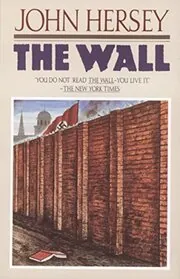
The Wall
by John Hersey
1950
Presented as a recovered journal from the Warsaw ghetto, this novel follows Jewish men and women trying to survive Nazi rule. It is both a chronicle of starvation and terror, and a record of stubborn moral resistance.
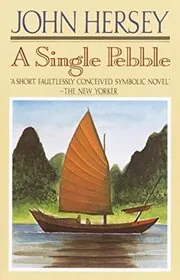
A Single Pebble
by John Hersey
1956
A young American engineer travels up the Yangtze on a junk boat to survey possible dam sites. As he works beside the Chinese crew and trackers, the river journey becomes a deeper encounter with another way of life.
The War Lover
by John Hersey
1959
On a bomber base in England before D-Day, a crew flies under the command of the gifted, frightening Buzz Marrow. Through co-pilot Boman's eyes, Hersey examines charisma, fear, and the deadly thrill some men find in war.
Here to Stay
by John Hersey
1962
This collection brings together true stories of people pushed to the edge by war, disaster, and political violence. From floodwaters to battlefields, Hersey keeps the focus on endurance and the stubborn instinct to keep living.
Of Men and War
by John Hersey
1965
This collection gathers World War II stories drawn from Hersey's reporting, centered on the experiences of soldiers and sailors rather than commanders. The pieces look closely at survival, fear, duty, and the strange routines of combat.
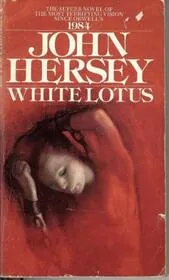
White Lotus
by John Hersey
1965
After a war overturns the racial order, white Americans are enslaved by Chinese conquerors and stripped of language, status, and freedom. Through the life of a girl renamed White Lotus, Hersey imagines an alternate history about power, race, and resistance.
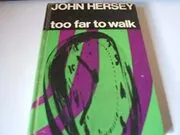
Too Far to Walk
by John Hersey
1966
John Fist, a gifted but restless student at an elite New England college, is bored by classes and ripe for temptation. Hersey reworks the Faust story into a darkly funny campus novel about appetite, rebellion, and the search for meaning.
Under the Eye of the Storm
by John Hersey
1967
A casual sail turns into a fight for survival when Tom Medlar, his wife, and another couple are caught in a hurricane. The physical danger strips away social niceties and exposes the fault lines in both marriages.
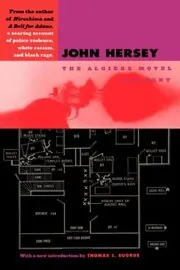
The Algiers Motel Incident
by John Hersey
1968
Hersey reconstructs the 1967 Detroit motel killings through interviews, testimony, police reports, and news accounts. The book is a stark account of police violence, racial terror, and the struggle to get at the truth after chaos.
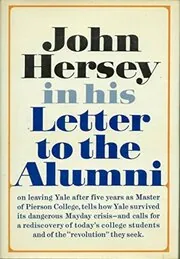
Letter to the Alumni
by John Hersey
1970
Written out of Yale's turbulent 1970 moment, this short book reflects on student protest, race, war, and the purpose of a university. It reads as a personal attempt to explain campus unrest to a skeptical older generation.
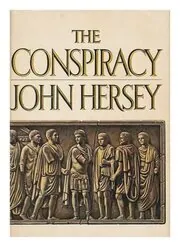
The Conspiracy
by John Hersey
1972
In Nero's Rome, whispers of a plot against the emperor draw senators, poets, courtiers, and spies into danger. Hersey treats the Pisonian conspiracy as both a historical thriller and a study of fear under tyranny.
The Writer's Craft
by John Hersey
1973
Edited by Hersey, this anthology gathers essays, interviews, and reflections by major writers on how writing actually works. It is a practical, wide-ranging reader for anyone curious about style, voice, and revision.
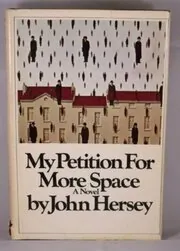
My Petition for More Space
by John Hersey
1974
In an overcrowded future New Haven, a man waits in a vast government line to ask for the unthinkable, more room. The absurd premise becomes a tense, intimate satire about bureaucracy, privacy, and human need.
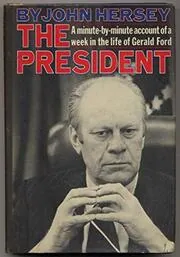
The President
by John Hersey
1975
Over one working week in 1975, Hersey follows Gerald Ford through meetings, ceremonies, workouts, and private conversations. The result is a compact, revealing portrait of a decent, cautious man carrying the burdens of the office.
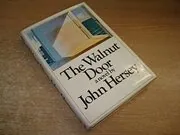
The Walnut Door
by John Hersey
1977
A quiet relationship and a beloved old door become the center of an intimate psychological drama. Hersey uses that fixation to explore desire, projection, and the strange emotional force ordinary objects can gather.
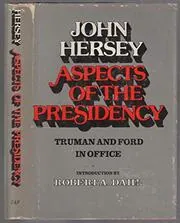
Aspects of the Presidency
by John Hersey
1980
Hersey shadows Harry Truman and Gerald Ford to see how the presidency looks from the inside. The book blends close observation with political portraiture, focusing less on policy than on temperament, routine, and decision-making.
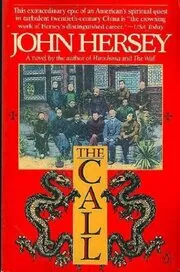
The Call
by John Hersey
1985
David Treadup, an American missionary, leaves rural New York for China after a powerful religious awakening. His long life there becomes a story of faith, marriage, service, and the hard clash between idealism and history.
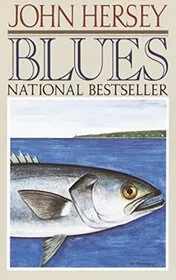
Blues
by John Hersey
1987
On the surface, it is a day of bluefishing shared by an older fisherman and a younger stranger. Beneath that, it becomes a reflective mix of natural history, craft, food, memory, and talk about why people keep returning to the sea.
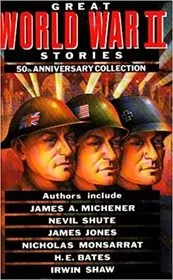
Great World War II Stories
by Irwin Shaw, JG Ballard, Nevil Shute, Ewen Montagu, James Jones, W. Stanley Moss, James A. Michener, Richard Hillary, Kurt Vonnegut, Evelyn Waugh, Norman Mailer, Charles James Rolo, Bruce Marshall, Paul Brickhill, Graham Brooks, Cornelius Ryan, R. J. Minney, Lindsay Baly, P. R. Reed, Guy Gibson, Nella Last, Joseph Heller, Martha Gellhorn, Raymond Paull, H. E. Bates, Ronald Seth, John Prebble, Nancy Wake, F. J. Salfeld, John Steinbeck, Nicholas Monsarrat, R. L. Crimp, James Aldridge, Robert J. Casey & John Hersey
1989
An anthology of significant short fiction about World War II. Michener provides the introduction and selects stories that capture the global scale and human cost of the conflict.
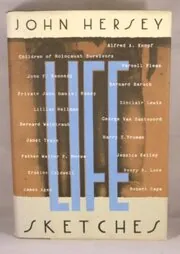
Life Sketches
by John Hersey
1989
This collection gathers Hersey's profiles and reported portraits from across five decades. Famous figures and ordinary people share the page, and the book shows how closely he listened to lives under pressure.

Fling and Other Stories
by John Hersey
1990
Hersey's first short story collection moves from China to New England to the sea, with a wide range of voices and settings. The stories are compact, sly, and often built around one sharp turn of character or fate.
Antonietta
by John Hersey
1991
A Stradivarius violin named Antonietta passes through centuries of hands, touching lives linked to Mozart, Berlioz, and Stravinsky. Hersey turns the instrument's journey into a lively meditation on music, art, and possession.

Key West Tales
by John Hersey
1993
Published after Hersey's death, these stories gather the humor, loneliness, faith, and oddness of life in Key West. The tone shifts from comic to poignant, but the local setting always feels lived-in.
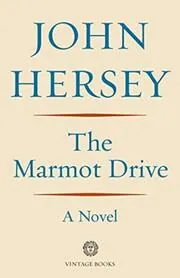
The Marmot Drive
by John Hersey
2019
In a small Connecticut village, residents finally organize a drive to clear a nearby valley of marmots. What starts as a local nuisance quickly uncovers buried resentments, attraction, and violence inside the community.
Where to start with John Hersey
If you want his defining nonfiction: Hiroshima → The Algiers Motel Incident → Life Sketches
If you want World War II fiction: A Bell for Adano → The War Lover → The Wall
If you want his China novels: A Single Pebble → White Lotus → The Call
If you want his experimental side: My Petition for More Space → Too Far to Walk → Antonietta
John Hersey collections, short stories, and related book types
Collections
Non-Fiction
Standalone John Hersey books

by Irwin Shaw, JG Ballard, Nevil Shute, Ewen Montagu, James Jones, W. Stanley Moss, James A. Michener, Richard Hillary, Kurt Vonnegut, Evelyn Waugh, Norman Mailer, Charles James Rolo, Bruce Marshall, Paul Brickhill, Graham Brooks, Cornelius Ryan, R. J. Minney, Lindsay Baly, P. R. Reed, Guy Gibson, Nella Last, Joseph Heller, Martha Gellhorn, Raymond Paull, H. E. Bates, Ronald Seth, John Prebble, Nancy Wake, F. J. Salfeld, John Steinbeck, Nicholas Monsarrat, R. L. Crimp, James Aldridge, Robert J. Casey & John Hersey
1989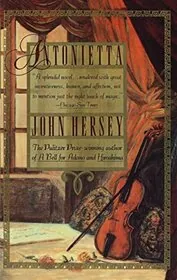
Author bio
John Hersey was born in Tientsin, China, on June 17, 1914, to American missionary parents. He spent most of his childhood there, grew up hearing and speaking Chinese, and later said he always felt a little like an outsider, someone with one foot in America and one foot somewhere else.
That early split never really left him.
His family returned to the United States in 1925 after his father became ill, and they settled in Briarcliff Manor, New York. Hersey went to public school there, then to Hotchkiss on scholarship, where he waited on tables and cleaned classrooms. After that came Yale, then a year at Clare College, Cambridge, and a summer working as Sinclair Lewis's secretary, which was about as close as a young writer could get to seeing the job up close.
He started in magazines rather than novels. At Time and later Life, he reported from China, the Pacific, Sicily, and Moscow during World War II. That newsroom training stayed with him for life. Even when he wrote fiction, he liked clear sentences, observed detail, and the feeling that real people were moving through history rather than posing inside it.
Then came A Bell for Adano, which won the Pulitzer Prize, and soon after Hiroshima, the book that made his name unavoidable. Instead of writing about strategy or leaders, he followed six survivors of the atomic bombing and let readers see the event at human scale. That choice tells you a lot about Hersey. He was drawn again and again to ordinary people caught inside very large events.
He kept moving between forms. The Wall turned to the Warsaw ghetto. A Single Pebble followed an American engineer up the Yangtze and showed Hersey's deep feel for China. Much later, The Call returned to missionary life in China through the story of David Treadup, a man whose wish to do good keeps running into history, pride, and the limits of his own understanding.
He could be sharp, too.
Books like The Child Buyer, My Petition for More Space, and The President show another side of him, skeptical about institutions, alert to bureaucracy, and interested in what power does to language. Even when the setup is satirical or speculative, the pressure point is usually moral. What do people owe one another? What happens when systems start treating human beings like tools, numbers, or problems to be managed?
For many readers, that steady moral pressure is part of the appeal. Hersey's books are serious without being stiff. He liked war stories, political stories, campus stories, sea stories, but what holds them together is his attention to conscience, to pressure, and to the moment when somebody has to decide what kind of person to be.
Later in life he taught writing at Yale for many years and served as master of Pierson College. Students remembered him as a careful reader of sentences and a demanding but generous teacher. He divided his later years between Martha's Vineyard and Key West, kept writing into old age, and died in Key West in 1993. By then he had left behind a body of work that moved easily between reportage and fiction, but almost always stayed close to lived experience.








Edited by
Software engineer whose passion for tracking book recommendations from podcasts inspired the creation of MRB.
Lead investor at 3one4 Capital whose startup expertise and love for books helped shape MRB and its growth.
Comments
Did we miss something? Have feedback?
Help us improve this page by sharing your thoughts