
John Dee Papers Books in Order
Part ofPhil Rickman Books in OrderExplore the John Dee Papers by Phil Rickman with books in order, rich Tudor-era mystery summaries, series background and guidance on reading this occult-tinged historical detective sequence.
Last updated:
As an Amazon Associate, we earn from qualifying purchases (at no extra cost to you).
John Dee Papers books in publication order
2 books
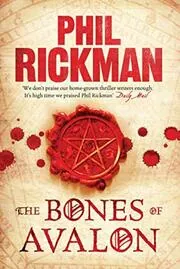
The Bones of Avalon
by Phil Rickman
2010
Newly crowned Elizabeth I sends her astrologer John Dee to Glastonbury to recover the supposed bones of King Arthur and shore up her throne. Among ruined abbey stones, rival factions and sudden deaths, Dee uncovers a plot that entwines royal survival with dangerous magic.
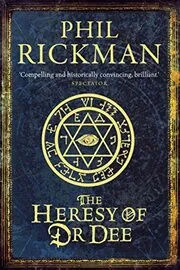
The Heresy of Dr Dee
by Phil Rickman
2012
In 1560, with rumours swirling about Robert Dudley’s dead wife, John Dee seeks a perfect crystal that might open the hidden world. Sent to the Welsh borders with Dudley and a travelling judge, he encounters outlaw legends, border grudges and visions he may not be able to trust.
John Dee Papers books in chronological order
Series background & context
The John Dee Papers move Phil Rickman’s fascination with borders and belief back into the sixteenth century. Here the main character is the real historical figure Dr John Dee – mathematician, astrologer, court adviser and, in these novels, an unwilling investigator into plots that tangle politics with the occult.
The first book, The Bones of Avalon, is set early in Elizabeth I’s reign. Dee, still in his early thirties, has a precarious position at court. When questions are raised about the new queen’s legitimacy, he is dispatched by William Cecil to Glastonbury, the legendary Isle of Avalon, to track down the missing bones of King Arthur. If Elizabeth can have Arthur’s remains ceremonially moved to London, the thinking goes, it will strengthen her claim to rule. What Dee finds among the abbey ruins is not a simple relic hunt but a web of murder, forged histories and rival visions of England’s future.
In The Heresy of Dr Dee, the stakes shift from Arthurian myth to the fallout from a very real scandal: the suspicious death of Robert Dudley’s wife, Amy. Dee is desperate to obtain a shewstone, a crystal through which he hopes to glimpse the hidden world, and that hope sends him and Dudley into the Welsh borderlands. They travel with a judge tasked with trying a feared outlaw, Prys Gethin, against a backdrop of legendary battlefields, brutal local politics and folk magic that refuses to stay in the past.
What links the books is Dee’s uneasy position between faith and experiment. He knows more than almost anyone about the “engines of the Hidden”, as he calls them, but he has no natural gift for visions and is painfully aware of it. His narration is clever, self-questioning and often funny, but he is also vulnerable: to the whims of monarchs, to the suspicions of both Protestants and Catholics, and to the manipulation of people who see opportunity in his reputation.
Rickman uses that voice to explore Tudor England as a lived-in place rather than a costume-drama backdrop. There are inns and muddy roads, herbalists and scryers, minor officials on the make and villagers who care more about weather and harvest than who sits on the throne. The occult elements are rooted in the beliefs of the time – angelic communication, alchemy, prophecy – and always threaded through with political risk.
Although set centuries before the Merrily Watkins books, the John Dee novels share their preoccupations: contested sacred sites, the tension between scepticism and experience, and the sense that old stories never quite stop influencing the present. Readers who enjoy historical crime with genuine strangeness and a strong sense of place will find plenty to savour here.


Edited by
Software engineer whose passion for tracking book recommendations from podcasts inspired the creation of MRB.
Lead investor at 3one4 Capital whose startup expertise and love for books helped shape MRB and its growth.
Comments
Did we miss something? Have feedback?
Help us improve this page by sharing your thoughts