
John Barth Books in Order
Explore John Barth’s books and series in order, with short summaries and reading lists to help you find your next book and decide where to begin reading.
Last updated:
As an Amazon Associate, we earn from qualifying purchases (at no extra cost to you).
John Barth books in publication order
19 books
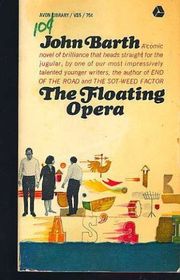
The Floating Opera
by John Barth
1956
Thirty-seven-year-old Todd Andrews looks back on the day he decided to end his life. His account turns personal recollection into an inquiry into existence, asking what gives life value and whether philosophical certainty can justify an irreversible act.
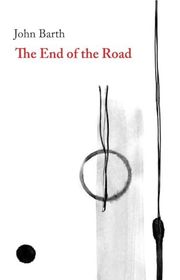
The End of the Road
by John Barth
1958
Paralyzed by the burden of limitless choices, Jacob Horner seeks treatment from an unconventional doctor and takes a college teaching job. His involvement with a fiercely rational couple turns intellectual disagreements into an intimate and morally troubling entanglement.
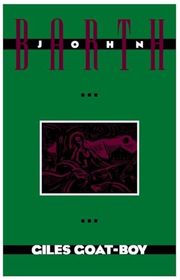
Giles Goat-Boy
by John Barth
1966
Raised among goats, George Giles comes to believe he is a prophesied savior in a world organized as a vast university. His rise to spiritual leadership brings him into conflict with authoritarian institutions and a computer system seeking control.
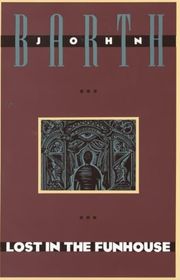
Lost in the Funhouse
by John Barth
1968
These experimental stories follow characters searching for meaning while questioning the stories that contain them. Nested narratives, unusual forms, and a tale designed as a looping strip turn the act of reading into part of the fiction itself.
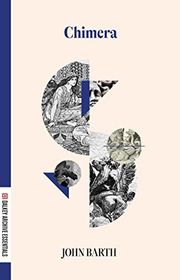
Chimera
by John Barth
1972
Three comic novellas revisit Scheherazade, Perseus, and Bellerophon, drawing new possibilities from familiar myths. Their stories of storytelling, heroic exploits, and legendary monsters combine ancient adventures with questions about how old tales can be told again.
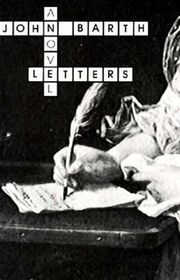
Letters
by John Barth
1979
Seven correspondents, including a fictional version of the author, exchange letters through seven months of 1969. Their intersecting accounts revisit earlier lives and American history, turning private upheavals into a meditation on revolution, repetition, and literary renewal.
Sabbatical
by John Barth
1982
A literature professor and her husband, a former CIA officer, take a sailing sabbatical to reconsider their marriage and future. Their Chesapeake Bay journey brings romantic reflection together with disappearances, adventure, and rumors of a mysterious sea creature.
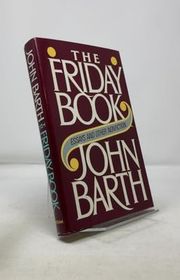
The Friday Book
by John Barth
1984
John Barth turns from fiction to essays that consider where literature might be heading and how writers shape their work. Reflections on his own novels connect broader questions about literary invention with the practical and intellectual problems of writing.
The Tidewater Tales
by John Barth
1987
Katherine asks her husband Peter to tell her a story, setting off an intricate current of tales about their lives and loves. Espionage, environmental dangers, and reinvented literary heroes mingle as the couple’s experiences become material for further storytelling.
The Last Voyage of Somebody the Sailor
by John Barth
1991
Washed ashore after an adventure at sea, journalist Simon Behler finds himself in Sinbad the Sailor’s house. Over six evenings, the two men trade accounts of their voyages, weaving their experiences into a succession of stories within stories.
Further Fridays
by John Barth
1995
John Barth collects essays, lectures, and other nonfiction arising from a decade of writing, reading, thinking, and teaching. Subjects range from postmodern fiction and chaos theory to memory and imagination, connecting literary questions with his broader intellectual life.
On with the Story
by John Barth
1996
A vacationing couple exchanges bedtime stories as though continued storytelling might postpone an ending neither wants to face. Their linked tales explore the many forms of love, from youthful obsession and exhaustion to the possibility of lasting fulfillment.
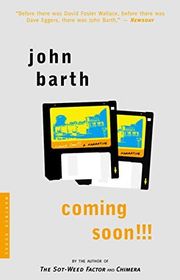
Coming Soon!!!
by John Barth
2002
An aging novelist attempts to write his final work while an ambitious young hypertext writer challenges his place. Their rivalry explores the uneasy relationship between print and electronic fiction, artistic inheritance, and the urge to overthrow a literary mentor.
The Book of Ten Nights and a Night
by John Barth
2005
A veteran writer frames stories about aging, relationships, time, and unrealized possibilities. As the tales explore what language can reveal or conceal, storytelling becomes a way to respond to the emotional and ethical pressures of tragic events.
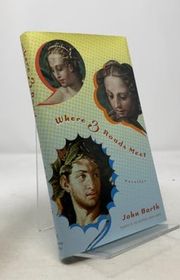
Where Three Roads Meet
by John Barth
2005
Three linked novellas explore the making and telling of stories through an undergraduate's initiation, a history of narrative, and elderly sisters recalling a vanished novelist. Shifting perspectives and forms connect personal experience with the uses and ambiguities of language.
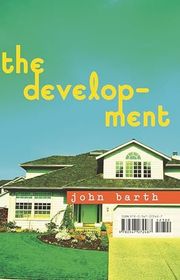
The Development
by John Barth
2008
Residents of a gated retirement community on Maryland's Eastern Shore discover that comfortable surroundings offer little protection from uncertainty. Nine connected stories follow their social rituals, shocks, and private troubles as ageing unsettles the lives they thought they understood.
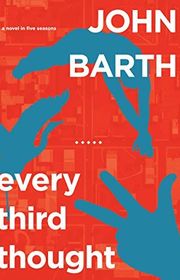
Every Third Thought
by John Barth
2011
After a tornado destroys his community, George Newett travels to Europe with his wife and suffers a fall on his birthday. Seasonal visions begin revisiting pivotal moments in his life, linking unsettling coincidences to memory, love, and mortality.
Final Fridays
by John Barth
2012
John Barth gathers twenty-seven essays written during the Friday mornings he reserves for nonfiction. Reflections on reading, writing, and contemporary literature sit alongside tributes to friends and family, tracing the interests behind his long career as a novelist.
Postscripts
by John Barth
2022
In a collection of mostly brief essays, John Barth reflects on the writers and literary influences that helped shape his work. These playful pieces bring his interest in storytelling and self-conscious invention to the compact form of the personal reflection.
Where to start with John Barth
For his early novels: The Floating Opera → The End of the Road
For experiments in short fiction: Lost in the Funhouse → Chimera
For a longer storytelling voyage: The Tidewater Tales
For essays: The Friday Book → Further Fridays → Final Fridays
Standalone John Barth books
by John Barth
1979An Old Time Epistolary Novel by Seven Fictitious Drolls & Dreamers Each of Which Imagines Himself Factual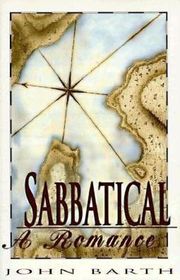

Author bio
John Barth made the act of telling a story part of the story itself. His fiction includes dark comedy, myth, letters and narrators who draw attention to the forms they are using. Born in Cambridge, Maryland, in 1930, he earned his bachelor’s and master’s degrees at Johns Hopkins University and later taught in its Writing Seminars.
The Floating Opera was his first novel.
Together with The End of the Road, it offers a route into his work before the later experiments grow more elaborate. Both books combine existential comedy with love triangles. They are useful starting points for readers who want to meet Barth through characters’ tangled emotional lives and arguments about how to live.
Lost in the Funhouse brings the machinery of fiction closer to the surface. Its interconnected stories question how stories work, making the collection a good choice for readers interested in playful narrative construction. It was a National Book Award finalist.
Chimera won the National Book Award for fiction in 1973.
That book turns to mythical figures, while Letters uses correspondence and brings back people from earlier Barth novels. The latter is therefore a better destination after some exploration of his other fiction. His books invite different kinds of reading: some offer a first encounter, while others make more of their links to what came before.
In The Tidewater Tales, a novelist and an oral historian sail the Chesapeake and exchange stories. The setting gives the book a literal journey, while their storytelling supplies another kind of movement. It is an appealing choice for readers drawn to a long novel about people making and sharing narratives.
Barth also wrote essays about reading and writing. The Friday Book, Further Fridays and Final Fridays give access to that side of his work, with Postscripts gathering mostly brief reflections on literary influences. These books provide a companion route for readers curious about the thinking behind the fiction. Barth died in 2024.







Edited by
Software engineer whose passion for tracking book recommendations from podcasts inspired the creation of MRB.
Lead investor at 3one4 Capital whose startup expertise and love for books helped shape MRB and its growth.
Comments
Spotted a missing book, a wrong order or a mistake? Tell us and we'll fix this page.
We're a reading guide, not the author or publisher, so we can't send books or pass on messages.